
The 10th Season Premier of Introduction to Sports Memorabilia starts with two episodes, each focusing on a college jersey from the late 1950’s to Early 1960’s.
Month: November 2013
DGF2099 Productions-Introduction to Sports Memorabilia-Vintage “State” Game Used Baseball Jersey #11
The 10th Season Premier of Introduction to Sports Memorabilia starts with two episodes, each focusing on a college jersey from the late 1950’s to Early 1960’s.
The Driver Suit Blog-Video-Matching, and The Challenges It has
By David G. Firestone Video matching is another way to authenticate a driver suit, though it is somewhat more complex than simple photo-matching. Whereas a photo stands still, video is in motion, and this method of authentication is more complex and can sometimes be problematic. I will give you the steps to make this happen.
First is that you need to find a video that may have the driver wearing the suit visible in it. Google and YouTube are very good for this. It will take some time, and can be frustrating. Once you think you have found it, you have to watch every second of the video to see if the driver is in fact in the video. This can and often is time consuming and frustrating. If you get lucky and find a video, take a screen shot, and isolate the driver. On a PC you hit prtScn and then save it on an image saving program such as Windows Paint. For Macs, you use Command-Shift-3: Take a screenshot of the screen, and save it as a file on the desktop Once done, you can compare the screen shot to the real suit, as seen below:

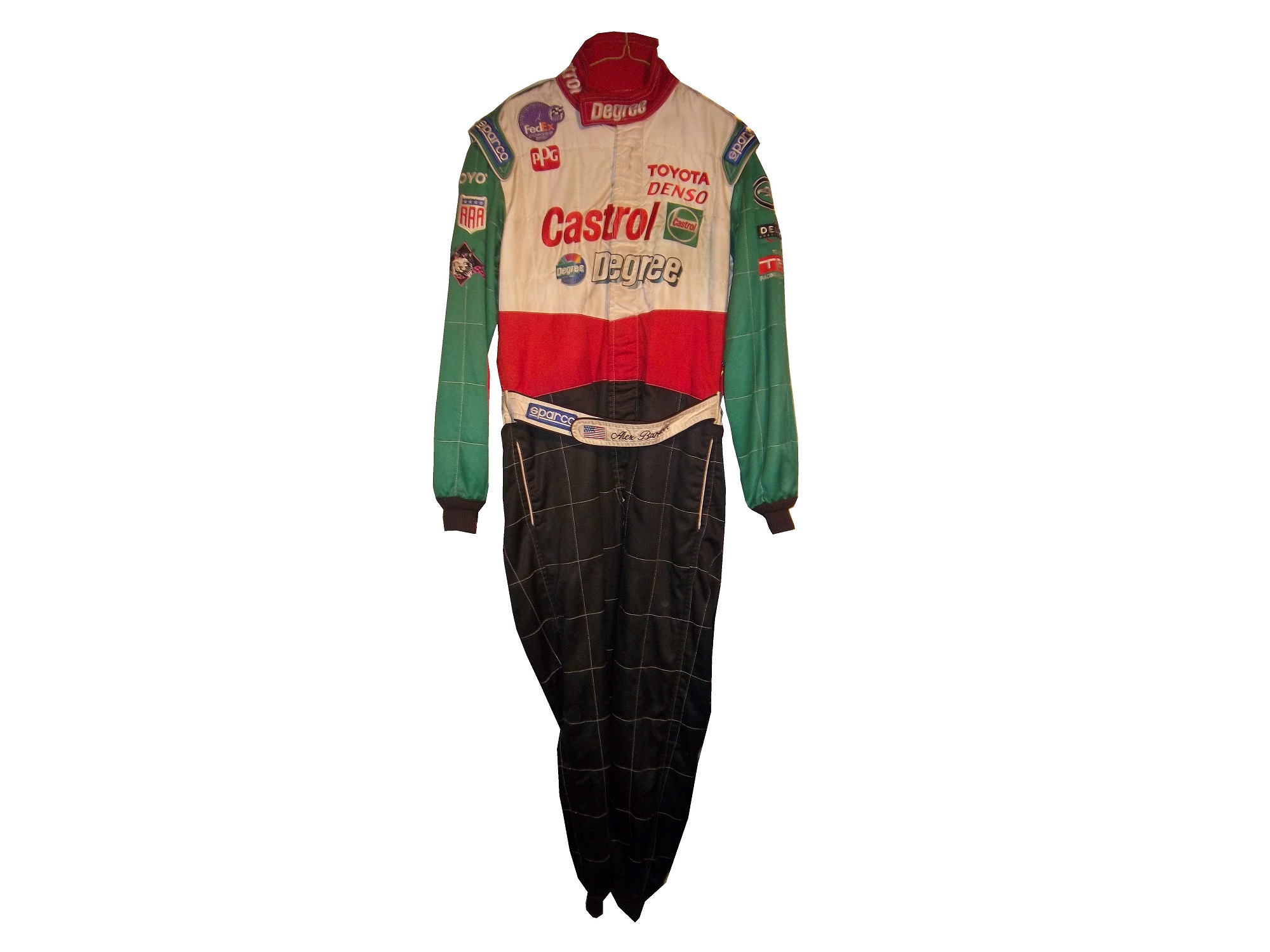
 It needs to be noted that race-wear, that is wear that comes from racing does not always show up in video, as it is difficult to pinpoint when and where race-wear happened over the course of the season. In-car cameras can be used for video matching, but the downside to this is that since there is not a lot of the suit that shows up on in-car cameras during a race, this can be problematic, and can in some cases lead to a false identification of a suit.
In a number of instances, drivers appear in video games. Many racing games feature a select screen, where you can choose a driver, and they wear their suits as seen below:
Again, there is not a lot of the suit visible, so total identification can be difficult. I would wait until all other avenues have been exhausted.
The last way is to use a VHS tape of a race that has video of the driver in question. If at all possible, transfer the tape to a computer, or a DVD, but if that is not possible, then, as a last resort, take a picture of the screen, and use that to match the suit. It is not very scientific, and the quality will probably be low, but if it works, it works.
While it is not required to match a suit, real collectors who care about the hobby do so to make sure that they are getting the real deal when they buy a driver suit. But where exactly do you buy these suits? We’ll discuss that next week.
Vintage Item Spotlight- 1931 Armour Institute of Technology Baseball Uniform

This week on Vintage Item Spotlight, we will look at one of the rarer items in my baseball collection, a 1931 Armour Institute of Technology baseball uniform.
The story of Armour Institute of Technology is an interesting one, and it starts in 1890. Frank Gunsaulus wanted to found a university where students from all backgrounds would be admitted. Meat packing magnate Philip Armour, Sr. supported the idea, and donated $1 million in 1890 to support this endeavor. Thus the Armour Institute of Technology was born. It ran until 1940, when due to finanical constraints was merged with the Lewis Institute. Thus the Illinois Institute of Technology was born.
Most colleges in the United States have sports, and Armour Tech was no exception. Baseball was the most popular sport in the United States and so Armour Tech had a baseball team. This is an example of the uniforms the Armour Tech players wore.
The collar has a vintage Spalding Brothers Company tag, and the remains of where a second tag was removed.
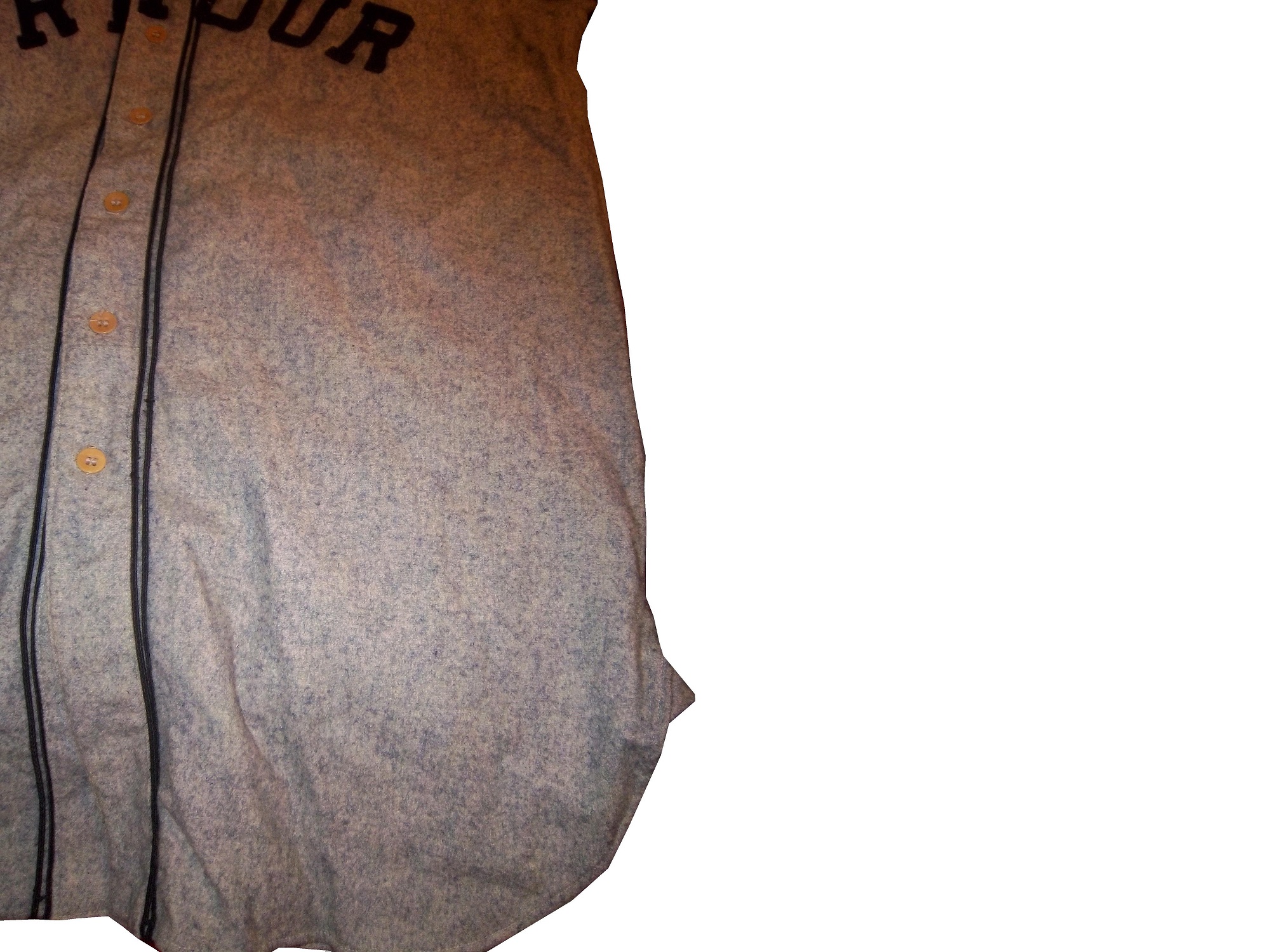
The ARMOUR name is sewn in dark blue felt lettering into the heavy gray flannel. The dye from the felt lettering has stained some of the fabric aroun the lettering. The buttons are all present and in good condition.
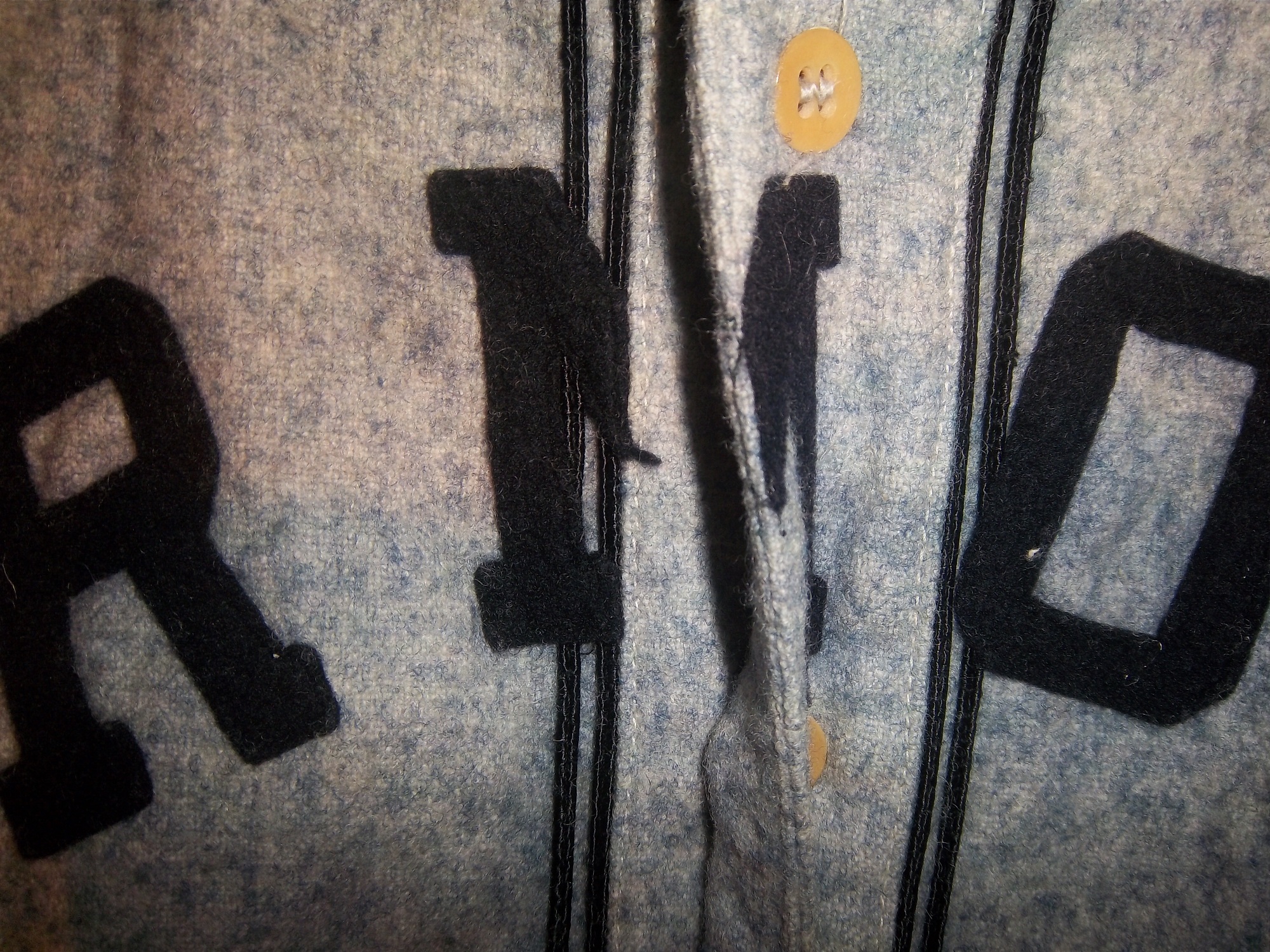
The bottom of the front of the jersey has some staining present.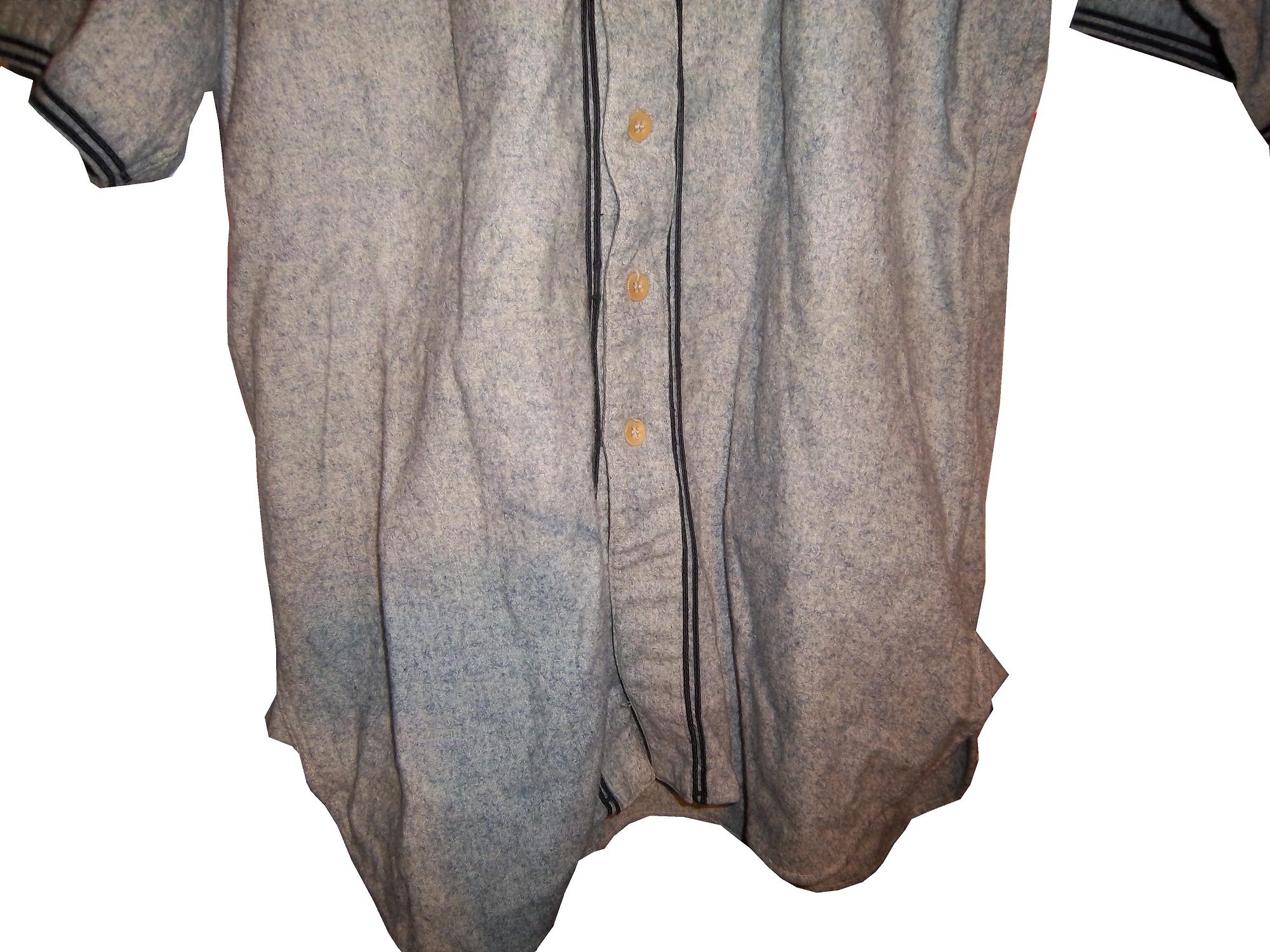
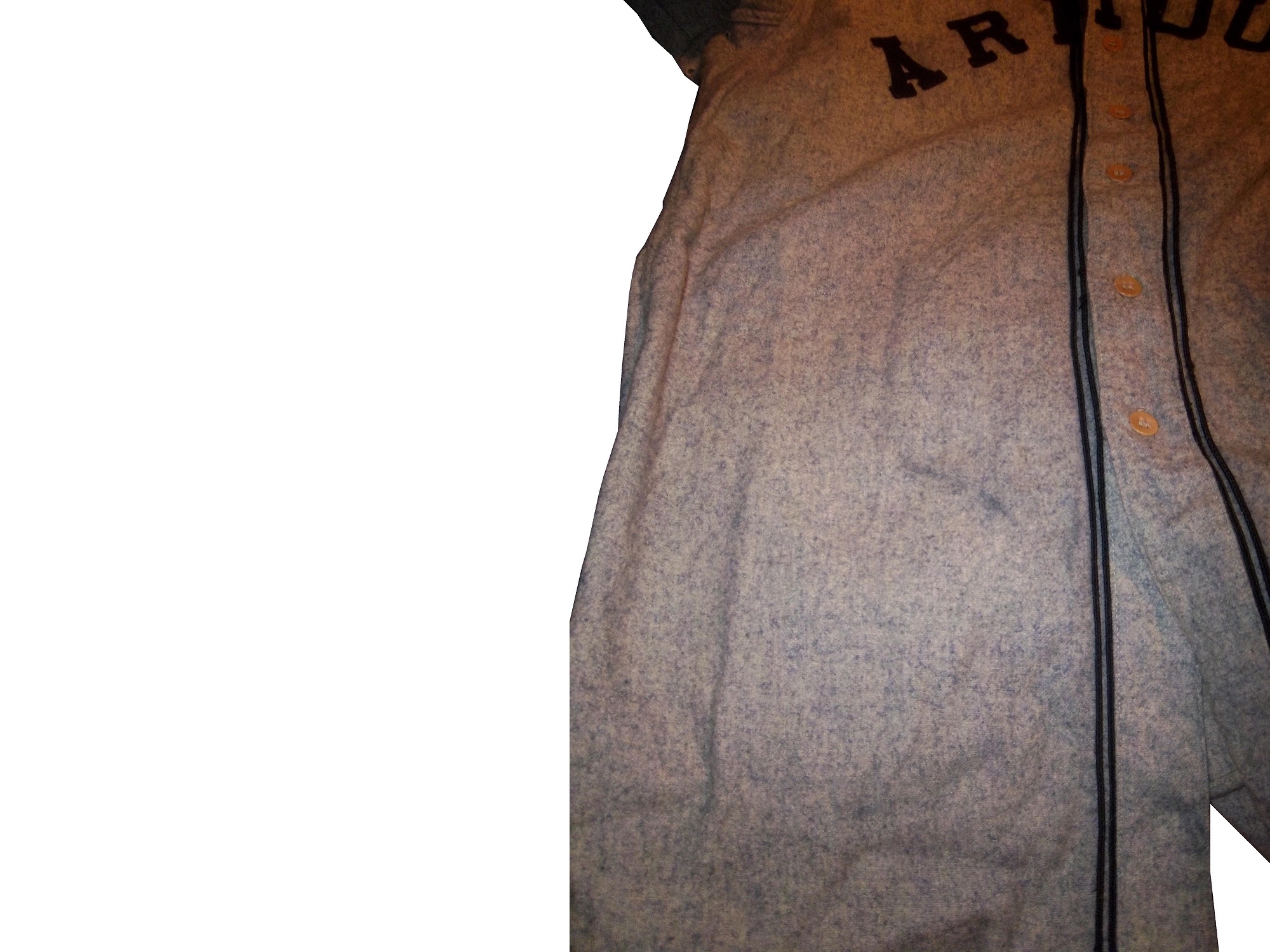
In addition to a really nice cuff design, there is some light staining on the right sleeve.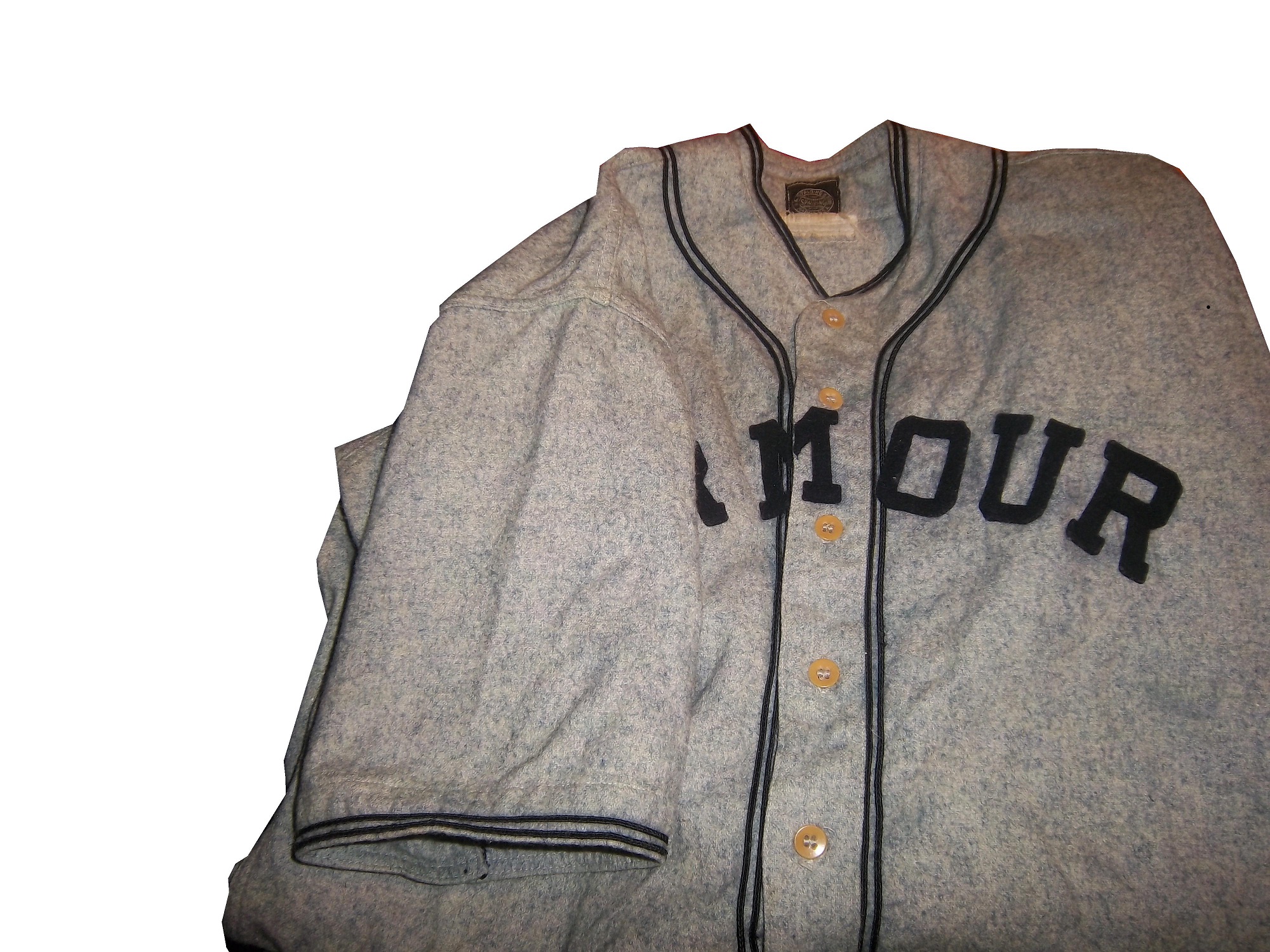
Possibly from the lettering, the left sleeve has some blue stains present.
Since uniform numbers were not introduced in baseball until 1929, and did not catch on immediately, it makes sense that this uniform does not have a number.
Turing to the pants. There are stains on the front of the legs, as well as the back seat area. 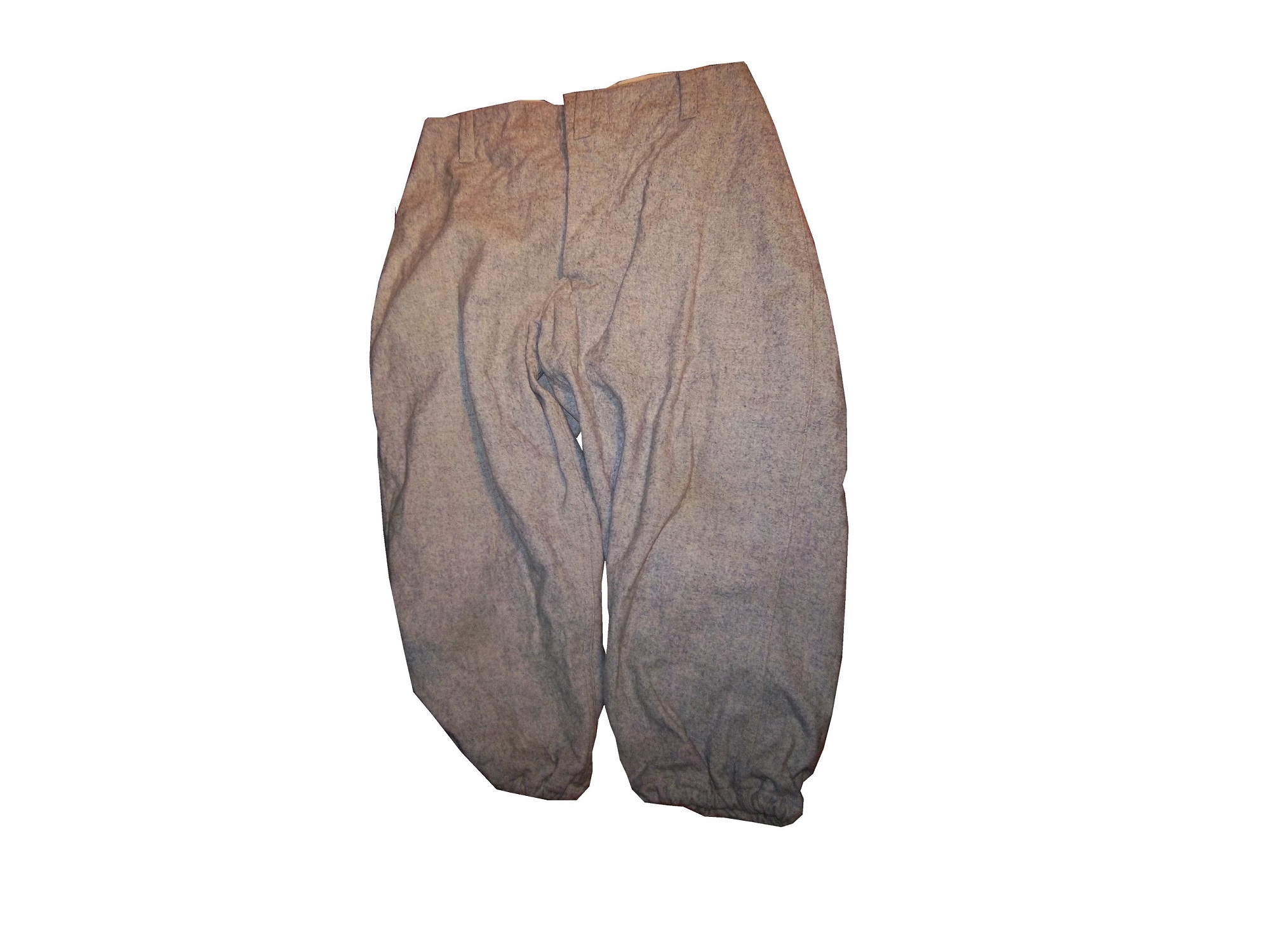
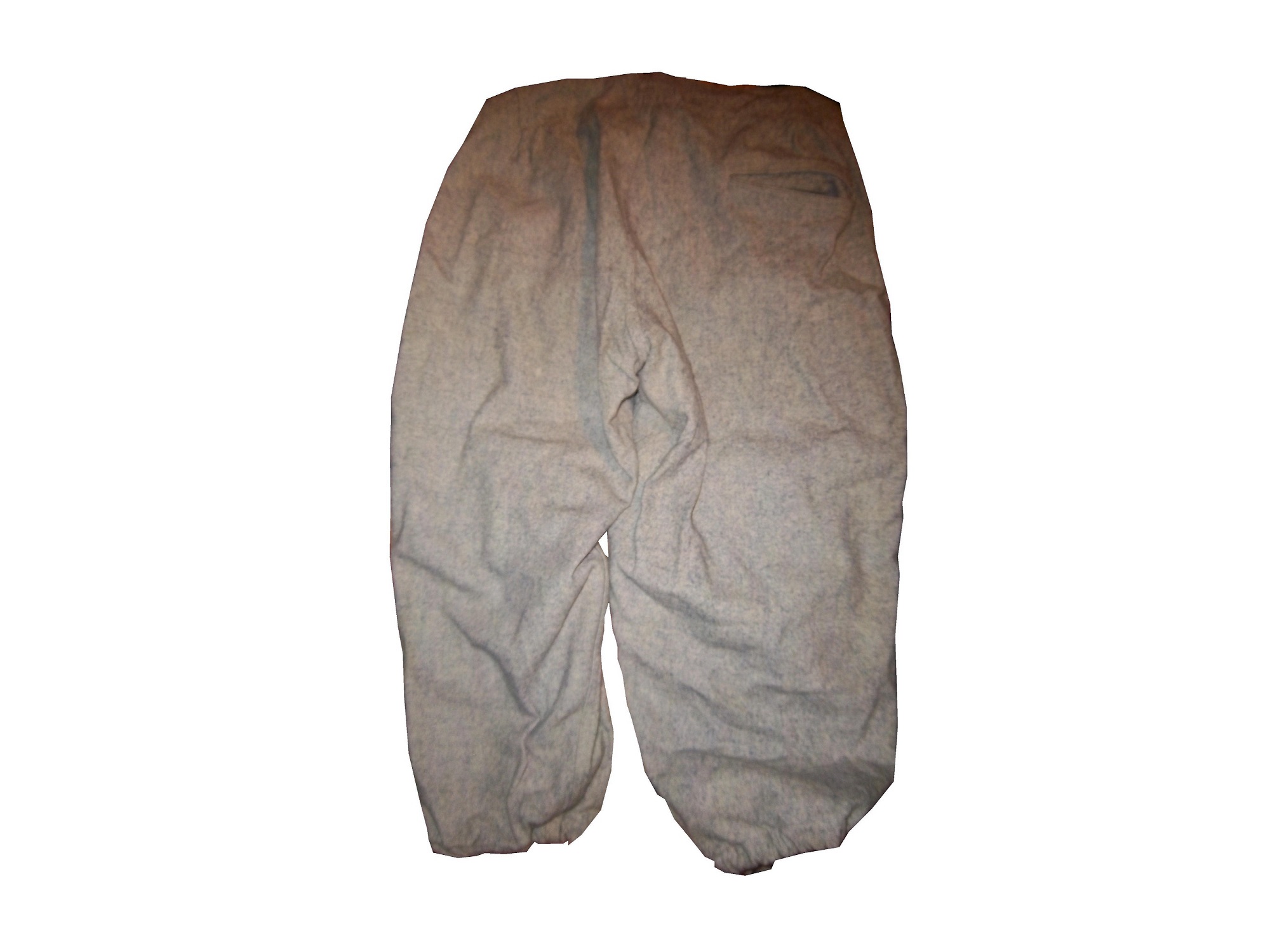

The cuffs show a lot of wear as well.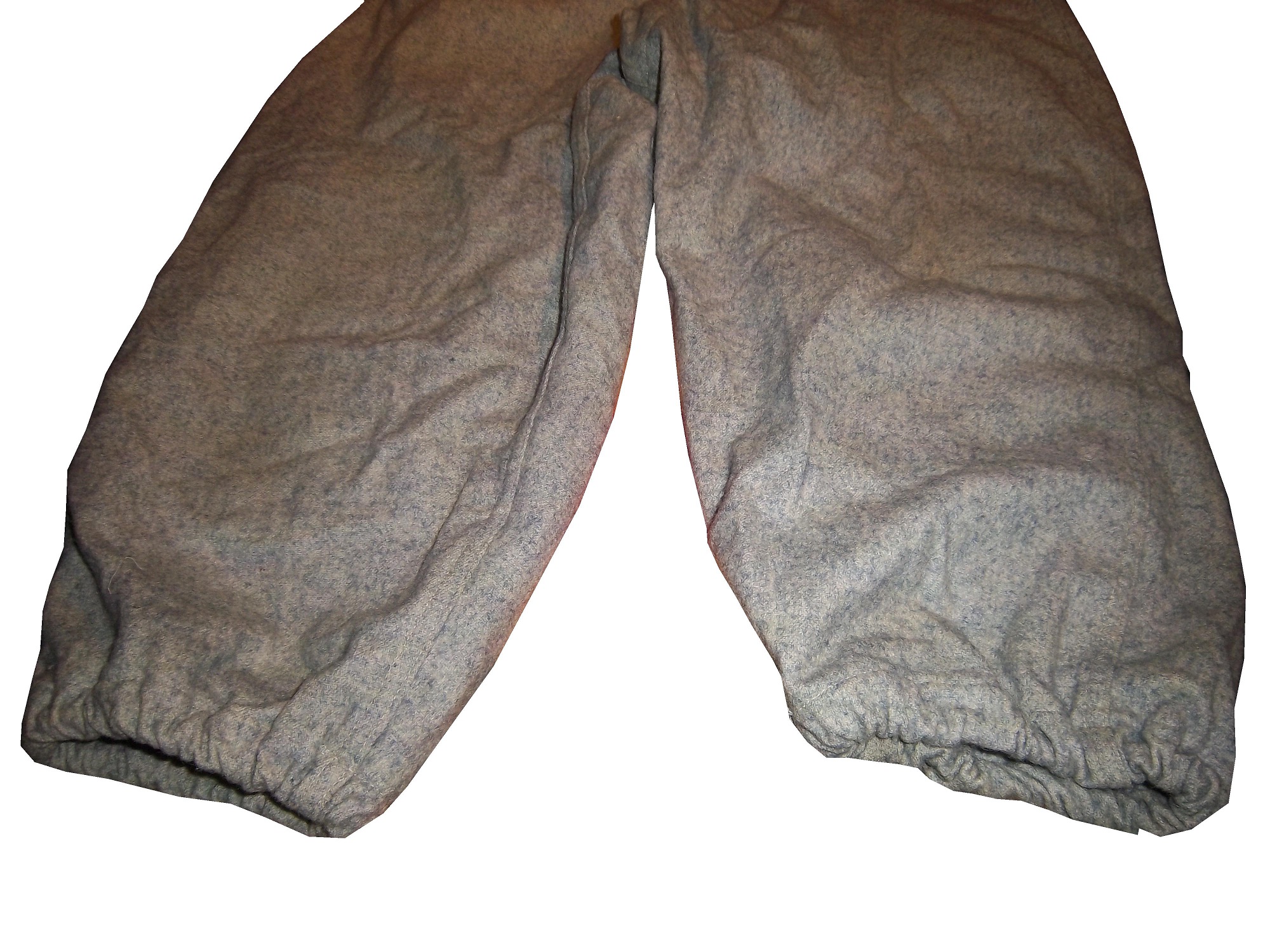

The buttons are in good condition as well.
A vintage Spalding tag, with a 34 size indication is sewn into the waist. The name SOMMER is written in fountain pen next to the size tag. Using the TechNews archives, I was able to discover that Sommer, who’s first name I was never able to find, was a center fielder from 1931-1934, eventually becoming a captain in 1934.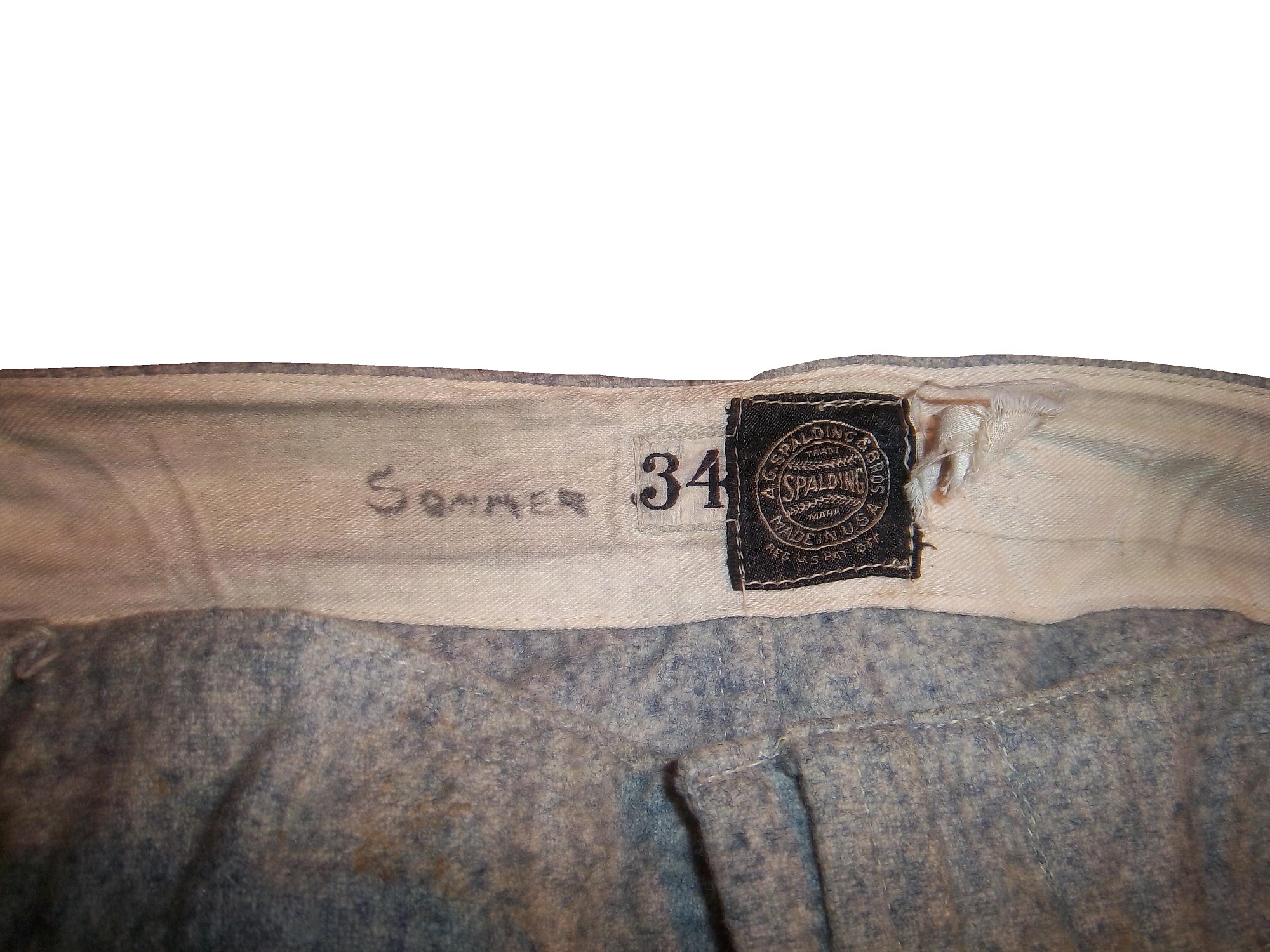
A pair of blue stirrups accompanies the uniform.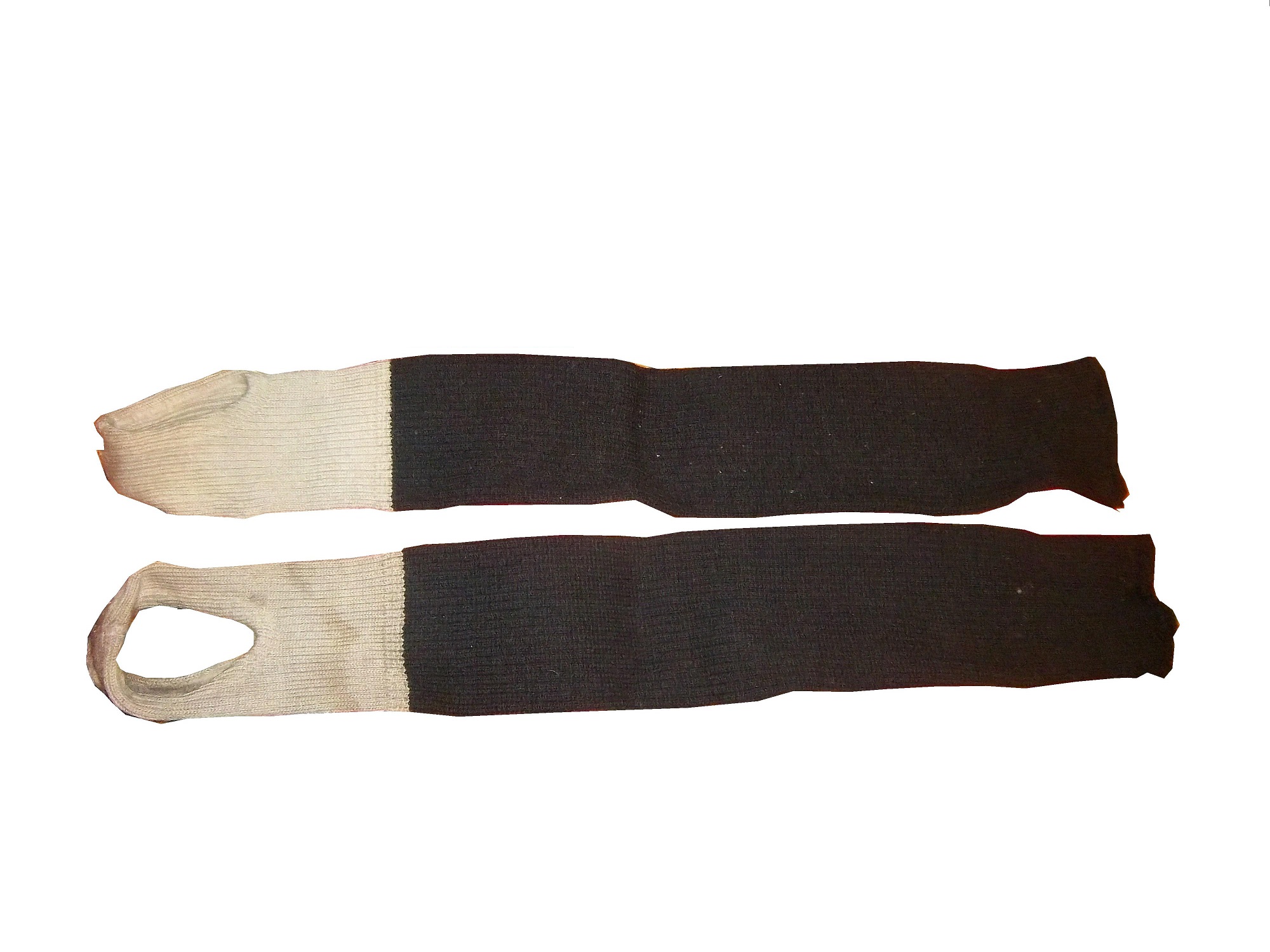
MEARS has authenticated this uniform as authentic, and it is a very impressive vintage piece. In fact, it may be the only example of its kind in existence, not just in this form, but in ANY form. This is a true example of a well-preserved vintage baseball uniform.
 DGF2099-Main Page