By David G. Firestone
TRACKHOUSE RACING #1
Ross Chastain #1 Busch Light Chevy Camaro–New scheme for 2026, white mountains added. A
Ross Chastain #1 Choice Privileges Chevy Camaro–New scheme for 2026, gray removed. C
Ross Chastain #1 Wendy’s Chevy Camaro–New scheme for 2026, red front, white with checkers and pig tail across sides. F
Ross Chastain #1 Busch Light For the Love of Texas Chevy Camaro–New scheme for 2026, white with blue and red designs and star. C-
Ross Chastain #1 Kubota Chevy Camaro–New scheme for 2026, black space in center reduced. C
Ross Chastain #1 Moose Fraternity Chevy Camaro–New scheme for 2026, side design changed. A-
Ross Chastain #1 Safety Culture Chevy Camaro–New scheme for 2026, darker blues used. F
TEAM PENSKE #2
Austin Cindric #2 Discount Tire Ford Mustang–No change. A
Austin Cindric #2 Freightliner/eCascadia Ford Mustang–No change. D
Austin Cindric #2 Menards/Frog Tape Ford Mustang-New sponsor for 2026, Menard’s template with green. F
Austin Cindric #2 Autotrader Ford Mustang–New scheme for 2026, logo replaces stripe. A
Austin Cindric #2 Menard’s/Quaker State Ford Mustang–No change. C
Austin Cindric #2 Menard’s/Richmond Ford Mustang–No change. A
RICHARD CHILDRESS RACING #3
Austin Dillon #3 Bass Pro Shops/Winchester Chevy Camaro–New scheme for 2026, black with silver and red designs. A
Austin Dillon #3 Morgan & Morgan Chevy Camaro–New scheme for 2026, black with yellow stripes. C
Austin Dillon #3 BREZTRI Chevy Camaro–No change. A
Austin Dillon #3 Bass Pro Shops/Winchester Long Beard XR Chevy Camaro-New scheme for 2026, orange and black with designs. F
Austin Dillon #3 Dow Coatings Chevy Camaro-New sponsor for 2026, red with designs. A
FRONT ROW MOTORSPORTS #4
Noah Gragson #4 MillerTech Ford Mustang–No change. C
Noah Gragson #4 Rush Truck Centers Ford Mustang–No change. A
Noah Gragson #4 TrueTimber Ford Mustang–No change. F
Noah Gragson #4 TitleMax Ford Mustang–No change. C
Noah Gragson #4 Straight Talk Wireless Ford Mustang-New sponsor for 2026, yellow front, black checkered rear. A
Noah Gragson #4 Curate Ford Mustang-New sponsor for 2026, yellow with white and black designs. A-
Noah Gragson #4 Long John Silver’s Ford Mustang-New scheme for 2026, same as #34. C
Noah Gragson #4 Fuel by Franzia Ford Mustang-New sponsor for 2026, pink and black with cutting edge designs. F
HENDRICK MOTORSPORTS #5
Kyle Larson #5 Hendrickcars.com Chevy Camaro–No change. A
Kyle Larson #5 Valvoline Chevy Camaro–New scheme for 2026, red reduced, sides cleaned up. A
ROUSH-FENWAY RACING #6
Brad Keselowski #6 Body Guard Ford Mustang–No change. A
Brad Keselowski #6 BuildSubmarines.com Ford Mustang–New scheme for 2026, matte black with gray stripe. A
Brad Keselowski #6 Castrol Ford Mustang–New scheme for 2026, same as last year, but with Greg Biffle number tribute. A
Brad Keselowski #6 Solomon Plumbing Ford Mustang–No change. F
Brad Keselowski #6 Graza Olive Oil Ford Mustang-New sponsor for 2026, green and yellow with flames on rear wheel well. A
Brad Keselowski #6 Consumer Cellular Ford Mustang–No change. A-
Brad Keselowski #6 Trimble Ford Mustang-New scheme for 2026, same as #60. C
Brad Keselowski #6 Solomon Plumbing Throwback Ford Mustang–New scheme for 2026, based on Greg Biffle’s #16 3M scheme. A
SPIRE MOTORSPORTS #7
Daniel Suarez #7 Freeway Insurance Chevy Camaro–New scheme for 2026, blue with white and green designs. B
Daniel Suarez #7 Cal Ripken, Sr. Foundation Chevy Camaro-New sponsor for 2026, white with orange and black. A
Daniel Suarez #7 NationsGuard Chevy Camaro-New scheme for 2026, colors switched. C
Daniel Suarez #7 Group 1001 Chevy Camaro–No change. F
RICHARD CHILDRESS RACING #8
Kyle Busch #8 Lucas Oil Chevy Camaro–No change. A
Kyle Busch #8 Cheddar’s Scratch Kitchen Chevy Camaro–No change. A-
Kyle Busch #8 zone Premium Nicotine Patches Chevy Camaro–No change. A-
Kyle Busch #8 Rebel Bourbon Chevy Camaro–New scheme for 2026, black with barrel and mug motif. A
Kyle Busch #8 BetMGM Chevy Camaro–New scheme for 2026, colors reversed, designs added. F
Kyle Busch #8 FICO Chevy Camaro–No change. A
HENDRICK MOTORSPORTS #9
Chase Elliott #9 UniFirst Chevy Camaro–No change. A
Chase Elliott #9 NAPA Chevy Camaro–New scheme for 2026, blue hood, roof, and deck lid white sides with blue and yellow stripe. A
Chase Elliott #9 Kelly Blue Book Chevy Camaro–New scheme for 2026, hood, roof, and deck lid changed to blue with designs, and stripes removed. A
Chase Elliott #9 Amazon Prime Chevy Camaro–New scheme for 2026, blue with black designs. B+
KAULIG RACING #10
Ty Dillon #10 Grizzly Nicotine Pouches Chevy Camaro–No change. B
Ty Dillon #10 Sea Best Seafood Chevy Camaro–No change. B
Ty Dillon #10 Patriot Mobile Chevy Camaro-New sponsor for 2026, white, blue, and red with stripes and designs, B
Ty Dillon #10 Campers Inn RV Chevy Camaro-New scheme for 2026, some designs added to front. C
Ty Dillon #10 Black’s Tire Chevy Camaro–New scheme for 2026, blue and white reversed. A
JOE GIBBS RACING #11
Denny Hamlin #11 Bob’s Discount Furniture Toyota Camry–No change. C
Denny Hamlin #11 National Debt Relief Toyota Camry–No change. C
Denny Hamlin #11 Progressive Insurance Toyota Camry–No change. A
Denny Hamlin #11 Yahoo! Toyota Camry–New scheme for 2026, some white added to sides. D
Denny Hamlin #11 Sport Clips Haircuts Toyota Camry–No change. B+
TEAM PENSKE #12
Ryan Blaney #12 Menard’s/Delta Ford Mustang–No change. A
Ryan Blaney #12 Wurth Ford Mustang–New scheme for 2026, white fade to black, fade to red. A
Ryan Blaney #12 Menard’s/Great Lakes Flooring Ford Mustang–No change. A
Ryan Blaney #12 BodyArmor Chill Ford Mustang–No change. F
Ryan Blaney #12 Menard’s/Peak Ford Mustang–No change. B+
Ryan Blaney #12 Menard’s/Dutch Boy Ford Mustang–No change. C
Ryan Blaney #12 Menard’s/Pennzoil Ford Mustang–No change. A
Ryan Blaney #12 Dent Wizard Ford Mustang–No change. C
Ryan Blaney #12 Advance Auto Parts Ford Mustang–No change. A
KAULIG RACING #16
AJ Allmendinger #16 Celsius Chevy Camaro–New scheme for 2026, design cleaned up. A
AJ Allmendinger #16 Grizzly Nicotine Pouches Chevy Camaro–No change. A
AJ Allmendinger #16 Campers Inn RV Chevy Camaro–New scheme for 2026, darker shade of red. B
AJ Allmendinger #16 U-Save Chevy Camaro-New sponsor for 2026, yellow with gray stripes. A
ROUSH-FENWAY RACING #17
Chris Buescher #17 Body Guard Ford Mustang–No change. A
Chris Buescher #17 BuildSubmarines.com Ford Mustang–New scheme for 2026, matte black with gray stripe. A
Chris Buescher #17 Fifth Third Bank Ford Mustang–No change. F
Chris Buescher #17 Trimble Ford Mustang–No change. D
Chris Buescher #17 Fry’s/Artesano/Kraft Ford Mustang–New scheme for 2026, red with cheese motif and sandwich. A
Chris Buescher #17 Smith’s/Farm Rich Ford Mustang–No change. A
Chris Buescher #17 Fifth Third Bank Throwback Ford Mustang–New scheme for 2026, based on Greg Biffle’s #16 3M scheme. A
Chris Buescher #17 Kroger/Thomas’ High Protein Bagels Ford Mustang–No change. A
JOE GIBBS RACING #19
Chase Briscoe #19 Columbia Bank Toyota Camry-New sponsor for 2026, blue with white designs, and black stripe. B+
Chase Briscoe #19 Free Bird Southern Spring Water Toyota Camry-New sponsor for 2026, white with red and black stripe and patriotic motif. B
Chase Briscoe #19 Bass Pro Shops Toyota Camry–No change. C
Chase Briscoe #19 Zep Toyota Camry–New scheme for 2025, blue and yellow with curves. A
JOE GIBBS RACING #20
Christopher Bell #20 DeWalt Toyota Camry–No change. A
Christopher Bell #20 Rheem Toyota Camry–No change. A-
Christopher Bell #20 Mobil 1 Toyota Camry–New scheme for 2026, white and blue with stars. A
Christopher Bell #20 DEWALT/Interstate Batteries Toyota Camry–No change. F
Christopher Bell #20 DeWalt Concrete Toyota Camry–No change. F
Christopher Bell #20 Reser’s Fine Foods Toyota Camry–No change. A
Christopher Bell #20 Interstate Batteries Toyota Camry–No change. F
WOOD BROTHERS RACING #21
Josh Berry #21 Motorcraft/Quick Lane Ford Mustang–No change. A
Josh Berry #21 eero Ford Mustang–New scheme for 2026, blue with white circles. A-
Josh Berry #21 Würth Ford Mustang–New scheme for 2026, black vertical fade. A
Josh Berry #21 DEX Imaging Ford Mustang–No change. A
TEAM PENSKE #22
Joey Logano #22 Hunt Brothers Ford Mustang–New scheme for 2026, red and green with diagonal stripes. D
Joey Logano #22 Shell/Pennzoil Ford Mustang–No change. A
Joey Logano #22 Autotrader Ford Mustang–New scheme for 2026, logo replaces stripe. A
Joey Logano #22 Pennzoil Ultra Premium Ford Mustang–New scheme for 2026, yellow with red designs. A-
Joey Logano #22 Shell/Pennzoil Ford Mustang–New scheme for 2026, red and yellow with white center. A
23XI RACING #23
Bubba Wallace #23 Xfinity Toyota Camry–New scheme for 2026, blue with white designs. A
Bubba Wallace #23 Robinhood Toyota Camry–No change. A
Bubba Wallace #23 Columbia Sportswear Toyota Camry–New scheme for 2026, blue replaces gray. A
Bubba Wallace #23 Hardee’s Toyota Camry-New sponsor for 2026, yellow with red and black. A
HENDRICK MOTORSPORTS #24
William Byron #24 HP Chevy Camaro–New scheme for 2026, white with blue. A
William Byron #24 RAPTOR Chevy Camaro–New scheme for 2026, Axalta-style flames with white background. A
William Byron #24 All-Pro Auto Reconditioning Chevy Camaro–No change. C
William Byron #24 Cincinnati Chevy Camaro–No change. A
William Byron #24 Liberty University Chevy Camaro–No change. A
William Byron #24 Valvoline Chevy Camaro–New scheme for 2026, white with new designs. A-
William Byron #24 Phorm Energy Chevy Camaro-New sponsor for 2026, patriotic motif across car, diagonal stripe on hood. A-
RICHARD CHILDRESS RACING #33
Jesse Love #33 C4 Energy Chevy Camaro–New scheme for 2026, red, orange, and yellow with a series of designs. F
Austin Hill #33 United Rentals Chevy Camaro–New scheme for 2026, blue and orange with sublimated designs. C
FRONT ROW MOTORSPORTS #34
Todd Gilliland #34 Love’s Truck Stops Ford Mustang–No change. A-
Todd Gilliland #34 Dairi-O/Jerry Hunt Supercenter Ford Mustang-New sponsor for 2026, white with yellow and red curves. A-
Todd Gilliland #34 Long John Silver’s Ford Mustang–No change. C
Todd Gilliland #34 Ruedbusch Development and Construction Throwback Ford Mustang–New scheme for 2026, based on Bill Elliott’s Coors Ford Mustang. A
23XI RACING #35
Riley Herbst #35 Monster Energy Zero Sugar Toyota Camry–No change. A
Riley Herbst #35 FRE Nicotine Pouches Toyota Camry-New sponsor for 2026, red, white, gray, and black with designs. C
FRONT ROW MOTORSPORTS #36
Chandler Smith #36 QuickTie Ford Mustang–New scheme for 2026, white, pink, and black with cutting edge designs. C
FRONT ROW MOTORSPORTS #38
Zane Smith #38 Speedy Cash Ford Mustang–No change. C
Zane Smith #38 TitleMax Ford Mustang–No change. B
Zane Smith #38 Aaron’s Ford Mustang–No change. A
Zane Smith #38 Long John Silver’s Ford Mustang–No change. C
Zane Smith #38 Mystik Lubricants Ford Mustang–No change. F
Zane Smith #38 Mystik Lubricants Throwback Ford Mustang–New scheme for 2026, based on Elliot Sadler’s 2000 #21 Citgo Ford Taurus. F
JR MOTORSPORTS #40
Justin Allgaier #40 Traveller Whiskey Chevy Camaro–New scheme for 2026, cream with black, red and yellow stripes. C
HAAS FACTORY TEAM #41
Cole Custer #41 HaasTooling.com Ford Mustang–New scheme for 2026, some slight design changes. F
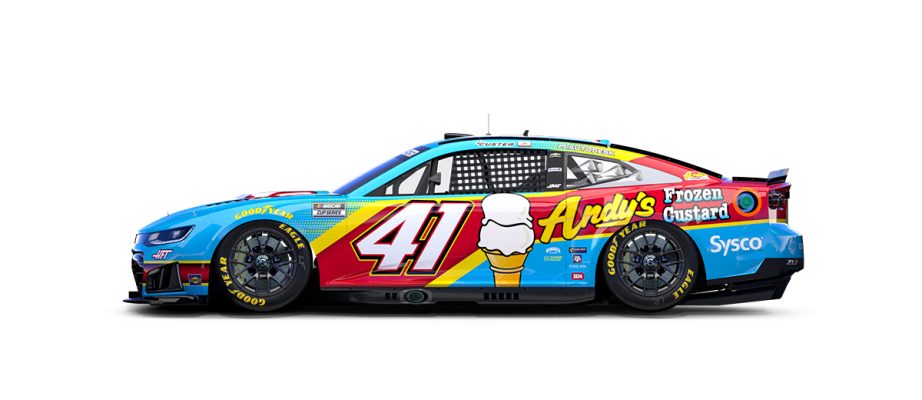
Cole Custer #41 Haas/Andy’s Frozen Custard Ford Mustang–No change. B
Cole Custer #41 Bonanza Cabernet Ford Mustang–No change. A
LEGACY MOTOR CLUB #42
John Hunter Nemechek #42 Rexel Toyota Camry-New sponsor for 2026, blue white white, hood, and deck lid with blue sides and teal, white, and green stripe. B
John Hunter Nemechek #42 Dollar Tree Toyota Camry–No change. A
John Hunter Nemechek #42 Pye Barker Fire & Safety Chevy Camaro–New scheme for 2026, purple, teal, and white with designs. F
John Hunter Nemechek #42 Mobil 1 Toyota Camry–New scheme for 2026, blue and white with stripes. D-
John Hunter Nemechek #42 Tri State Vacuum & Rental LLC Toyota Camry–No change. C
John Hunter Nemechek #42 Dollar Tree Toyota Camry–No change. F
LEGACY MOTOR CLUB #43
Erik Jones #43 Dollar Tree Toyota Camry–No change. A
Erik Jones #43 Advent Health Toyota Camry–No change. B+
Erik Jones #43 Advent Health Toyota Camry–New scheme for 2026, based on Wally Dallenbach Jr.’s 1994 #43 STP Pontiac. A
NY RACING #44
JJ Yeley #44 Barnett Southern Corporation Chevy Camaro–New scheme for 2026, black and red with sublimated designs. A-
23XI RACING #45
Tyler Reddick #45 Chumba Casino Toyota Camry–New scheme for 2026, black with red swirls. A
Tyler Reddick #45 Pala Casino Toyota Camry-New sponsor for 2026, teal and pink with curves and black stripe. F
Tyler Reddick #45 Pinnacle Toyota Camry–No change. A
Tyler Reddick #45 Jordan Brand Toyota Camry-New scheme for 2026, red fade to cream with black bottom. A
Tyler Reddick #45 Jordan Brand Toyota Camry-New scheme for 2026, gray and black with designs. A
HYAK MOTORSPORTS #47
Ricky Stenhouse Jr. #47 Chef Boyardee Ford Mustang-New sponsor for 2026, red with sublimated designs. A
Ricky Stenhouse Jr. #47 Onin Staffing Chevy Camaro-New sponsor for 2026, blue and yellow with some designs. C
Ricky Stenhouse Jr. #47 Ram Self Storage Chevy Camaro–No change. D-
Ricky Stenhouse Jr. #47 Pylon Aviation Chevy Camaro-New sponsor for 2026, red and gray with designs. C
Ricky Stenhouse Jr. #47 NOS Energy Chevy Camaro–New scheme for 2026, some designs changed. B
Ricky Stenhouse Jr. #47 Jack Links Non-Vegan Chevy Camaro–No change. A
Ricky Stenhouse Jr. #47 Jack Links Non-Vegan Chevy Camaro-New scheme for 2026, black with red designs. A
HENDRICK MOTORSPORTS #48
Alex Bowman #48 Ally Financial Chevy Camaro–New scheme for 2026, blue, pink, and purple, with designs. C
Alex Bowman #48 Ally/Best Friends Chevy Camaro–New scheme for 2026, blue with stripes and paws. A
TEAM AMERIVET #50
Burt Myers #50 Team Amerivet/Tibbets Lumber Chevy Camaro-New sponsor for 2026, blue with red, and white designs. C
RICK WARE RACING #51
Cody Ware #51 Evel Knievel/Parts Plus Chevy Camaro–New scheme for 2026, colors reversed. A
Cody Ware #51 Jacob Companies Chevy Camaro–No change. A
Cody Ware #51 Blue Highway Chevy Camaro-New sponsor for 2026, blue front, white rear with blue designs. A-
Cody Ware #51 Parts Plus/Costa Oil Chevy Camaro–New scheme for 2026, black front, white rear. A
Cody Ware #51 Super.com Chevy Camaro-New sponsor for 2026, pink top and bottom with white center. A
Cody Ware #51 Yeego.ai/Habit Burger & Grill Chevy Camaro-New sponsor for 2026, white with purple designs. C
JOE GIBBS RACING #54
Ty Gibbs #54 Zep Toyota Camry-New scheme for 2026, same as #19. A
Ty Gibbs #54 Monster Energy Toyota Camry–No change. A
Ty Gibbs #54 Saia Toyota Camry–No change. A
Ty Gibbs #54 AMPM Toyota Camry–New scheme for 2026, black, blue, and orange with a series of designs. F
Ty Gibbs #54 SiriusXM Toyota Camry–No change. C
ROUSH-FENWAY RACING #60
Ryan Preece #60 Trimble Ford Mustang–No change. C
Ryan Preece #60 Body Guard Ford Mustang–No change. A
Ryan Preece #60 BuildSubmarines.com Ford Mustang–New scheme for 2026, matte black with gray stripe. A
Ryan Preece #60 Kroger/Viva Towels Ford Mustang-New sponsor for 2026, blue, yellow, and white with some designs. B-
Ryan Preece #60 Kroger/Coca-Cola Ford Mustang–New scheme for 2026, colors reversed from last year. A
Ryan Preece #60 Kroger/Viva Ford Mustang-New sponsor for 2026, blue with yellow and white stripes. A
Ryan Preece #60 Kroger/Red Baron Ford Mustang–New scheme for 2026, black. A
Ryan Preece #60 Castrol Ford Mustang–No change. A
Ryan Preece #60 Kroger/Oscar Mayer/Heinz Throwback Ford Mustang–New scheme for 2026, based on Greg Biffle’s #16 3M scheme. A
BEARD MOTORSPORTS #62
Anthony Alfredo #62 Dude Wipes Chevy Camaro–New scheme for 2026, blue, black, and white with designs. A
GARAGE 66 #66
Casey Mears #66 Ford Mustang–No change. A
Casey Mears #66 SI Yachts/Gracie Ford Mustang–No change. A
Timmy Hill #66 Auto Direct USA Ford Mustang-New sponsor for 2026, black front, white rear, blue stripe. A
23XI RACING #67
Corey Heim #67 Robinhood Toyota Camry–No change. A
SPIRE MOTORSPORTS #71
Michael McDowell #71 Workforce Chevy Camaro–New scheme for 2026, some slight design changes. C
Michael McDowell #71 Modo Casino Chevy Camaro–New scheme for 2026, patriotic elements across car. F
Michael McDowell #71 Delaware Life Chevy Camaro–New scheme for 2026, circles replaces curves. C-
Michael McDowell #71 B’laster Chevy Camaro–No change. D-
Michael McDowell #71 Katz Coffee Chevy Camaro–No change. C
SPIRE MOTORSPORTS #77
Carson Hocevar #77 Zeigler Auto Group Chevy Camaro–New scheme for 2026, design cleaned up. A
Carson Hocevar #77 MINER Chevy Camaro–New scheme for 2026, yellow added, and design changed. F
Carson Hocevar #77 Spectrum Chevy Camaro-New sponsor for 2026, white with yellow purple, and yellow designs. F
Carson Hocevar #77 Chili’s Ride the ‘Dente Chevy Camaro–New sponsor for 2026, black replaces white. A
Carson Hocevar #77 Chili’s Ride the ‘Dente Chevy Camaro–No change. A
Carson Hocevar #77 Chili’s Marg Machine Throwback Chevy Camaro–New scheme for 2026, based on Dale Earnhardt Sr.’s #3 Wrangler Chevy. A
LIVE FAST MOTORSPORTS #78
BJ McLeod #78 Chevy Camaro–No change. A
BJ McLeod #78 Superior Logistics/RepairableVehicles.com Chevy Camaro-New sponsor for 2026, black. A
LEGACY MOTOR CLUB #84
Jimmie Johnson #84 Carvana Toyota Camry–New scheme for 2026, blue, yellow, and purple with designs. C
TRACKHOUSE RACING #88
Connor Zilisch #88 Red Bull Chevy Camaro-New scheme for 2026, some stripes added on front. A
Connor Zilisch#88 Roto-Rooter Chevy Camaro-New sponsor for 2026, red, white, and blue with a series of zig-zag designs. C-
Connor Zilisch #88 Trackhouse Chevy Camaro-New scheme for 2026, blue and black with stripes. F
Connor Zilisch #88 Choice Privileges Camaro-New scheme for 2026, white replaces black, more designs. D
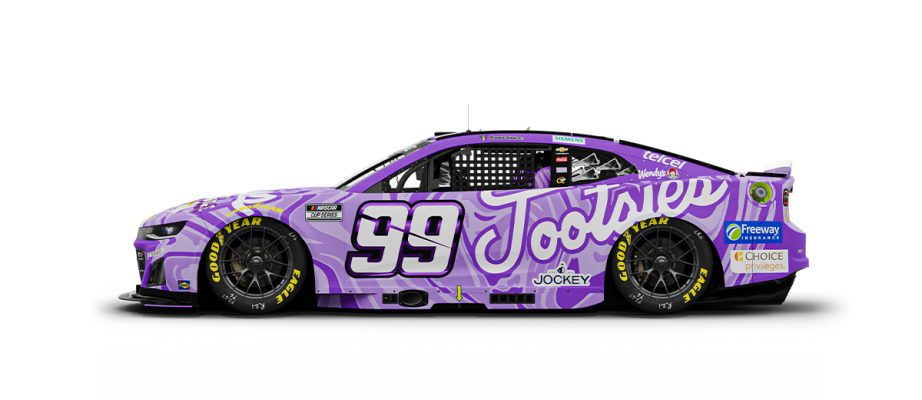
Connor Zilisch #88 Tootsie’s Orchid Lounge Chevy Camaro–New scheme for 2026, blue. A
Connor Zilisch #88 Wendy’s Chevy Camaro–New scheme for 2026, same as #1. F
Connor Zilisch #88 Jockey 150th Anniversary Camaro-New scheme for 2026, gold with red stripe and gold design. A
TRACKHOUSE RACING #97
Shane van Gisbergen #97 Red Bull Chevy Camaro–New scheme for 2026,some stripes added on front. A
Shane van Gisbergen #97 Trackhouse Chevy Camaro-New scheme for 2026, blue and dark blue with stripes. F
Shane van Gisbergen #97 SuperFile Chevy Camaro-New sponsor for 2026, black with super hero and lightning motif. C
Shane van Gisbergen #97 SuperFile Chevy Camaro-New scheme with decals and multi-colored paint splatter motif. F
Shane van Gisbergen #97 WeatherTech Chevy Camaro–No change. A


 DGF2099-Main Page