Just a quick one this week. Sometimes, I come across an item from a racing team I’ve never heard of. This makes research a little difficult, but I’m usually able to work around this. In this case, things are much different. This is a jacket from a team called “Baker Motorsports” that raced in the NASCAR Whelen Southern Modified Tour. There are so many race teams with Baker in the name, and most of them race modifieds, so figuring out specifics is very difficult here, so I can’t say where and when this was worn. What I can say that this is a Leaf Racewear jacket, which has some minor wear, and an SFI rating of 1. We will go from there.
The collar has a Velcro strap, with a LEAF RACEWEAR logo sewn into it. There is a tag sewn into the cowl.
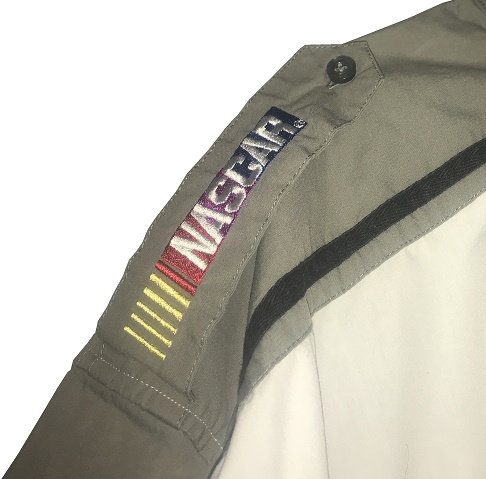
The right chest features a NASCAR WHELEN SOUTHERN MODIFIED SERIES logo embroidered.
The left chest features BAKER MOTORSPORTS embroidered.
The front torso features a blue stripe across. No sponsor logos are present.
The shoulders have black unadorned epaulets.
The right sleeve has a LEAF RACEWEAR patch sewn into it. There are no logos in television position.
The left sleeve has an SFI 3.5A/1patch and a LEAF RACEWEAR patch sewn into it. There are no logos in television position.
The back is unadorned, and shows some light wear.
The back of the neck is unadorned.
The back torso is unadorned.
With that done, let’s do some…
TAILGATING TIME!
Fried chicken tenders are a good idea for watching racing. Beer battered chicken is better. So, I present to you:
Easy Beer Battered Chicken
Ingredients:
*3/4 cup all-purpose flour
*1 12 ounce bottle of beer, ales are preferred.
Directions
1-Heat oil in pan
2-Combine flour and beer in a large bowl, whisking constantly until smooth.
3-Dip chicken pieces in batter, and allow excess to drip back into bowl and drop directly into oil
4-Fry chicken pieces for 3 minutes or until dark golden brown, then remove and drain on paper towels.
5-Serve with sauces of choice.
Next week, some vintage Burger King NASCAR toys with an unusual backstory…IN PODCAST FORM!
From 2002 to 2020, the top series in the NHRA was sponsored by The Coca Cola company. Coca Cola took over the NHRA sponsorship from Winston in 2002, calling it the NHRA Powerade Drag Racing Series. This lasted until 2008, when Full Throttle took over the sponsorship, becoming the NHRA Full Throttle Drag Racing Series. This lasted until 2013 when Mello Yello took over, and the series became The NHRA Mello Yello Drag Racing Series. This lasted until midway through the 2020 season, when Coca Cola announced they were terminating the sponsorship, and Camping World took over, thus becoming the Camping World Drag Racing Series, which it still has today.
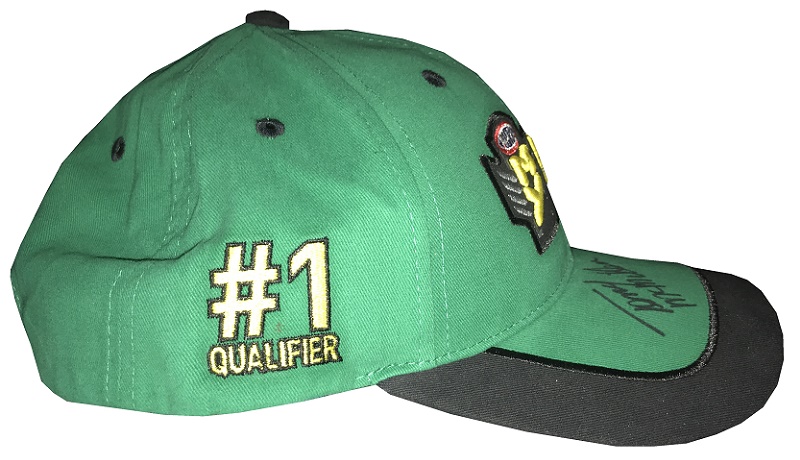
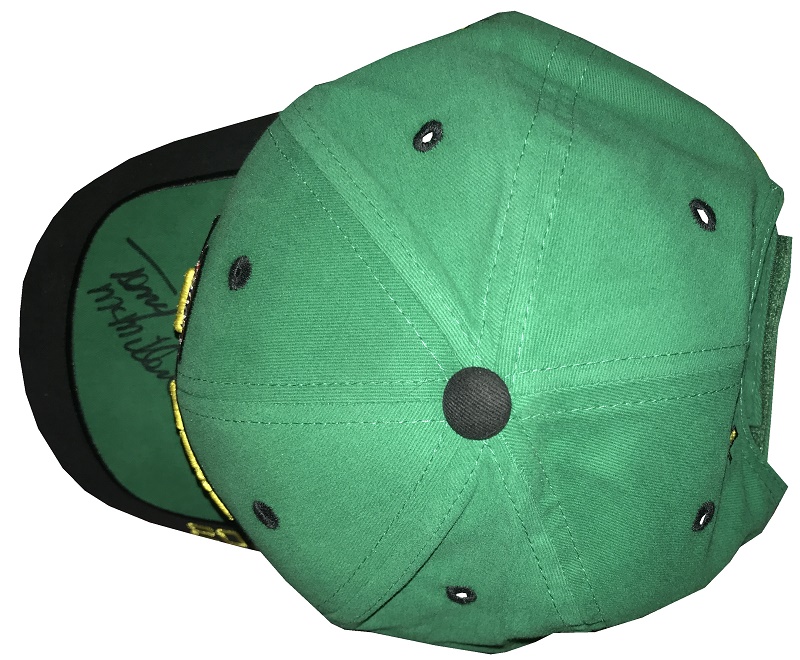
Like any racing series, The NHRA Mello Yello Drag Racing Series issued caps to drivers. The color of the caps was directly in line with when they were issued. Green was issued to #1 Qualifiers. Yellow was issued to event winners. White was issued to season champions. Other colors were issued as interview hats or race officials. We will look at the history of the NHRA Mello Yello Drag Racing Series caps, starting in 2013, and ending in 2020.
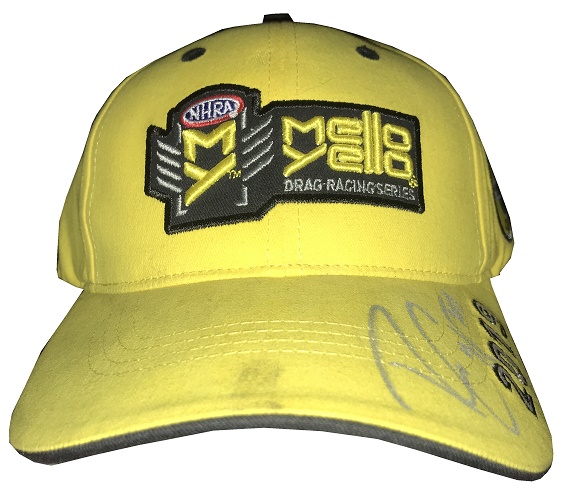
We will start with 2013, the first year of the Mello Yello Drag Racing Series. This yellow winner’s cap has been signed by all members of Don Schumacher Racing. The front has the NHRA Mello Yello Drag Racing Series logo, and 2013 embroidered on the bill. There is a Funny Car Winner patch on the left side, a hold over from the Full Throttle Days. The back has an NHRA logo embroidered, and normally the location of the track is embroidered in black on the Velcro strap. Finally, the right side of the cap is blank. The underside of the bill is plain too.
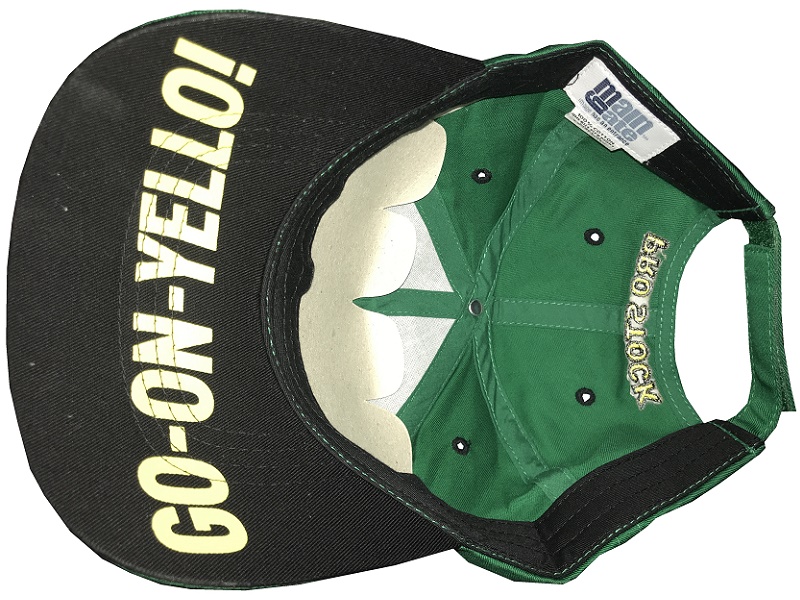
2014 saw some minor changes. It’s basically the same design, with a few differences. First, the black font on the brim has been replaced by white with black outlines. The phrase Go On Yello has been added to the under side of the bill, and the right side of the cap in the same font as 2014. Finally, the holes and squatchee have changed color from the color of the cap to black. This Shane Gray #1 Pro Stock is one example. The #1 Qualifier logo replaces the winner patch on the sides.
This yellow winner hat was issued to one member of Erica Enders’ crew after a win. This hat could have been worn at both Las Vegas, Houston, Bristol, Norwalk, Indianapolis, and the finals at Ponoma.
Erica would go on to win the 2014 Pro Stock Championship, and one of her crew was issued this white NHRA Mello Yello Drag Racing Series Championship cap. The cap has some changes to the formula, with the year and the side GO ON YELLO logos are in black. Erica was kind enough to autograph the cap at the Route 66 Nationals.
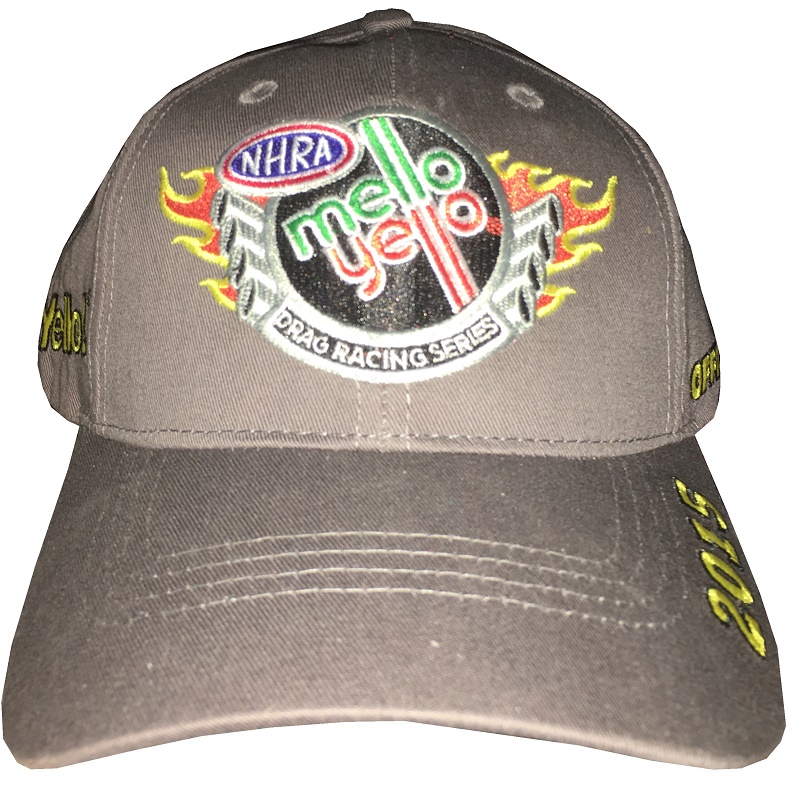
2015 would see some slight changes. The white with black outline font has been replaced with yellow with black outline font, as has the lettering on the Velcro strap. I think this is a better look. I got the hat autographed by a bunch of drivers over the years. This was won by Tony Schumacher at Bristol.
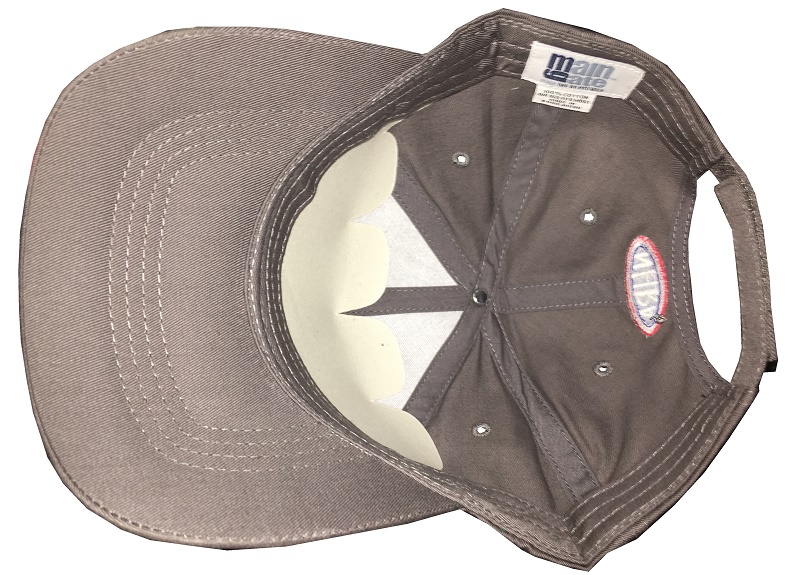
In 2015 the NHRA officials wore a different cap, which is a different shade of green. The left side patch has been replaced by OFFICIALS, and the under bill design has been removed.
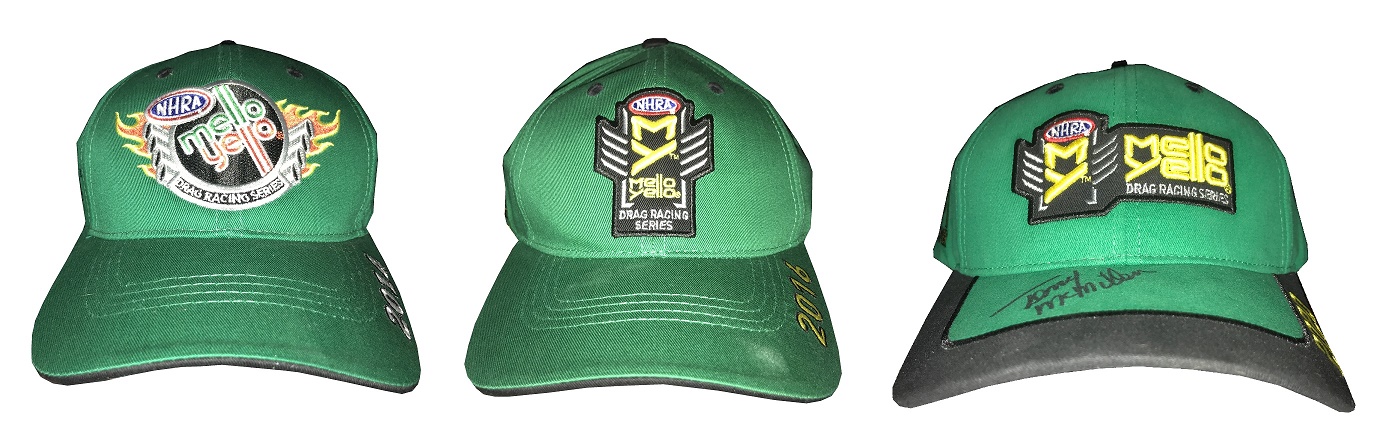
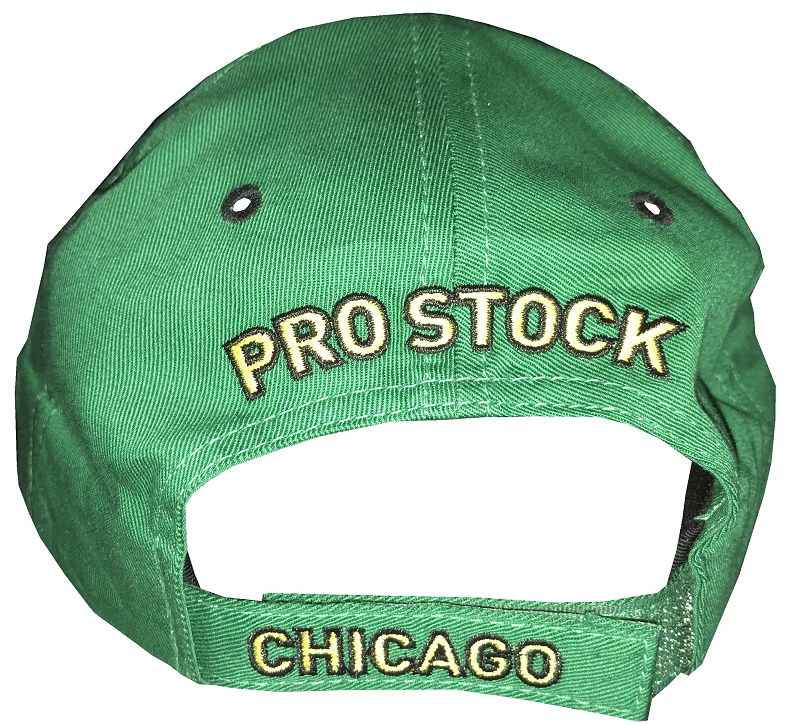
2016 brought a lot of changes. Mello Yello got a major rebranding, and the series got a new logo, which I think was a major downgrade. The caps got changes as well. The new logo is on the front. The yellow font has changed a bit, and on the qualifier caps, the #1 has moved to the right side. Also on the qualifier caps, the category has moved to the back. This Shane Gray hat from Chicago is an example.
Ron Capps won the 2016 Funny Car Championship. The Championship cap is same as the winner caps, with black replacing yellow lettering. Ron was kind enough to autograph this for me at Route 66 a few years ago.
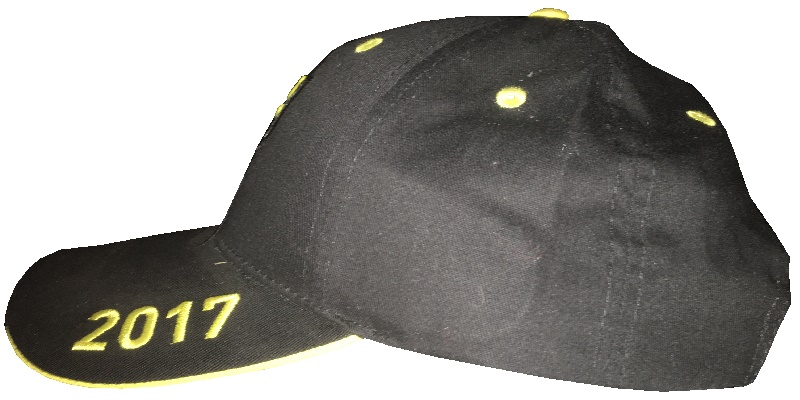
2017 saw very little change from 2016. This interview cap was given to drivers at the top end for interviews on television. It should be noted that after the rebrand, the only color cap issued to drivers was black. Prior, gray and orange caps were also issued.
2018 saw the second rebrand, with a new, and much better NHRA Mello Yello Drag Racing Series logo. There weren’t many other changes. This is an officials hat, which has an NHRA SALUTES FIRST RESPONDERS logo embroidered, and OFFICIALS on the right side in yellow lettering. There is also an NHRA logo printed on the underside of the brim.
2019 caps remain largely unchanged from 2018. This Ron Capps winner hat from Brainered is an example. It should also be noted that with all the changes made to these caps over the years, the category patch has remained largely unchanged. Capps signed this hat prior to my purchasing.
2020 would be the last year of the Mello Yellow Drag Racing Series brand. As a result of world health events, Coca Cola canceled a number of products due to low demand, and canceled some sponsorships, including the NHRA. This led to a lawsuit, and Camping World took over the sponsorship of the series. The 2020 caps feature an odd change. They remain largely unchanged from 2019, with the exception of a black outline on the front of the bill. The year logo has changed as well. This #1 Qualifier cap was issued to Terry McMillian for qualifying #1 at the third Indianapolis race. This is how the Mello Yello story ends. Not with a bang, but with a whimper.
NASCAR has a lengthy history in the United States. Founded in 1948, 72 years ago, NASCAR has taken stock car racing to new heights. Once a regional promotion, NASCAR is now an international powerhouse. NASCAR and their various series have logo histories that are interesting.
Let’s start with NASCAR itself.
1948-1968
The first NASCAR logo features a track-inspired oval design, with checkered flags, and two streamlined cars heading toward each other. NASCAR INTERNATIONAL is printed in black on the greenish-yellow oval.
1968-1978
A newer version of the logo is introduced. The oval is gone, the colors have changed from black and greenish-yellow to blue and white. The checkered flags have a much more pronounced, and a line motif is added to the back ground. NASCAR is on top of the cars, INTERNATIONAL is underneath them.
1978-2017
A brand new logo is introduced in 1978. A rectangle with NASCAR in white lettering, with various different colors in the negative space replaces the old school NASCAR International logo. A series of colored vertical bricks are on the left side of the logo.
2018-???
A much more toned down version of the previous logo, with different font is introduced during 2017, with much fanfare.
The Monster Energy NASCAR Cup Series has a unique tradition that stretches back to the 1970’s, the Series Logo. Series Logos are now commonplace in most forms of racing The evolution of the NASCAR Sprint Cup Series logo over the years in interesting.
1972-1981
This logo is designed in classic 1970’s design, and can be seen on driver suits, as this Dale Earnhardt Sr. example from 1980 clearly shows.
1982-1988
The “1 Car” logo was a major redesign, and features a logo, with NASCAR GRAND NATIONAL SERIES embroidered, and a 1980’s car. Very visible on driver suits from the era.
1989-1992
A simple Winston logo, which, while underwhelming is very visible on this Bobby Hillin Jr. Suit, and this photo of Dale Earnhardt Sr. from 1992…and look who is next to him!
1993-1996
Again an underwhelming yet attractive series logo. The interesting thing about logos from 1993-2001 is that there are two designs, red with white lettering that displayed better on light driver suits, and white with red lettering that displayed better on dark colored driver suits. Though the rule was rather ambiguous for a while.
1997-1999
This design went through some changes when Winston changed the design of their packaging. Starting in 1998, Winston went from a rounder typeface to a narrower and straighter typeface, as a young Tony Stewart is modeling.
1998:
Every team and driver ran the NASCAR 50th Anniversary logo on their cars and driver suits. Not bad at all.
2000-2001
A square design with an oval logo was used from 2000-2001, with the color-flipping returning. At this point, the discussion of who would replace Winston started, as due to legislation, cigarettes would not be allowed to sponsor auto racing within the next few years.
2002-2003
The transitional oval logo. The Busch Grand National series had adopted an oval logo in 1995, and since the series would change sponsorships in 2004, this new logo would be the bridge between the old and the new.
2004-2007
New sponsor, new colors, new shape. Nextell Communications took over in 2004 and it became the Nextell Cup Series. This logo would remain constant until Sprint and Nextell merged, which led to:
2008-2016:
Same color scheme, same shape, same basic design.
The logo has become a marketing point for NASCAR teams and NASCAR itself. Die casts, driver uniform coats, t-shirts, pit crew shirts, and many other items carry these logos.
2017-2019
Monster Energy takes over the series sponsorship from Sprint, initially for only one season, though two seasons were eventually announced. The new Monster Energy NASCAR Cup Series has a logo based on the new Xfinity Series. It’s a black rectangle, with the current Monster Energy NASCAR Cup Series.
2020-?
Starting in 2020, the Cup Series took a different direction with its sponsorship. Instead of one company sponsoring the Cup Series with exclusive rights for their field, four companies, Busch Beer, Coca Cola, Geico, and Xfinity sponsor the new Cup Series. Another welcome change is that the exclusivity aspect of the sponsorship is gone.
Now on to the NASCAR Xfinity Series
1982-1994
These two logos were used for the Busch Grand National series. The plain Busch logo worked better and was used more often than the Busch Beer Series logo.
1995-2004
An oval logo with the sponsor name, and GRAND NATIONAL SERIES added below. It was very marketable and worked quite well as a logo.
2004-2007
Grand National Series has been removed, and some minor redesigns to BUSCH and the NASCAR logo as well. 2006 featured the 25th Anniversary logo.
2007-2014
Complete redesign for the NASCAR Nationwide Series which began when Nationwide took over the titular sponsorship of the series. Uneven oval with a Nationwide logo, and a NASCAR logo, with a new overall design and color scheme.
2015-2017
Xfinity takes over the series sponsorship, and release an off-center oval logo, black outline with cutting edge designs on the black outline. The center is white, and features a NASCAR Xfinity Series logo.
2018-Present
With the new NASCAR logo came a new Xfinity Series logo, this one a black square with red designs and a NASCAR Xfinity Series logo replaces the oval.
Last but certainly not least the NASCAR Gander Outdoors Truck Series.
1995
For the first season, the Truck Series was referred to as the “Super Truck Series by Craftsman.” It featured a decidedly early 1990’s logo. It lasted for only one season.
1996-2002
The Craftsman Truck Series is a better name and the logo, while still bearing a 1990’s style design, is more refined and professional.
2003-2008
The entire logo is inside the oval, some minor color and typeface changes are present as well. 2005 featured the 10th Anniversary logo.
2009-2018
The same off-center oval design as the Nationwide Series and Sprint Cup logos, with a sponsor redesign for Camping World, who took over for Craftsman after 2009.
2019
Gander Mountain takes over from Camping World. They are both owned by the same company. This results in a new name, The NASCAR Gander Outdoors Truck Series, and a logo, this one with a black rectangle, outlined in blue, with a blue rectangle with white lettering.
2020
The series makes a slight change, going from the NASCAR Gander Outdoors Truck Series to the NASCAR Gander RV & Outdoors Truck Series, complete with new logo, adding RV into the logo.
2021
2021 would see the series rebranded yet again, the third time in three years, to the original Camping World Truck Series name, with an adjusted logo.
Next Friday Feature, the history of the NHRA Mello Yello Drag Racing Series in cap form!
This year is a little different than last year. In December, I left my previous job for a new job after almost 14 years. This new job didn’t work out. After some work, in early April, I got another job, which went as badly as it could go. As such, I went back to my original gig, but without my seniority, and without my paid vacation, which starts after a year. Never mind the fact that I spend the bulk of the time between January and April unemployed.
So this year, it wasn’t so much of a vacation from everything, as it was more of a social media break, which I need sometimes. This break was beneficial, as I was able to put together something that is going to keep The Driver Suit Blog alive…
I’ve been wanting to make this announcement for some time, and now that pretty much everything is in place, I can. Starting in 2022, I will become a podcaster! I’m taking The Driver Suit Blog and making Driver Suit Blog Radio, which will replace Friday Features! Come join me in discussing racing memorabilia, uniforms, aesthetics, sometimes non racing stuff, and we might even exchange muffin recipes! See you all in 2022!
What you are seeing here is a rough, rough draft, but I wanted to get the announcement out. I will do some test videos later this year, when all the infrastructure is in place.
Next Friday Feature will be the 2020 Series Logo edition.
Every good baseball team need a home for spring training. In 1959, the San Francisco Giants played their final game at Seals Stadium, a small, crowded, outdated facility in the Mission District of San Francisco. Starting in 1960, the Giants would play their home games at the brand new Candlestick Park. Giants owner Horace Stoneham renovated a large chunk of land near Casa Grande Arizona into a spring training resort named Francisco Grade, Francisco for the San Francisco Giants, and Grande for Casa Grande.
Francisco Grande hosted the Giants from 1959-1979, and during the resort’s early years, it became a desert refuge for Hollywood celebrities, like John Wayne, Pat Boone, and Gale Gordon. Willy McCovey, Juan Marichal and Willy Mays honed their skills at the ballpark, with Mays hitting a 375 foot homer in 1959. After the Giants left for Scottsdale in 1980, the facility wasn’t utilized until the California Angels came in 1982 through 1984. The Angels went all the way to the ALCS before losing to the Milwaukee Brewers. For those three seasons, the Angels prepared for the season, with talent like Reggie Jackson and Rod Carew working on the same diamonds that, 20 years before, Juan Marichal, Willy McCovey, Orlando Cepada, Gaylord Perry, Jose Pagan, Don Larsen and Willy Mays had utilized before their 1962 World Series Title.
When the Angels left, the facility was converted to a football field for the Arizona Wranglers and Denver Gold of the ill-fated USFL. Then it was converted into a golf course, which hosted a number of PGA events. Then in 2003, it closed for renovations. Two years and $8.5 million later, it has evolved into a world-class golf resort.
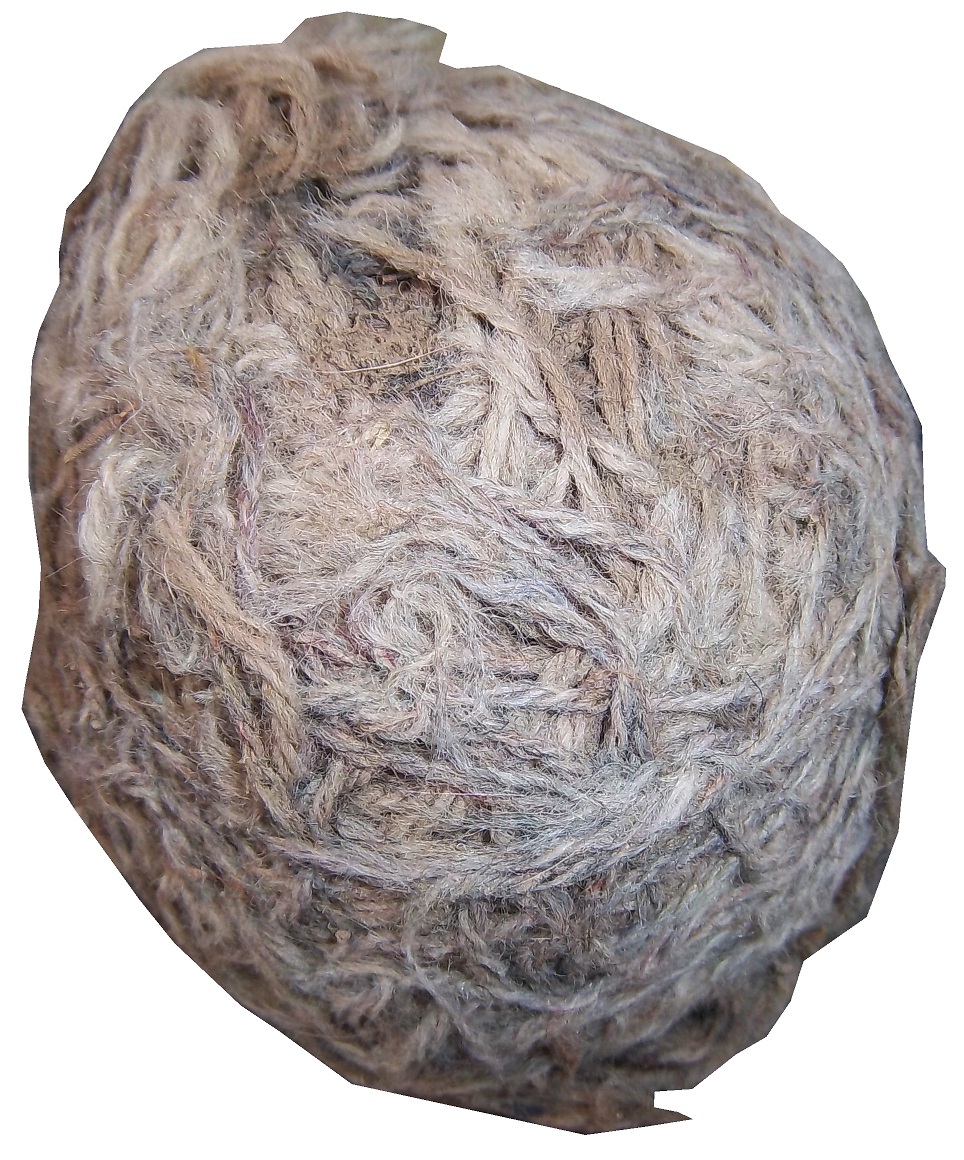
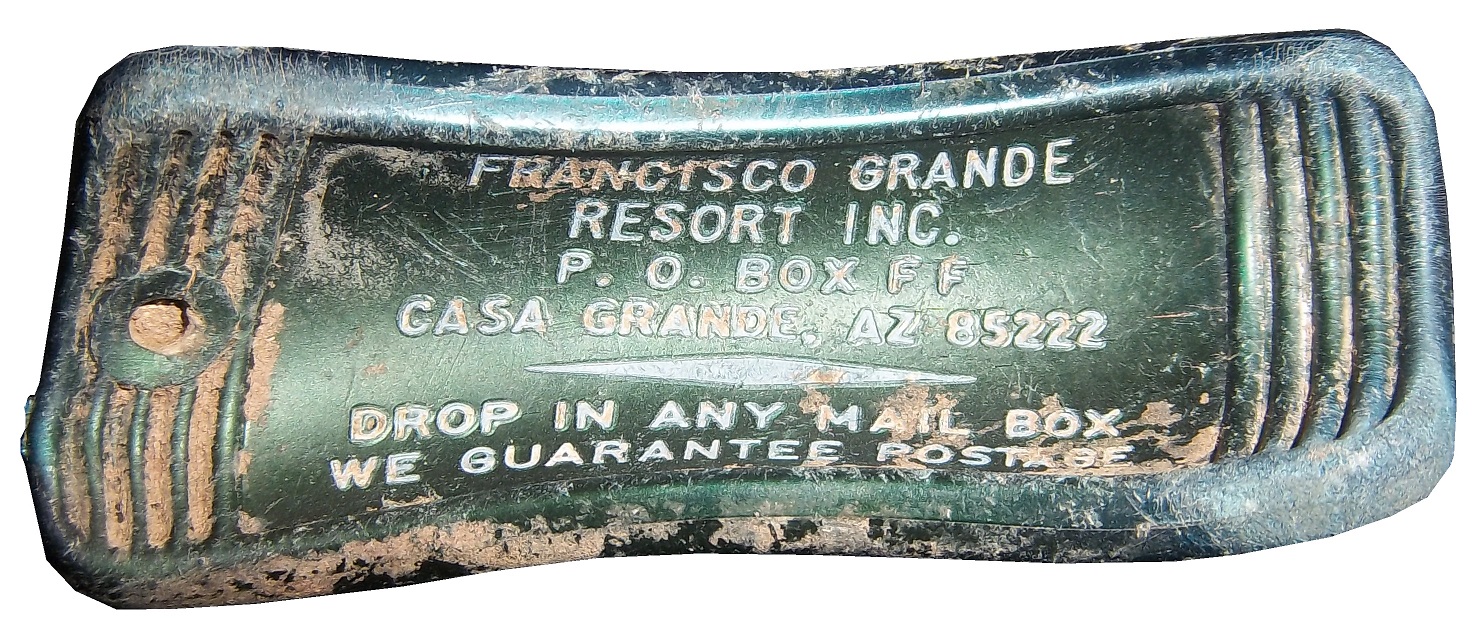
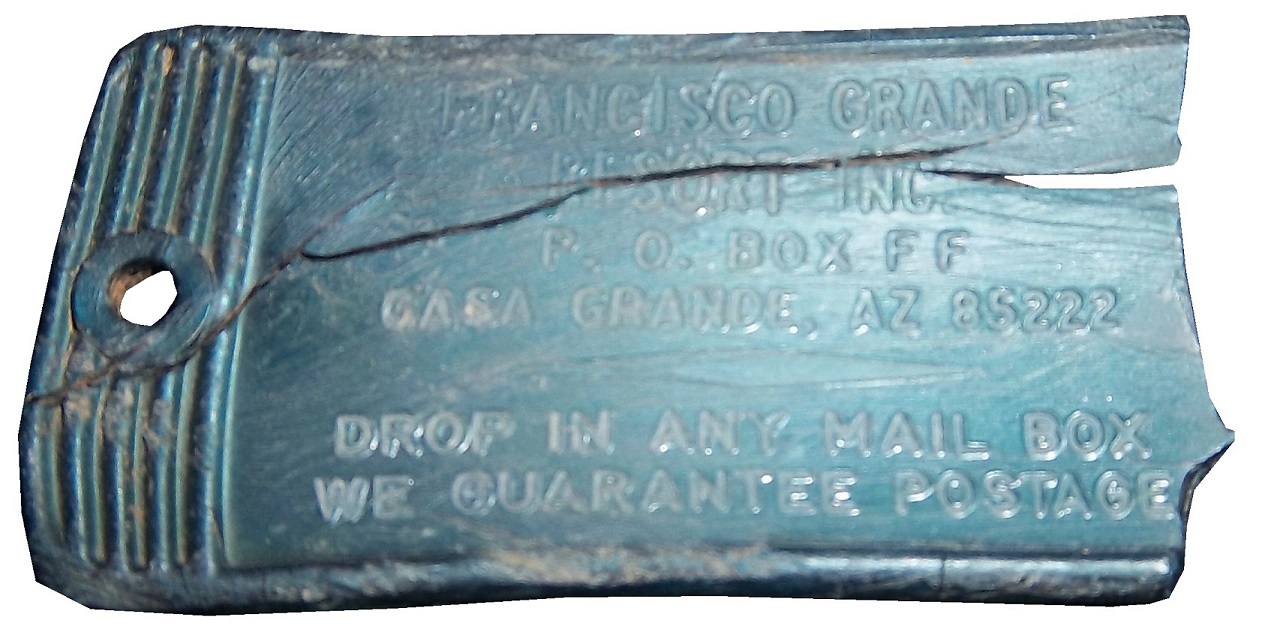
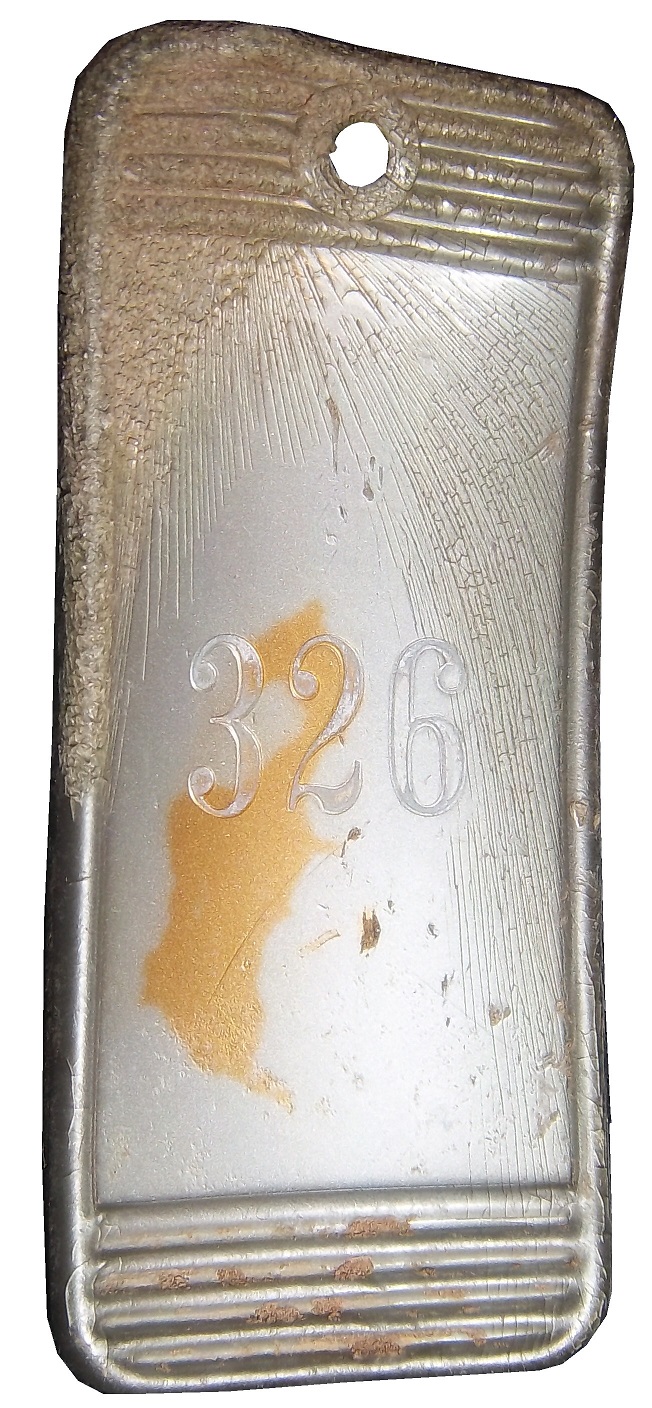
Most of the baseball equipment from the early glory days has been lost to history. Some of the home plates and equipment used is in a display in the resort. I acquired one of, if not the only remaining pitching rubbers from that resort. To think that Juan Marichal, Billy Pierce, Don Larsen, Gaylord Perry, Warren Spahn, Steve Stone, Vida Blue, or Tommy John used this pitching rubber is just mind blowing! It shows its age, but is still in decent condition. These baseballs were also rescued during the renovations. They have lost their leather covering and red stitches, but they clearly were there for a long time, and one can only dream of who used them… In additon there are also some hotel key tags from the days before plastic cards. When checking in, the front desk agent would hand the guest a key with one of these tags to let them know where their room was. These would be returned at the end of the stay. These were also rescued during the renovations, and many show their age as well.
The days of McCovey and Mays may be long gong, but the resort has risen anew. The success of the golf resort as well as the popularity of warm resort during the winter season has taken the resort from a humble ballpark to a world-renowned destination. The future looks as bright as the Arizona sun for Francisco Grande.
Founded in 1982, as the NASCAR Winston Racing Series, The NASCAR Advance Auto Parts Weekly Series is a short track series. The races all take place at short tracks, ranging from 1/4 mile to 5/8 miles. While some drivers go on to national series stardom, some are just weekend warriors. The kinds of cars allowed to race are left to the discretion of the tracks, leading to a lot of variety in the series.
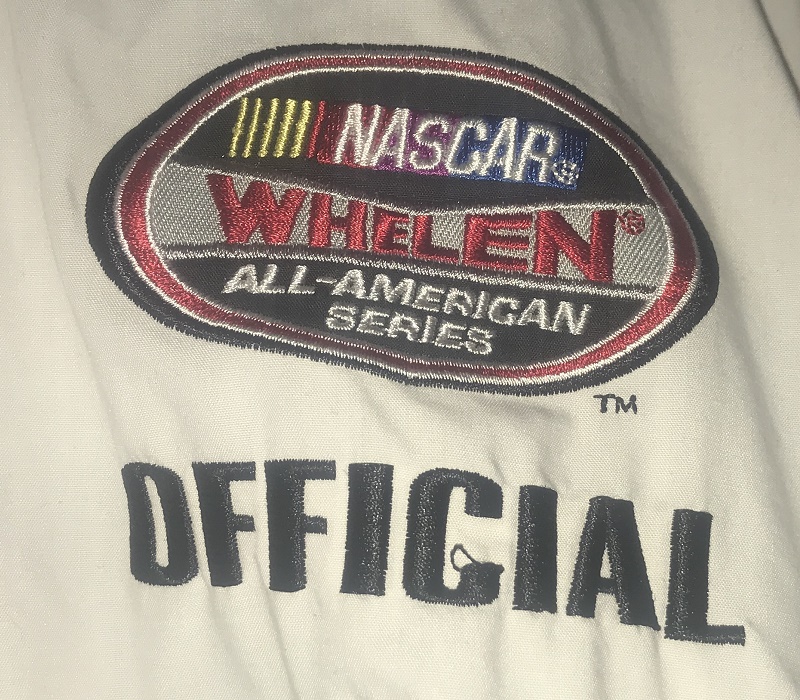
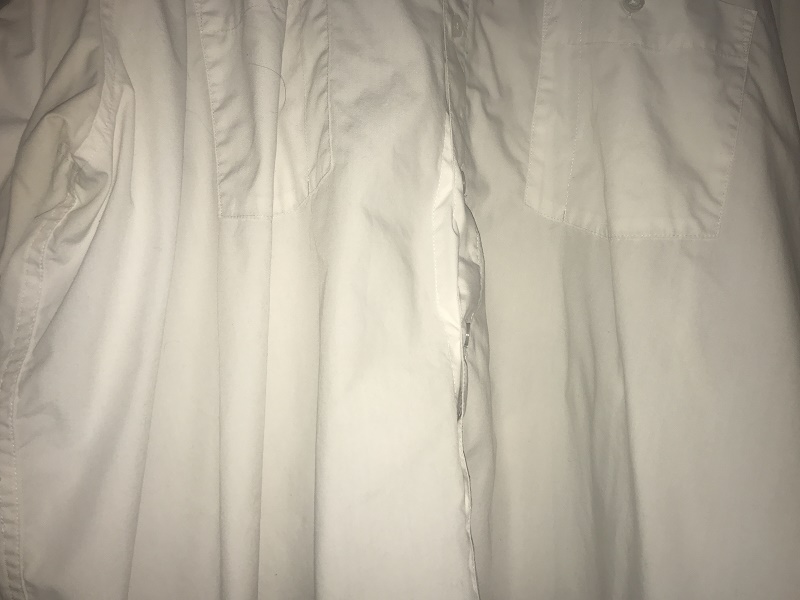
From 2006 to 2019, The Whelen Engineering Company, known for making warning lights, white illumination lighting, sirens, and controllers for cars, aviation, and civil defense, signed on to sponsor the series. The series became the Whelen All-American Series, at some point, a series official was assigned this shirt. This Oakley shirt shows some wear, with stains.
The green collar is unadorned.
There is an Oakley 5XL size and wash tag sewn in the cowl.
The right chest features a pocket.
The left chest features a NASCAR WHELEN ALL-AMERICAN SERIES logo, and OFFICIAL embroidered.
The front torso of the shirt features some light stains.
The shoulders have epaulets which feature the old NASCAR logo embroidered on the green.
The right sleeve features an Oakley logo, a NASCAR WHELEN ALL-AMERICAN SERIES logo, and OFFICIAL embroidered.
The left sleeve has an American Flag, a NASCAR WHELEN ALL-AMERICAN SERIES logo, and OFFICIAL embroidered.
The back of the shirt doesn’t show any wear.
The back of the neck is unadorned, but there is a small Oakley logo embroidered.
The back of the shirt has OFFICIAL embroidered in white on green, and a NASCAR WHELEN ALL-AMERICAN SERIES logo embroidered in the white.
So for July, I will be taking my yearly sabbatical, and I will have two Friday Features ready to go.
While many people fondly remember The NASCAR Winston Cup Series, I think a lot of people forget how instrumental Winston was in NASCAR’s eventual success. In 1971, Winston and NASCAR came together, NASCAR needing promotion and money, and Winston with the ability to provide both. Since Winston is based in Winston-Salem, North Carolina, it was also seen as a natural partnership. Winston and NASCAR had a partnership until 2003. The partnership was canceled due to the Tobacco Master Settlement Agreement signed in 1998. The change did not, and still does not sit well with longtime fans.
Winston’s commitment to NASCAR and auto racing in general was nothing, if not fully committed. Winston used NASCAR to promote their products on television, even though cigarette commercials had been outlawed in America since 1970. One oddball thing that Winston did was to start promoting the 25th Anniversary of the Winston Cup Series in 1994, a year before the actual anniversary. They decided to do this using Winston Cup Champions on limited edition matchbooks. This promotion was never finished, and only a fraction of the champion matchbooks were ever released.
I recently opened a tin of these matchbooks on my YouTube channel.
These are the contents of the tin. The tin comes with a purchase of two packs, there is a metal tin in a cardboard box. Inside the tin is a wrapped package, and some promotional materials.
One of the promotional materials is a card to mail in for free gifts from Winston Select.
The other promotional item is a small catalog of Winston-branded items. These are bought using points from purchasing Winston products.
The main package contains 50 different matchbooks which represent a total of 12 different Winston Cup Champions. The drivers represented are as follows:
Richard Petty 1972
Benny Parsons 1973
Richard Petty 1975
Cale Yarborough 1976
Darrell Waltrip 1982
Bobby Allison 1983
Terry Labonte 1984
Dale Earnhardt 1987
Bill Elliott 1988
Rusty Wallace 1989
Dale Earnhardt 1991
Alan Kulwicki 1992
Why these were never followed up on is unknown, but I’m willing to bet that it had something, maybe a lot to do with the fact that the legal system was cracking down on cigarette promotions, and this was a casualty. In my mind, there is no other possible reason, at least that makes sense.
So the 2021 Throwback Race at Darlington has come and gone. I’m going to do my usual throwback grades. Usually, the top pick will win the Paint Scheme Award for Best Throwback, but if something better comes along, it will take first place. We have a lot of season left. So, without further ado, my ranks:
I’m going to knock this one down because I hated the original. I loved the classic black Winn-Dixie scheme, but the flames one is awful. Still, it’s a faithful throwback, so I’ll give it a B.
This is one that, while it looks good, I don’t get. It’s clearly inspired by 1969-1970’s designs, but if it is there to commemorate Camping World’s 55th anniversary, it should look like it is from 1966. It’s not bad, I just don’t get it, so I’ll give it a B.
You can’t collect racing memorabilia without talking about equipment. The parts and pieces that make the car go, are just as important, and interesting as most other racing memorabilia.
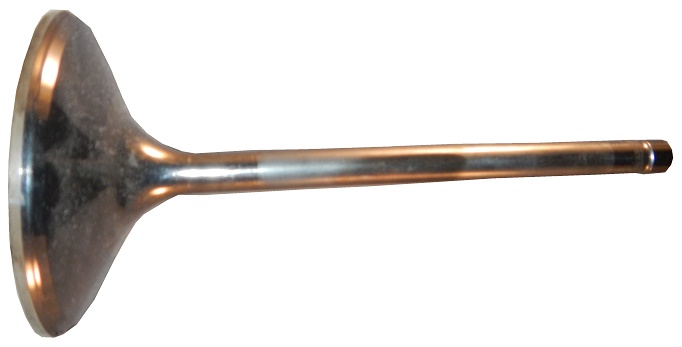
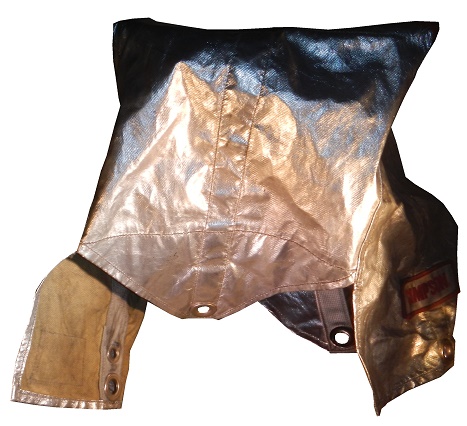
One incarnation that Don Garlitts worked with before he settled on Swamp Rat XIV was Swamp Rat VIII. Swamp Rat VIII was built in 1964. Swamp Rat VIII was designed to use the Dodge 426 Elephant Hemi engine. The 426 was a lot harder to tune than the old 392, so Garlitts did not have a good year, though once he figured it out, it was an impressive car. The 426 Hemi was such a good design, it is still the car used by the NHRA to this day, in Top Fuel and Funny Car. Garlitts cut the car in half, and used the front half to make Swamp Rat X. In 2005, Garlitts rebuilt the car, and in 2006, took it to a few vintage races. This is a set of spark plugs pulled from that recreated car. The set of 8 plugs comes in a Styrofoam case, which has been autographed by Garlitts. Each plug shows some wear, some more than others.This is a spark plug from Morgan Lucas Racing.In 1970, Johnny Rutherford raced an Eagle chassis with an Offenhauser engine. He didn’t score a win, and had 3 DNS’s. These plugs came from that Offenhauser engine. They have been mounted to a wood display, with a small paper sign.When the race is on, a thousand things can go wrong with the car, especially the engine. One of the most common pieces of equipment to go wrong is with pistons. Top fuel and funny car pistons generate 1,250 horsepower each. If they aren’t aligned right, aren’t lubricated enough, or something is wrong, that can cost the driver a win or even a championship. This example is a piston head used and autographed by Brandon Bernstein. It was only used for one run, but shows some light use, and is in good condition.Now let’s look at an interesting Del Worsham piston from 2002. The story behind this piston is interesting. At the 2002 Checker Schuck’s Kragen Nationals at Firebird International Raceway, Del Worsham beat John Force in the final. Worsham temporarily denied Force his 100th event win. This mangled piston wrecked the engine block during that run. The piston chewed the block and itself up during that final run. Part of the piston arm is still wedged inside the piston, and one side is almost completely gone.Brainerd International Raceway in Brainerd, Minnesota isn’t known as a place where records get broken. In 2015, the big highlight for funny car at Brainerd was Del Worsham vs. Matt Hagan in an elimination round. During that run, Hagan ran a blistering 3.879 second elapsed time. This piston head came from Hagan’s car during that historic run.This piston shaft was used and autographed by Bob Vandergriff.Valve springs help the opening and closing of the valves at the speed the engine requires. These are three examples, one from Cruz Pedregon, and two from Paul Lee.On the subject of Paul Lee, these are what are known as manifold burst panels. These are specifically design to burst when the pressure in the manifold gets too high. They are meant to sacrifice themselves to save the engine.I also have this head gasket from Paul Lee. NHRA engines are sealed systems, under a lot of pressure and heat. Expansion of engine parts will occur, and copper head gaskets are used to keep the seal intact. They will expand with the rest of the engine. This is an example Paul Lee’s funny car. It is bent, and shows staining from race wear.This is a head gasket from Morgan Lucas. It shows decent wear.At Route 66 in 2014, I got this ignition coil from Morgan Lucas Racing. Ignition coils are used to turn on cars in general, but this MSD 8142 is designed to fire up these 11,000 horsepower engines, which need a lot of electricity to start and operate. I was fortunate enough to have Tony Schumacher and Ron Capps autograph it in person. I have this timing belt from Bob Tasca’s Motorcraft Funny car, this one used in his first qualifying session at the Ford Thunder Valley Nationals in Bristol Tennessee. This run he had a 4.15 second, 306 MPH run. This thing is HUGE, measuring over 64 inches in circumference and 3 inches across. Pistons in an engine need things to function. An example are valves, and valve springs. The valves move in conjunction with the movement of the pistons. One set introduces fuel and air into the engine, and the other set removes exhaust from the engine. These examples are from Bob Tasca’s funny car.This burnt hose cover is a perfect example of why Nomex is the go-to material for driver suits. This Nomex hose cover went through a serious fire, and was burnt. Nomex isn’t fireproof, it’s fire retardant, which means it will burn, but much slower than most fabrics. It will burn, but will protect whatever it is covering from fire damage for a brief time. The easy way to see if the material has been compromised is if the fabric is discolored. Notice the areas of light on the black fabric, that means that area of the fabric has been compromised.This Jimmie Johnson spark plug is part of a display which features other parts, specifically a piece of the track bar, a lifter, a valve spring, and a piece of sheet metal. Part of the plug has been modified to make the plug useless. Interestingly, sometimes oil was sold to collectors, as is evidenced by this display of oil from Kyle Busch’s #18 Toyota Camry when he won the 2009 Shelby 427 at Las Vegas. The package is about 5 inches long by 3 inches wide. Inside the box is the display. It has a small oil drum with a small amount of motor oil. The oil has a thick viscosity, which is needed because of the wear that Cup engines produce during a race. The COA comes in the box, and states that this is #359 of 504.Let’s switch from engines to wheels. I have a brake rotor used by John Andretti in the 1998 Bank of America 500 at Charlotte, which has been signed by Richard Petty. In 2014, at the U.S. Nationals, TJ suffered a major engine explosion. He still has the blower drive seen flying in the video. I wound up getting one of the rear tires from that race. Rear tires from top fuel dragsters are 3 feet tall by 17 inches wide. I’m planning on getting a glass to and making a coffee table at some point. The level of wear on the tires is amazing, with large patches of damage from the explosion. TJ also signed it and personalized it to me!I also got a front tire, which is 22 inches tall, by 3 inches wide.These tire covers are meant to protect the tires from the shade. Why is this important? Well tires are 36 inches tall by 17 inches wide. These races often take place in bright sunlight on hot days. If there was no shades, tire pressures could be very uneven, and as a direct result, the tire wouldn’t race as well, and there could be safety issued. These are designed and marketed by Jeg’s. These are designed for top fuel dragsters. Funny cars have a square piece that covers the wheel on the body.Tires can be purchased whole, but since they can weigh as much as 90 pounds, they are often cut up and the pieces are sold, like sheet metal. This example, used by Kevin Harvick in the 2002 Daytona 500 is an example. it gives a good example of the thickness of the tire.Race-used lug nuts go hand in hand with tires. Lug nuts are used once, and then sold after the race, such as these Tony Stewart examples. Lug nuts are Super glued to the rim, and one of these still has superglue residue on it. Moving away from the wheels, this is a parachute bag used by Frank Pedregon Jr. It’s designed to hold the parachute on the back of the car, and was from the car when Frank hit Scotty Canon.One of the best tools at a drag racer’s disposal is the parachute, and for Scelzi, that was no different. You can’t be the first driver to reach 330 MPH in a funny car without a good parachute to stop the car. Scelzi raced with many different parachutes throughout his career, and this 12′ x 12′ Mopar example from his days with Don Schumacher Racing. It shows heavy use with numerous scuff marks, and holes.One of my big gets was a TJ Zizzo Peak parachute. Zizzo ran two of these chutes on the back of his dragster from 2010 to 2013., and this example is 12 feet by 12 feet. It shows a decent amount of wear, with stains and holes. There is a hole in the center that allows the chute to be deployed, and there is an inventory tag placed here as well. On the cables connecting the chute to the car, there is some extra protection. This is necessary because on top fuel dragsters, the engine is very close to the parachute attachment, and in the event of a fire, the chute will still be able to function. This shows some wear on the silver layer.Pilot chutes are universally used to deploy parachutes. When the cords are pulled, and the chute is released, the pilot chute deploys, which catches air and pulls the primary chute behind it. The chutes are strapped to a bar at the back of the car, and are covered in Nomex to prevent fire damage, then packed into a bag, before the race.This is a carbon fiber dashboard from a Cup car. It is very light, and SFI Certified.When KV Racing Technology folded, they sold off their assets, including this digital fuel pump, which still works.Next week, the 2021 Throwback grades!