The Driver Suit Blog-A Dave Mader Suit of Unknown Use

By David G. Firestone

Hailing from Maylene, Alabama, Dave Mader III was a driver who had some success in the lower echelons of auto racing, but on the national level, didn’t really do much. He beat Mark Martin at the 1978 Snowball derby. He also scored four consecutive championships in the All-American Challenge Series win the 1991 Michigan ARCA 200, and had one top 5, and 9 top 10’s in the Xfinity Series, but his career results are otherwise unremarkable.

Coming off a 1992 where he raced 10 races in the Cup and Xfinity Series, it looked like Dave would have a ride for 1993. While he did race in the NASCAR Southeast Series, he didn’t race in the Cup Series again, though he did race in other series. This Simpson custom made double-layer suit was prepared for Mader sometime in the 1990’s. I’ve noticed something odd about the Winston Cup logo, but more on that later. The suit was worn, as it shows decent use, including stains on the yellow stripes.The collar is a Velcro version, and is black outlined with yellow piping.The standard Simpson warranty label is in the cowl.On the right chest, there is a zippered pocket. On that pocket are a couple of Simpson patches, and DAVE MADER embroidered.On the left chest, there is a NASCAR WINSTON CUP patch circa 1993-1996. The patch is covering something on the suit, but I can’t figure out what it is.The front torso is unadorned, except for the quilt pattern.The black belt is unadorned, except for the white stitching.The legs have white and black stripes up the side that extend to the arm pits. They have no logos, and are boot cuffs.The shoulders have black epaulets, outlined in white piping. The right sleeve is unadorned, except for a small Simpson patch near the cuff. The left sleeve is unadorned. The back of the suit is unadorned, and doesn’t show any wear. It’s rare that I’ve encountered a suit where I can clearly tell it has been used for some time, but not been able to find out anything more than that. Simpson stopped adding flag tags indicating when the suits were made around the mid 1990’s. The Winston Cup Series patch would date it 1993-1996, but since it appears the patch was added at a later date, this doesn’t help much. I’m going to go with what I have already, since I’ve hit the wall in terms of what and where I can search.

Next week, a pair of Ryan Newman autographed gloves.

The Driver Suit Blog-NASCAR Napkin Rings Revisited

By David G. Firestone

The tradition of giving special rings to teams that win championships in sports in the United States dates back to 1922. After winning the World Series, the New York Giants issued the first championship ring, and the trend has caught on. In the 1990’s a new form of this trend came in to wide spread use in NASCAR, the championship napkin ring.

I’ve talked about NASCAR banquet rings before. They just fascinate me. I’ve understood the significance of championship rings, who doesn’t. But I’ve never seen these kinds of rings before, where they were enlarged, and used at the banquet as napkin rings until I came across these NASCAR example.

These over sized rings were used as napkin rings for team banquets and then the attendees were allowed to keep them. They were awarded for winning a race, and designed in the same style as championship rings.

In 1993, he won the Daytona 500, the race came down to the white flag as Dale Jarrett passed Dale Earnhardt in what became known as “The Dale and Dale Show.” With his father Ned in the broadcast booth calling the race, Dale Jarrett won the race, his second career victory. His first, incidentally, came at Michigan in 1991, while driving by the Wood Brothers. This ring was made for the banquet. It shows some wear on the inside. The top is a traditional design, one side has a picture of Dale Jarrett, his signature and #18. The other side has a picture of the car sandwiched in between INTERSTATE BATTERIES RACING and JOE GIBBS RACE TEAM. The inside shows some wear in the form of spots. In 1994, he won his third race, the Mello Yello 500 at Charlotte Motor Speedway. He won after an engine failure claimed Geoff Bodine and a late crash destroyed the cars of Ricky Rudd and Jeff Gordon. This ring, almost identical in design to the Daytona 500 ring was prepared for the banquet. The only difference is that the #18 in the center of the top of the ring is in yellow, as the race was sponsored by Mello Yello. The small spots on the Daytona 500 ring are present here as well. This next one is from the 1995 Coca Cola 600, which was won by Bobby Labonte. During that race, he started 2nd, led 85 laps, and his brother Terry finish second. It was his first Sprint Cup win, and is done in a gold colored metal, with Labonte’s image, car number and signature on one side, and an image of his car on the other side. It briefly spread to Roush Racing, where, at the 1997 banquet, these rings were issued to Jeff Burton’s crew for his victory in the 1997 Hanes 500 at Martinsville. During that race, he started 10th and led 92 laps. This silver ring with an enameled 99 logo, a Roush Racing logo, car logo and signature on one side, and an Exide Racing Team logo, and crossed checkered flag logo on the other side. In 1997, Texas Motor Speedway hosted their first race, the Interstate Batteries 500. The event saw Dale Jarrett on the pole and Jeff Burton winning the race. This proves my theory that Interstate Batteries was behind the rings. This pewter ring was prepared for the race. I haven’t been able to figure out if this is was used at a banquet, or was sold in the gift shop. But it’s nearly identical design and style is hard to ignore. Since Interstate Batteries was doing this for Joe Gibbs racing before this race, and then this ring was made for that race, there is no doubt in my mind that Interstate Batteries was the driving force behind that.   Above and beyond that, it makes sense that Jeff Burton’s team would do that, since at that time, they were sponsored by Exide Batteries, a competitor to Interstate. Exide had to have found out what Interstate was doing, and once Jeff Burton began winning races, Exide decided to join in the fun. It would also explain why there don’t seem to be any examples of any other teams making these rings besides Joe Gibbs Racing, and Roush Racing. 

Ok, now with that out of the way, let’s stay in 1997, and look at a new design that Bobby Labonte’s team was given. The 1997 Napa 500 at Atlanta was the season finale. Jeff Gordon won the championship over Dale Jarrett by 14 points. Bobby Labonte won the race. It’s the same design as the other rings, except it is made of pewter. The material change is very evident in that it shows scratches and more chips than their brass counterparts.   Pewter didn’t last too long, and they switched back to brass by 1999. By 1999, the rings were redesigned as well. The driver profile hasn’t changed, but on the other side, a new logo design takes over the car logo. The crest of the ring has a bigger #18 and a glaze around it, instead of a cheap enamel.
The silver color returned in 2000, which culminated in Bobby Labonte winning the NASCAR Winston Cup Championship over Dale Earnhardt. One of the four races he won was the 2000 Dura Lube / Kmart 400 at Rockingham. This brand new design was prepared. A new #18 panel was designed, with the sponsor panel unchanged. The crest has been redesigned with car color on the stone area, and bigger lettering on the front. 5 years later, in 2000, Labonte won the won the 2000 Dura Lube / Kmart 400 at Rockingham.  He started third, and led 134 laps.  This napkin ring was made as a response.

Also in 2000, Bobby Labonte UAW-GM Quality 500, again at Charlotte Motor Speedway. He started 2nd, and led 37 laps. This ring was given at the banquet to the attendees, it is silver, with an enameled Interstate Batteries logo on the top, Labonte’s name and car number on one side, and Interstate Batteries and Joe Gibbs Racing logos on the other side.

Next week, a vintage driver suit.

The Driver Suit Blog-The Goal of All Athletes In Their Respective Sports

By David G. Firestone

Anyone who plays sports, or competes in competitions does so with one goal in mind…winning. They will say they do it because it is fun, or for the love of the game, but they really just want to win. To the victor go the spoils, and the spoils include pride, bragging rights, and the trophies.

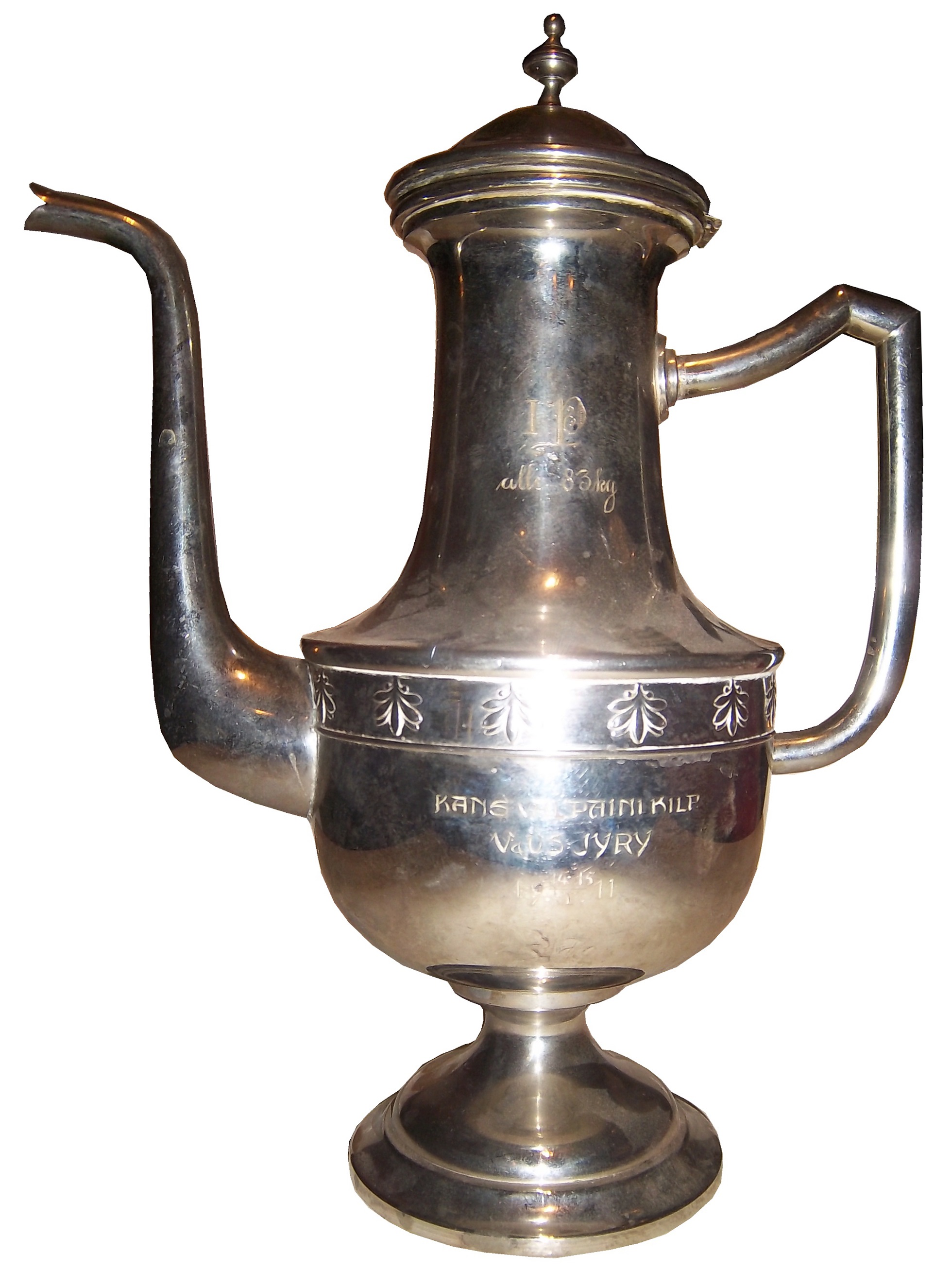
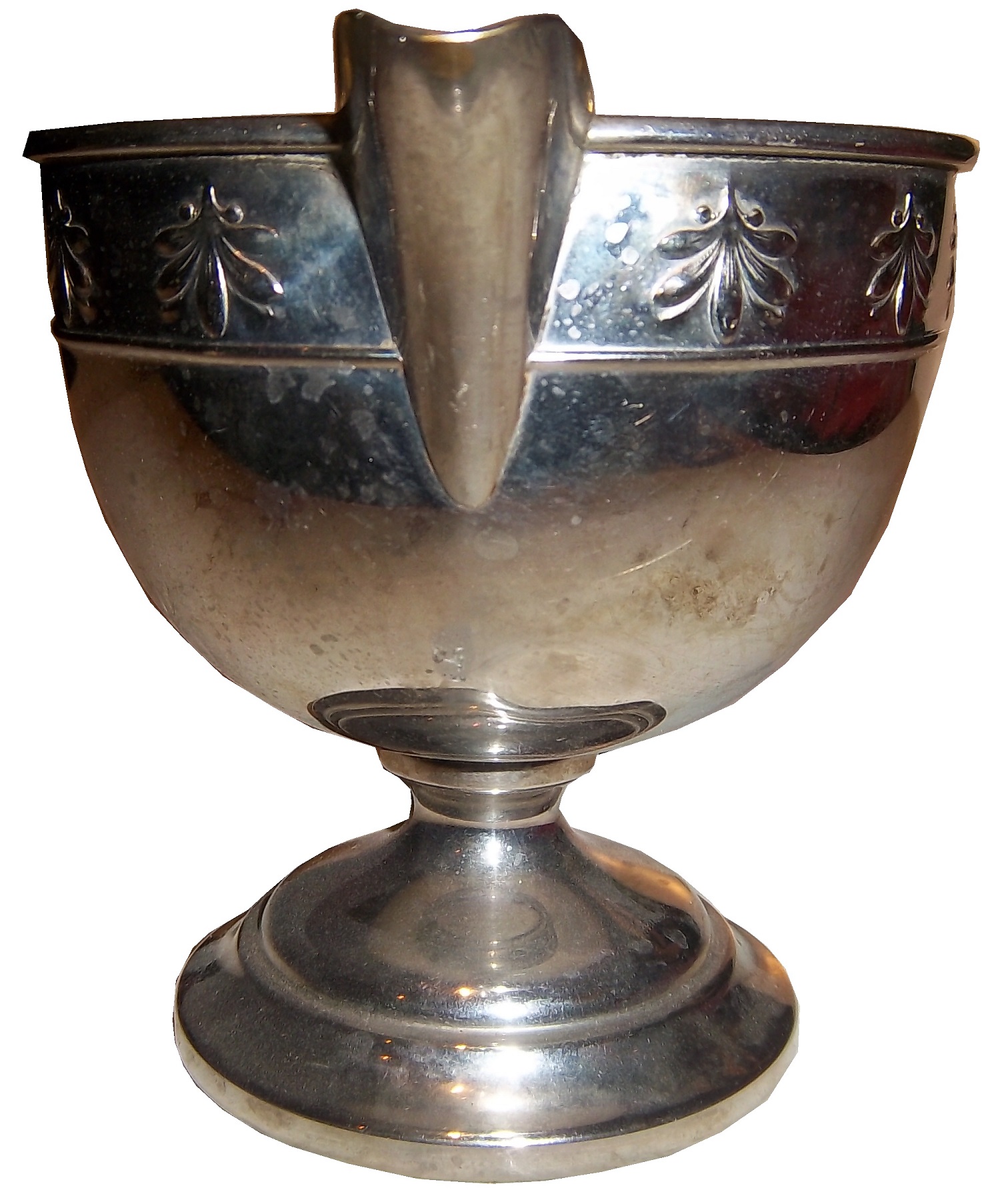
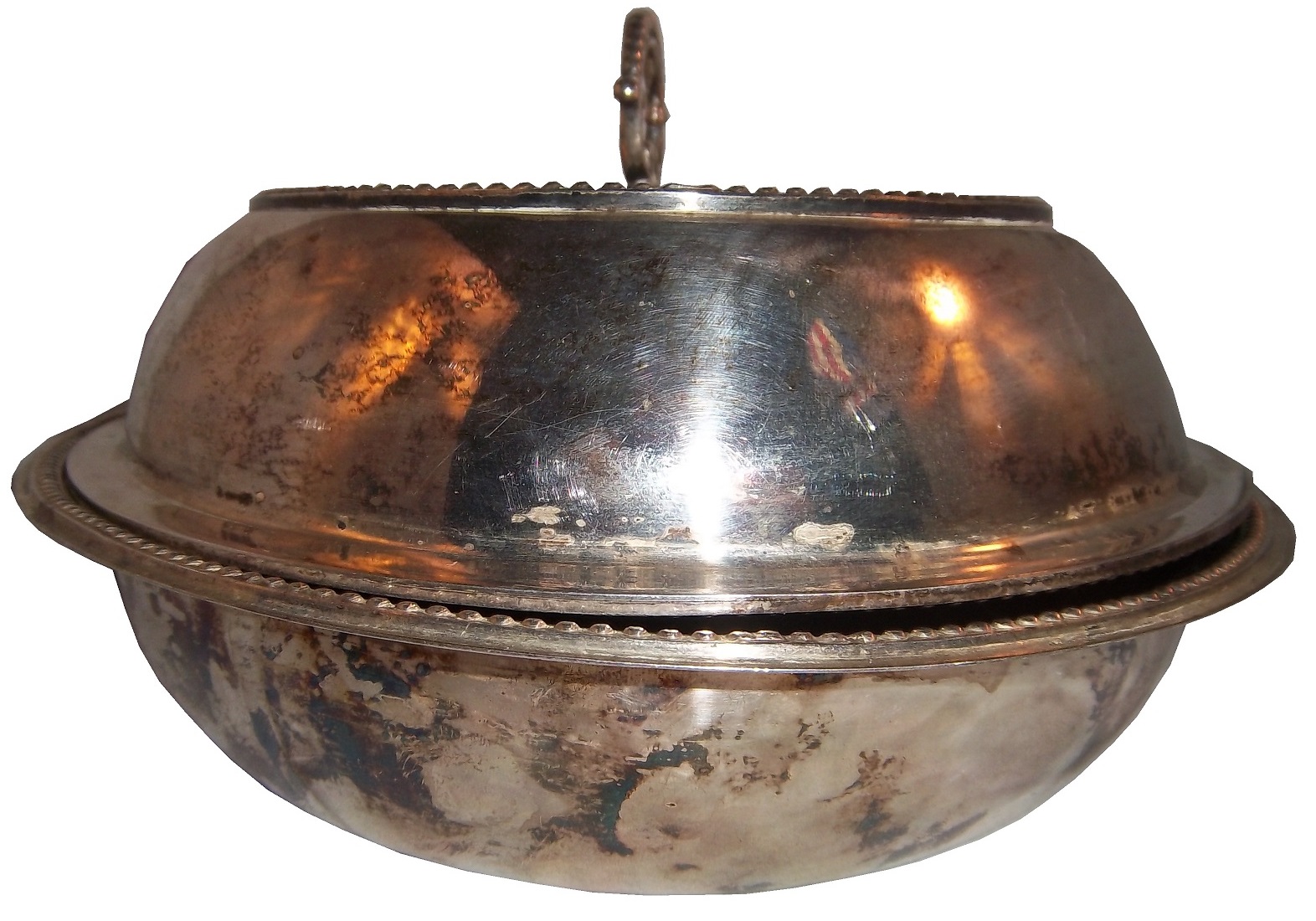
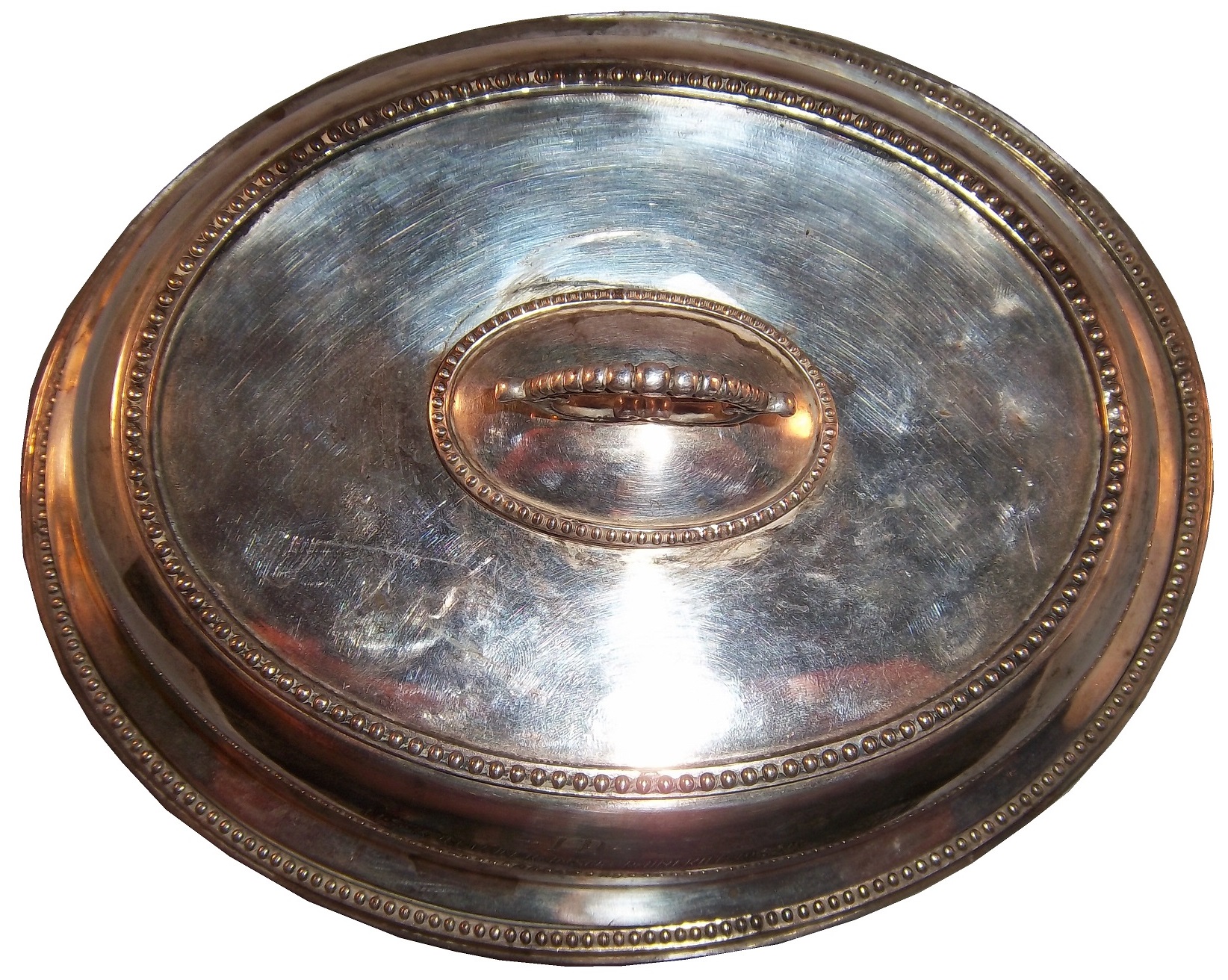
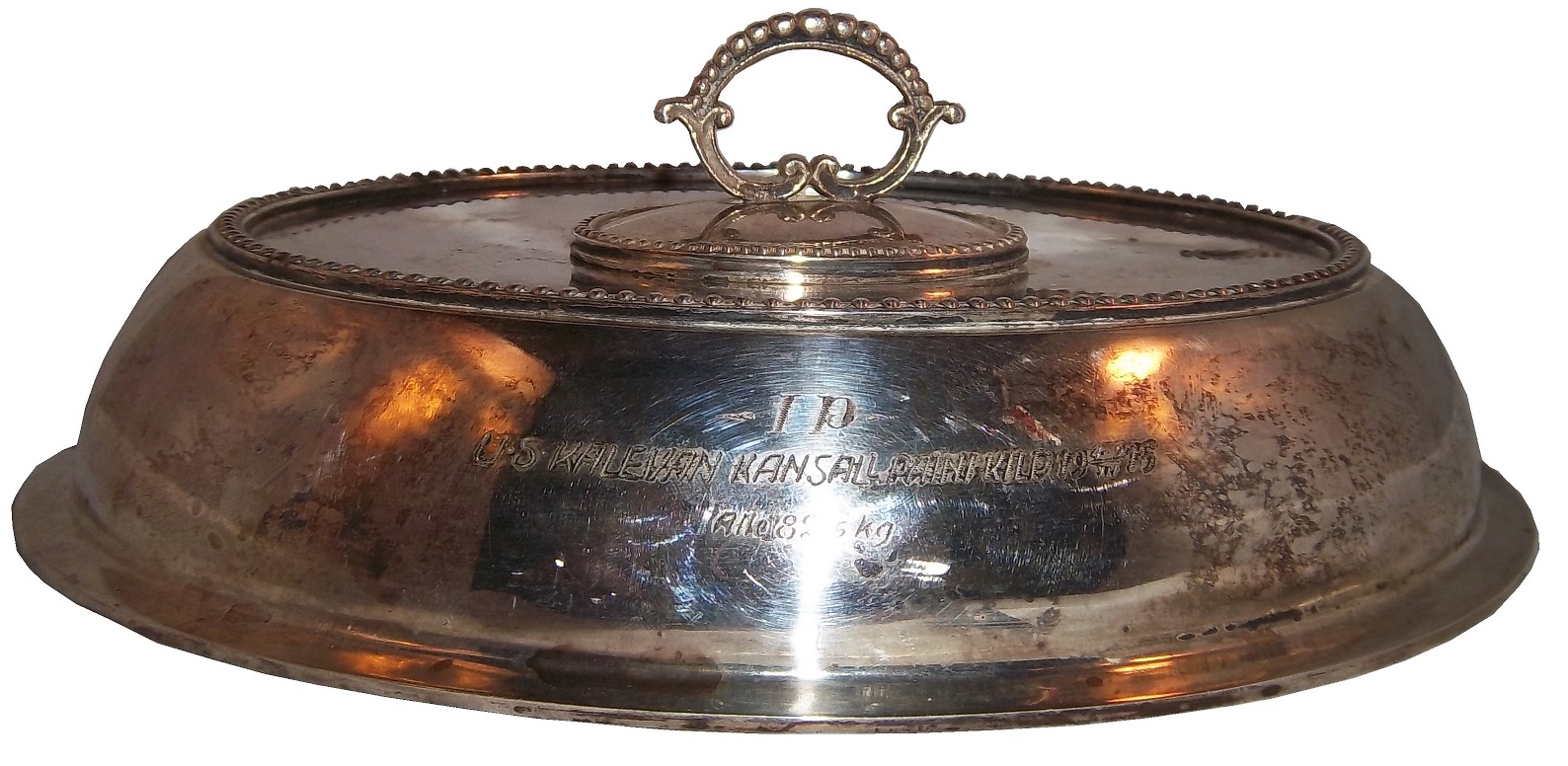
Trophies can come in many shapes and sizes. Many older trophies combine form and function, in that they serve every day functions, such as this tea service from 1911. It consists of a tea pot1914-tea-service-2, creamer1914-tea-service-11, and sugar bowl. 1914-tea-service-18It was won by a wrestler for a first place win at an event, and the pot has “1P, alle 83 kg, 1914-tea-service-41914-tea-service-3Hans Van Paini Kilp, V&Us Jyry 1911, 14,15” engraved into it. Kans Val Paini Kilp means Kansainvälinen Paini Kilpailu or international wrestling competition.  The handle of the pot has become detached at the bottom, and evidence of repair work is evident1914-tea-service-6 1914-tea-service-5. The pot also shows signs of age, with numerous scratches, scuffs, and chips.1914-tea-service-7 1914-tea-service-8 1914-tea-service-6 1914-tea-service-10 1914-tea-service-9 The matching sugar bowl is in much the same state, but overall is in good condition.1914-tea-service-16 1914-tea-service-17 1914-tea-service-18 1914-tea-service-19 1914-tea-service-20  The creamer has a dent in it, just under the spout, and shows the same age wear that the tea pot and sugar bowl show.1914-tea-service-11 1914-tea-service-12 1914-tea-service-13 1914-tea-service-14 1914-tea-service-15 The really interesting thing is that I have an original cabinet photo, taken in Helsinki Finland where Hans can be seen with this very tea service.1914-tea-service-21 1914-tea-service-22

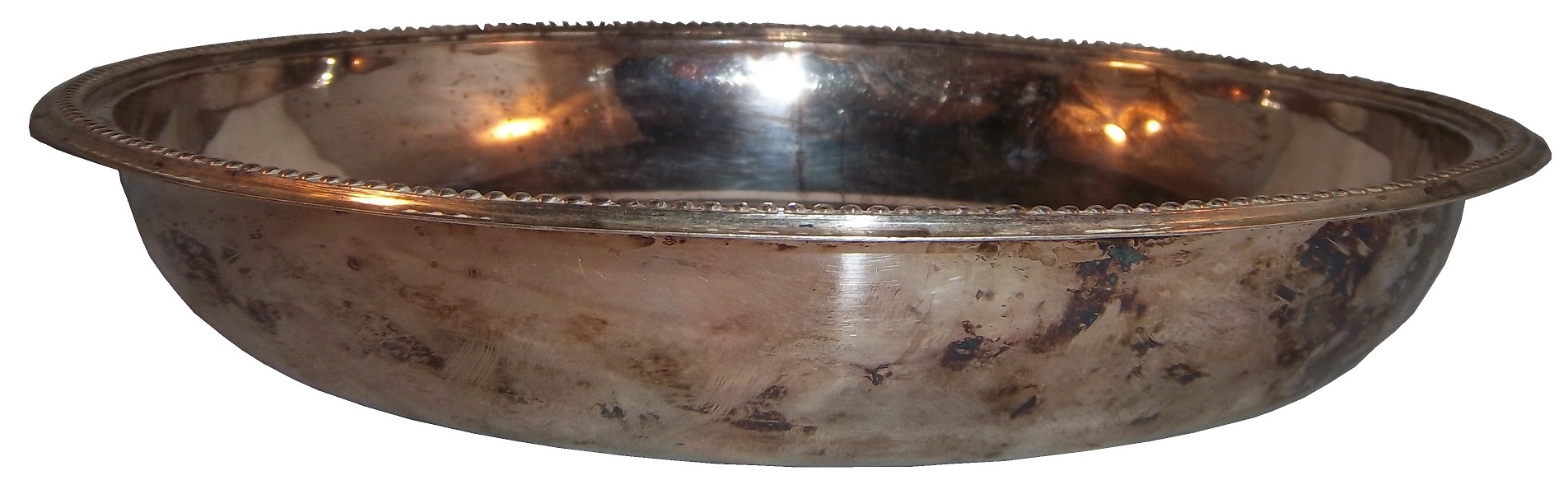
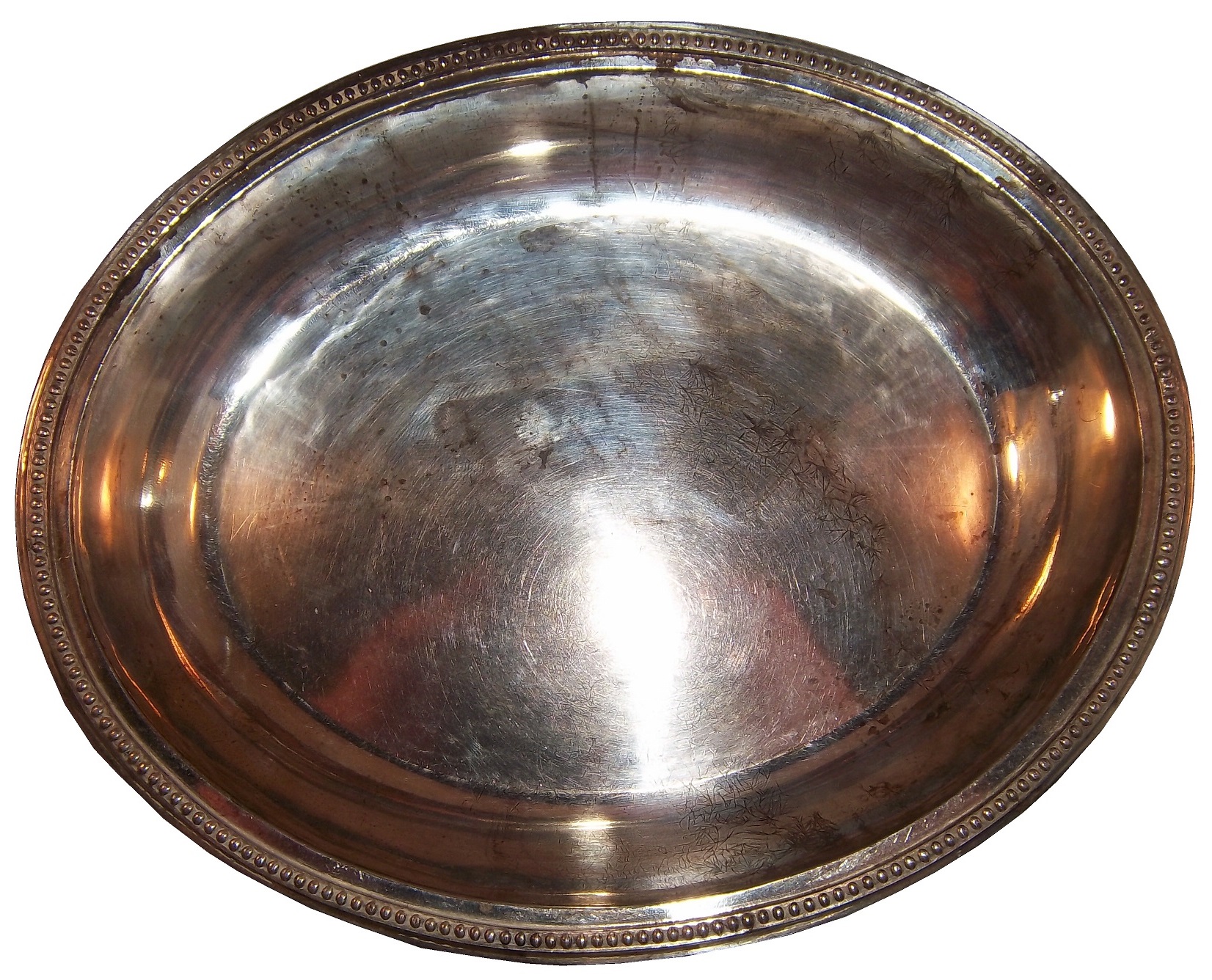
This vintage tray from 1915 has a very similar inscription as the tea service, and while I believe that they were won by the same person, I have no proof of this.1915-tray1 1915-tray2 1915-tray3 1915-tray4 1915-tray5 1915-tray6 1915-tray7 1915-tray8 1915-tray9 1915-tray10 1915-tray11 1915-tray12 1915-tray13 1915-tray14 1915-tray15

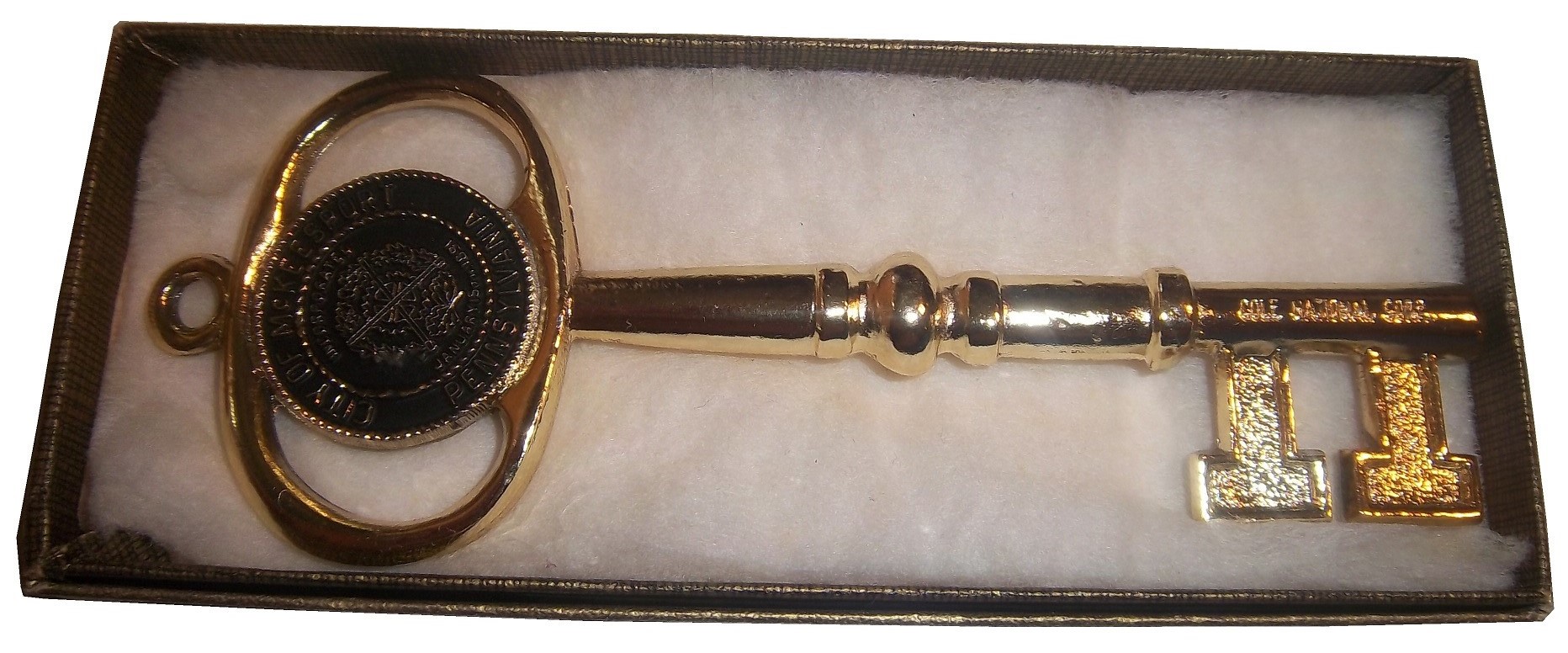
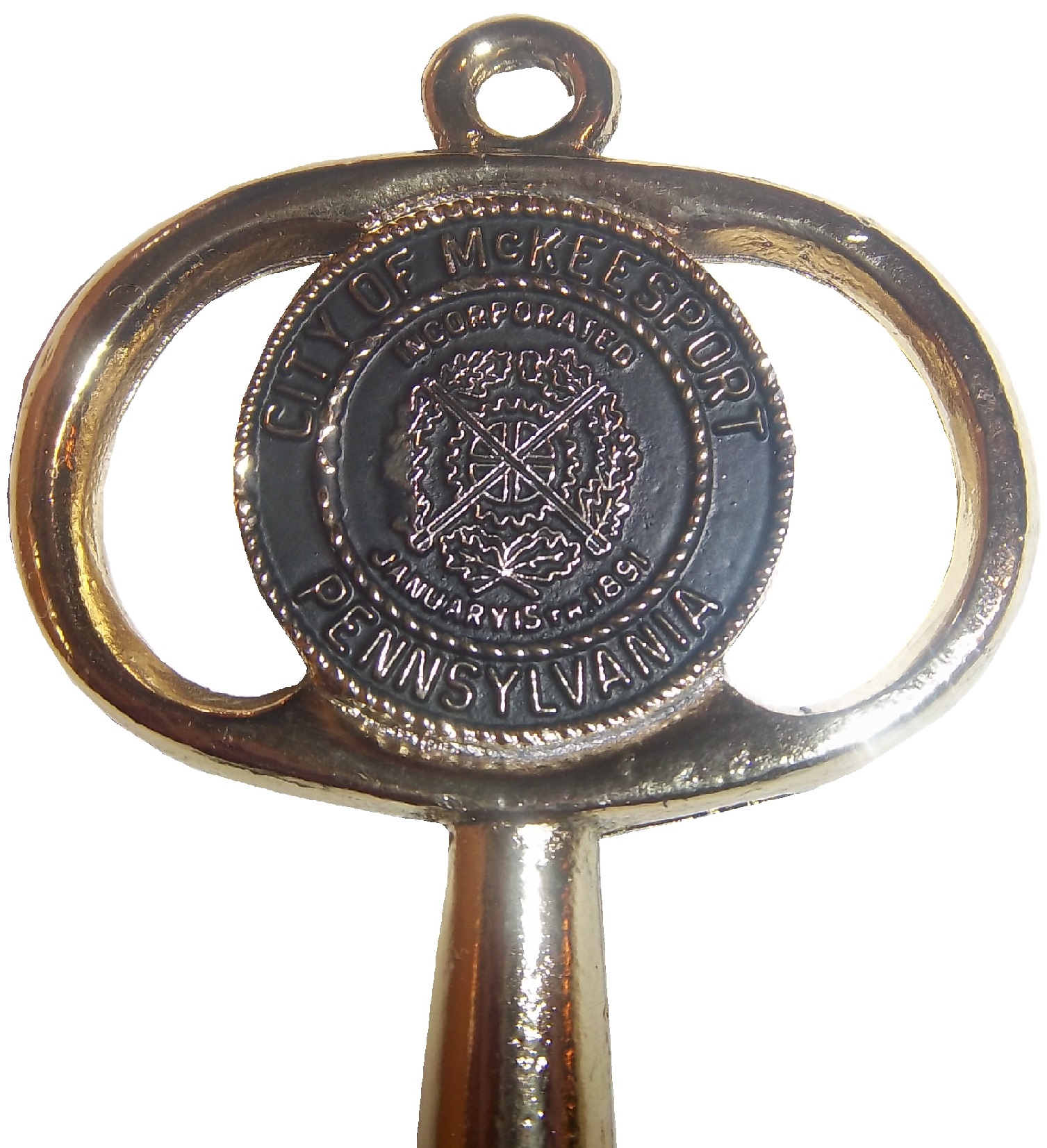
Albert Elko was the mayor of McKeesport Pennsylvania from 1966-1970, serving only one term. He was not very well liked, having been somewhat corrupt. During his tenure, he gave out these keys to the city.mckeesportkey-1 The key is a large heavy brass key, about 4 inches long, and has two black circles, one on each side. One circle has the city seal, mckeesportkey-3the other has a logo with “Greetings Mayor A Elko” etched into it.mckeesportkey-4 A key to the city is a unique item to have in any form.mckeesportkey-2

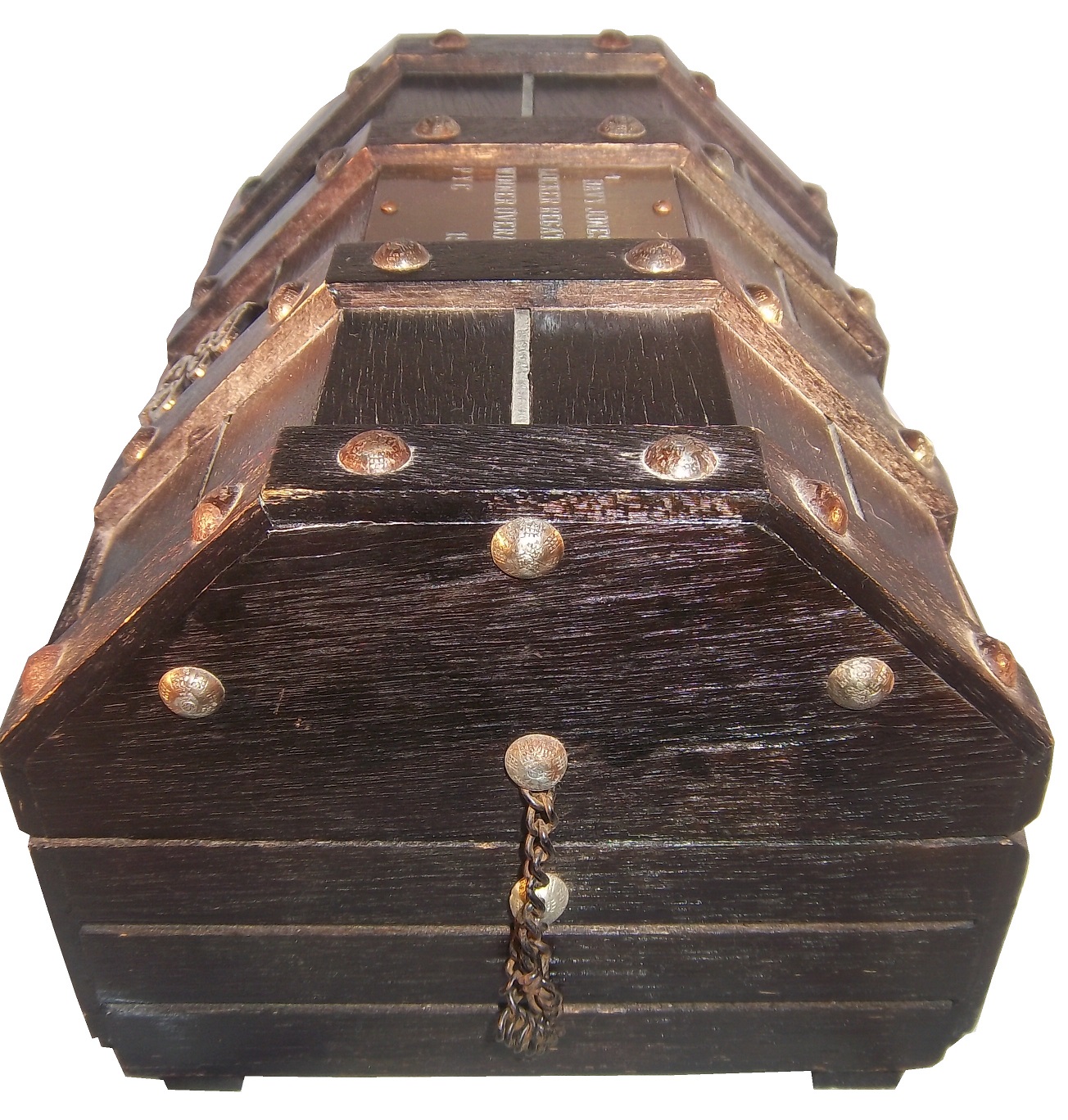
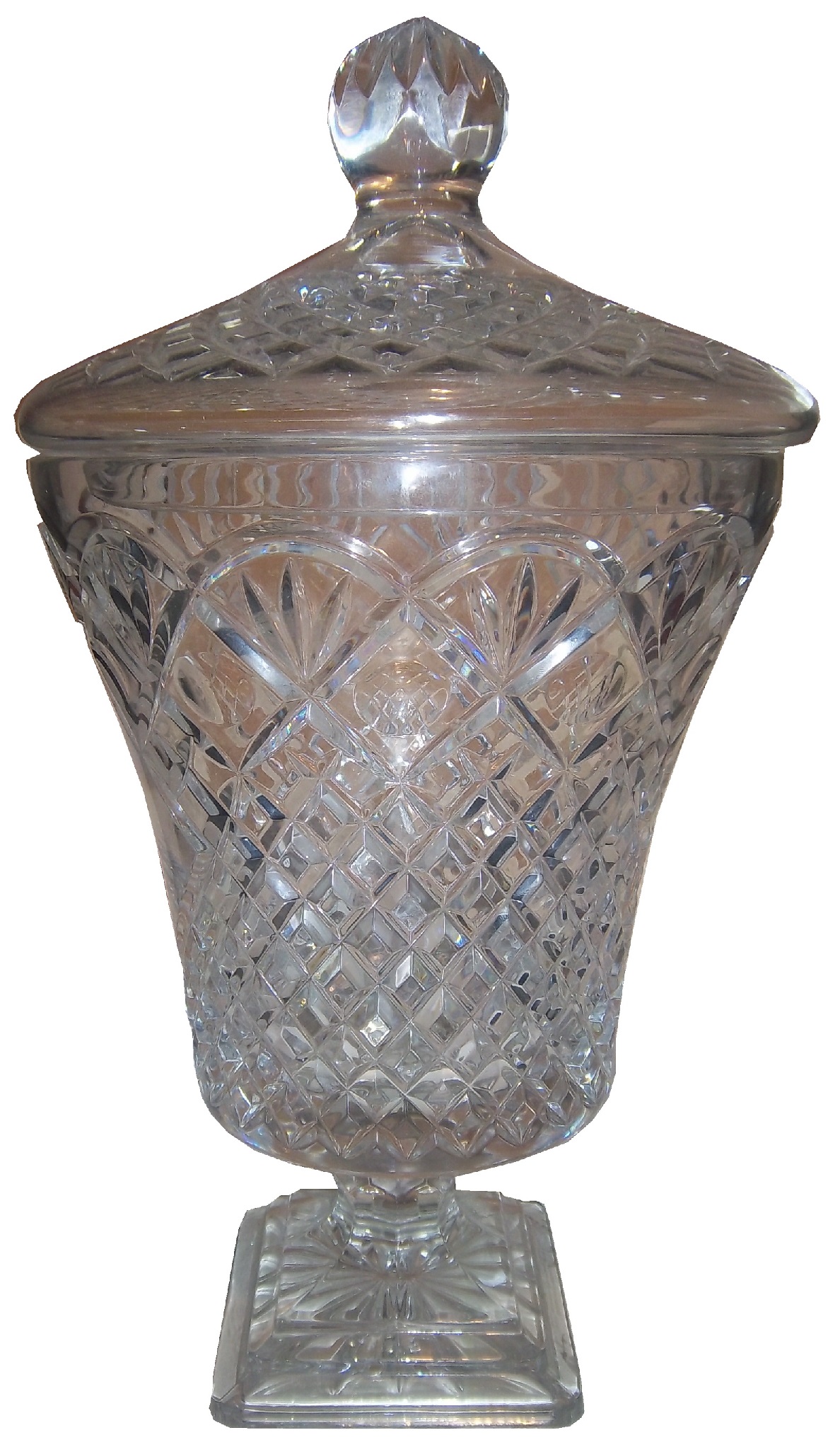
Sometimes a trophy can take an unusual form. Such is the case with this treasure chest from the PYC Regatta in 1973, won by Cotton Blossom II.regatta-chest1 Measuring 10 inches long by 7 inches wide, by 6 ½ tall, and made out of wood, this black treasure chest has been painted black, had some decorative elements added to them, and has a plaque stating “Davy Jones Locker Regatta Winner Overall PYC 1973.” regatta-chest5 regatta-chest6The inside has been lined with red felt. regatta-chest7There is a small chip on the back of the lid.regatta-chest3 It is a very appropriate design for a sailing trophy.regatta-chest2 regatta-chest3 regatta-chest4 After a long and successful golf career, Arnold Palmer worked with a number of golf courses, owning Bay Hill, and designing others. His group took the Kings Bay Country Club, which has been founded in 1949, and in 1990 redesigned it to form the Deering Bay Country Club. This crystal trophy was awarded to a “Member-Guest” winner in 2001.deering-bay-1 deering-bay-3 It is 18 inches tall, is in perfect condition, and is very heavy. The lid can be removed, and is in perfect condition.deering-bay-2 deering-bay-4 deering-bay-5 deering-bay-6

Next Week, some NASCAR Napkin Rings.

The Driver Suit Blog-The Goals of All Drivers in Racing

By David G. Firestone

For this week, we will focus on collecting trophies. Drivers race for two things, the love of the sport, and to win. Climbing out of the car in victory lane feels good, and being presented a trophy for winning feels even better. Interestingly, trophies and awards from NASCAR and other racing series are frequently finding their way into private collections, such as mine. It might seem odd that trophies make their way into private collections, but there are a myriad of reasons for this.

One reason for this is that after their racing career ends, drivers will sometimes need to make some money, and will sell them. Other times, they are sold to raise money for charity. Sometimes it is because they need more space. After a driver passes away, the family will sell off the trophies, because they don’t have the same meaning to the rest of the family. In any event, these artifacts are unique items to collect, and are as unique as the drivers who won them.

Drivers have been awarded everything from surfboards, wine bottles, and guitars, to grandfather clocks, and gas pumps. The grandfather clock is given out to winners at Martinsville was started in 1964. The story goes that track founder Henry Clay Earles was talking with Curtis Turner, and in the course of conversation, Turner mentioned he did not have the room for trophies, and had to give some away, so he decided to award a trophy with a legitimate function, and as luck would have it, Ridgeway Clocks had a factory 3 miles away from the track. Earles gave the first grandfather clock to Fred Lorenzen when he won the 1964 Old Dominion 500, and the rest is history.

Interestingly, giving trophies that had everyday functions is a lot more common than most people realize. This example is a silver footed tray.  It was awarded to the winner of the Oilzum Motor Oil Trophy Race at Onteora Speedway in Olive New York.  The name of the winner, and when the race was run has been lost to history.  It is 21 inches long, and 17.5 inches wide. It looks as though it could have been used for a tea service or as a serving tray for food at a party. It has some scratches across the front, but for a trophy as old as it is, it is still in very good condition.

Award and function combine again in this 4 inch tall silver mug given to the winner of something called the SCCA Rallye on December 1, 1957. It has not fared as well as the tray, showing rust spots and discoloration.

Like many national racing sanctioning bodies, The Sports Car Club Of America or SCCA has several regions that have their own racing. Other sanctioning bodies that have regions are NASCAR, and the NHRA, to name a few. While some drivers go on to national success, many drivers come to be great in one specific region.

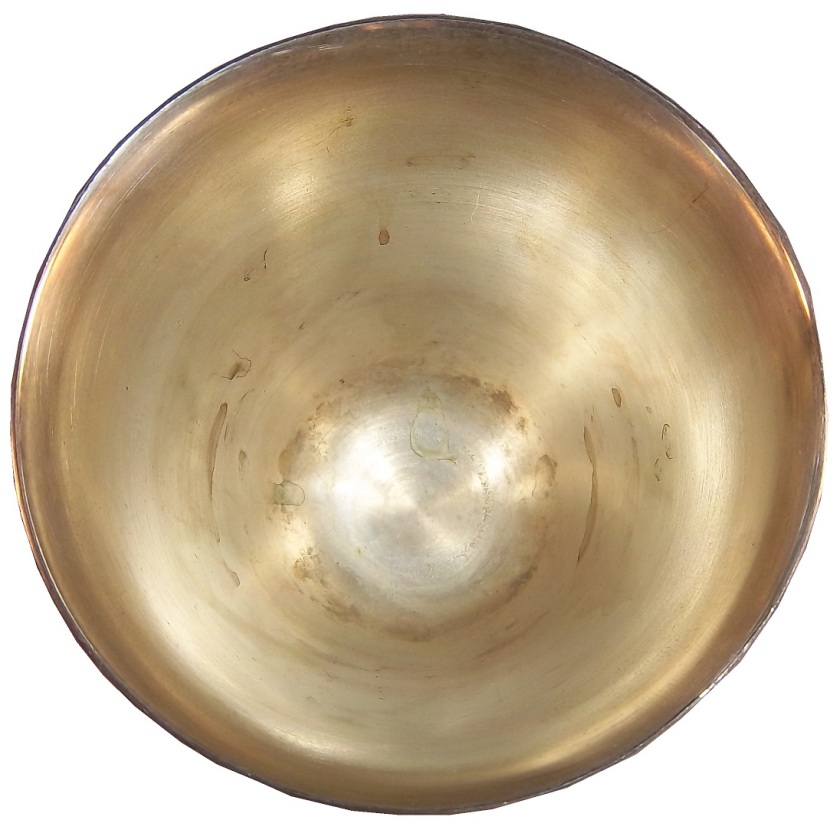
The Southern Indiana is one of 115 regions, which are divided in to nine divisions. One such region is the Southern Indiana Region, which holds events in Southern Illinois, Indiana, and Kentucky. One driver who raced in a number of events was a driver named Walter Scott. Racing from at least 1960 to 1995, Scott won a number of different awards and trophies, which survive in my collection, including this small bowl. The bowl is for a 10th place finish for an unnamed event or series in 1960, and is in great condition. For another unnamed event or series in 1962 , Scott finished 10th. He was awarded this small bowl as a result. Walter Scott was a navigator for a driver in something called the “Thimsen’s Terrible Rallye” in 1965. The duo finished 2nd. This trophy was awarded to him for that 2nd place finish. For a third place finish in an unnamed Rallye in 1970, Scott was awarded this small bowl. It has some scratches. 1973 had Walter Scott perform well, and winning this small Thimsen Memorial Trophy for Rallyist Of the Year, which has some small scratches and dings. That same year, Scott won a small bowl for finishing 7th in something called the SIR Concourse, which shows some scratches. Walter Scott was still going in 1988, where he won this large trophy for the 1988 Year End Award for finishing 6th place. It doesn’t show any damage. In 1995, the Southern Indiana Region celebrated 40 years. Walter Scott had been a member for 35 years, and was awarded this plaque clock to commemorate his long time with the SIR. In 1996, Walter Scott competed in a Rallye called the “Tulips and Other Spring Flowers,” where he finished first in his class. He was awarded this small plaque as a result. It is in great condition. The checkered flag is synonymous with racing. While no one is really sure when the checkered flag was first used, photographic evidence dates it to at least 1906. The origin of the design is also lost to history as well. Since it is so iconic, the checkered flag is used as a trophy in many forms of racing. This example is from the Doylestown Quarter Midget Race Club which is based in Honeybrook Pennsylvania. It is 24 inches square and has the wooden pole still attached. A patch on the front states that this was awarded to the “FEATURE WINNER, DQMRA.” The awarding of small trophies was and is very popular, and this is an example. It is a 6.25 inch tall chalice awarded to The Best Beginner of the 1966 Rusters Run. It shows some staining from age, but it is in great condition This small wine goblet was awarded El Paisano Rally Race in 1969. It is about 6 inches tall, and like the Ruster’s Run chalice, it shows some stains but is in overall good condition. There is something to be said for a traditional trophy. This example is a trophy from Springfield Ozark Dragway, which was for many years, a mainstay of the NHRA. This huge trophy was awarded in the 1960’s to an event winner, and is over 24 inches tall! The term “pole position” comes from horse racing, where the fastest qualifying horse would be placed on the inside part of the course, next to the pole. Though Qualifying takes several different forms, all drivers want the pole position.

In 1979, Busch Beer started sponsoring the pole award in the Winston Cup Series, with the pole award winners would race in the Busch Clash, before the Daytona 500. The Busch Clash lasted from 1979 until 1997, when it became the Budweiser Shootout in 2001, to 2012. The sponsorship spread to the Xfinity Series and the Truck Series as well. Anheuser-Busch dropped the sponsorship in 2012, and Molson took over. In the Cup and Xfinity Series, the pole award is sponsored by Coors Light. In the Truck Series, the pole award is sponsored by Keystone Light. With the new sponsor came these small flags given to the drivers and crew members of the pole winners.  In 2018, Coors left, and Busch replaced them.

This version was given to pole award winners who are under 21. The flag is 19 inches long, and 12 inches wide, is only printed on one side, and is in good condition. In 2015, nobody in the Cup series under 21 won the pole award. In the Xfinity Series, Erik Jones won pole awards at Fontana, Texas, and Bristol. Darrell Wallace Jr. won the pole at the Dover. Finally, Ben Rhodes won the pole at Road America. In the Truck Series, Erik Jones won the pole at Kansas, Texas, Gateway, Iowa, Pocono,and Phoenix. Bobby Pierce won the pole at Eldora, and Cole Custer won the pole at Martinsville. This flag was given to one of their race teams at some point.

This flag was from 2015 at Dover, and would have been awarded to Denny Hamlin, Matt Kenseth, or Ryan Blaney. It’s the same size as the under 21 flag, The flag is 19 inches long, and 12 inches wide, is only printed on one side, and is in good condition. These pole award flags are small when compared to a full-sized checkered flag, this one from the 2010 IMSA Continental Tire SportsCar Challenge Miami Grand Prix.The IMSA Continental Tire SportsCar Challenge has two different classes, “Grand Sport” and “Street Tuner.” Grand Sport or GS features large displacement 6, 8, 10, or 12 cylinder engine sports cars. GS also features small displacement 4-cylinder forced induction sports cars. Street Tuner, or ST features smaller 4-cylinder, 5-cylinder or 6-cylinder sedans, hatchbacks, coupes or convertibles. Though some minor modifications are allowed, for the most part, these cars are identical to their showroom counterparts. These cars aren’t specially built race cars, but the cars that you or I might drive to work in.

Regardless of if drivers are racing professionally for a well-paying, championship caliber team, or a weekend warrior racing for personal glory, there is one thing that they all want in the end. It’s also the most iconic item in auto racing, the checkered flag. As I stated in my Uni-Watch Flag column: “The most iconic flag in motor sports is universally used to indicate that the race has ended. Its exact origins are unknown, but the first picture of a checkered flag being used to end a race was at the 1906 Vanderbilt Cup on Long Island. NASCAR and IndyCar checkered flags carry the Sunoco logo.”

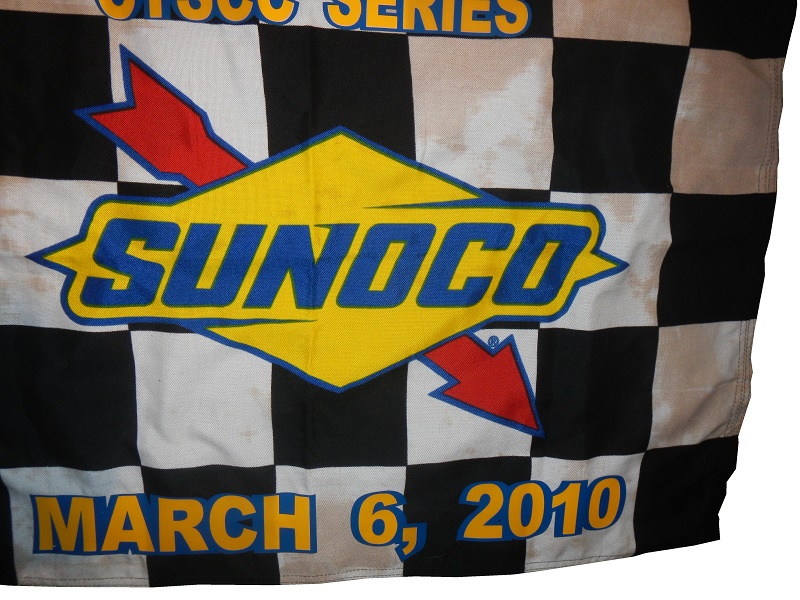
The tradition of the Sunoco logo on the checkered flag was actually started by Unocal. From 1948 to 2003, Unocal was the official fuel sponsor of NASCAR. As such, their logos appeared on the checkered flags during the 1980’s. It was around that same time that the race used flags would be customized with the name of the event, and presented to the driver, a process that continues to this day. One such example is this 2010 IMSA Continental Tire SportsCar Challenge Miami Grand Prix flag.

The second race of the 2010 IMSA Continental Tire SportsCar Challenge was the Miami Grand Prix on March 6, 2010. During that 91 lap race, the #61 Roush Performance Mustang, driven by Billy Johnson, and Jack Roush Jr., won the overall event in GS, and the #25 Freedom Autosport Mazda MX-5 driven by Derek Whitis won ST. As Roush and Johnson were the overall winners, they were presented with this customized Sunoco race winner flag.

The flag shows a heavy amount of use, including numerous stains all over, and some light snagging. The flag features the Sunoco logo on the front. Traditionally, flags are designed so that the pattern starts on the left side, and this flag is no different. The white stripe is the area where the flag pole is inserted. After the race, when the stains occurred, blue and yellow letters were heat-pressed onto the flag, which read “GRAND PRIX OF MIAMI CSTCC SERIES MARCH 6 2010.” The flag is meant to be displayed with the front only showing, because the back of the flag has the Sunoco logo reversed. The staining present on the front, is clearly visible on the reverse.Every driver who races wants to be the first one to see that black and white checkered flag. It’s the one hope of all drivers.

Next week, we keep the trophy theme going.
The Driver Suit Blog-Wheel Reviews-Ferrari: Race to Immortality

By David G. Firestone

Directed by Daryl Goodrich, Ferrari Race to Immortality is a telling of the history of Ferrari.

The opening sequence is a series of unidentified voice overs, placed over vintage Ferrari footage. This footage does get quite gruesome. There is a music track that works perfectly here. After about 5 minutes, the title card pops up and the movie starts.

Enzo’s early life, including the death of his father is discussed. What follows is a series of amazing racing footage, with some modern replications of what happened in car. The scene shifts to a discussion of racing talent in the aftermath of World War II. The story of two drivers, Mike Hawthorn and Peter Collins. Hawthorn was described as “beer drinking”, and “one of the guys.” Collins was described as “a boy’s own character of what a racing driver should be.” Ferrari took a liking to the two British drivers.

The movie tells the story of Ferrari in a year-by-year, discussing the drivers, and significant races. The historical perspective shifts to LeMans in 1955. Hawthorn’s father had died, and he left Ferrari to race in sports car racing. The moments leading up to the legendary crash are discussed. Lance Macklin discusses the moment of impact, and the graphic footage of the crash and aftermath is shown. Much of this footage is graphic, and horrific. The race is resumed, and Hawthorn’s team wins, but his post race actions vilified him in the media.

The Peter Collins story picks up in 1956, where a point is made that Ferrari didn’t understand how to deal with drivers on an individual level, especially their style. Peter became close with Enzo’s son Dino, who was dying from muscular dystrophy. Dino’s death was hard on Enzo.

The story of Peter Collins giving up his seat so that Juan Manuel Fangio won the 1956 Formula 1 World Championship is told. Peter said that he was young, and he’d win another world championship soon. Ferarri was touched by such loyalty and selflessness.

The Ferrari style of pitting the drivers against each other is discussed. Ferrari said that the best driver last Sunday would be the #1 driver for the next race. The addition of a fifth driver for four cars added another layer of depth to this rivalry. This led to a decent turn around of drivers.

Enzo’s competitive spirit lead to the death of Eugenio Castellotti and Alfonso de Portago, who was testing at Autodromo di Modena. Maserati’s team held the lap record, Enzo wanted Ferrari to hold the lap record, and Castellotti was forced to attempt, and was killed. Alfonso de Portago was killed later in 1957 at the Mille Miglia. This led to a manslaughter charge, though this was ultimately dismissed.

1958 starts out at LeMans. The relationship between Hawthorn and Collins was such that the two were closer than a team owner would have liked. This was even more detrimental to Luigi Musso, who was the low man on the totem pole. He was in deep financial stress by the time the 1958 French Grand Prix. He was killed during a wreck at that race.

The safety standards, or lack thereof, are discussed as well. Drivers didn’t want to wear seat belts because they would be thrown from the car, as opposed to be trapped and crushed, or burned alive. This would affect Ferrari again at the German Grand Prix, when Peter Collins was killed.

Ferrari was devastated, with Enzo Ferrari wanting to quit all together. Mike Hawthorn had a meeting with Enzo Ferrari and said that he wanted to drive the rest of the season, and he would prefer to drive for Ferrari. So Ferrari decided to finish the season with Hawthorn behind the wheel.

The 1958 season ended in Moroccan Grand Prix in Casablanca, where, with a second place finish, Mike Hawthorn won the championship. Enzo Ferrari was relieved to win the championship, but was furious at Hawthorn since Hawthorn had decided to retire from racing. It was worse for Hawthorn, because Stuart Lewis-Evans had been seriously burned in a wreck. Hawthorn announced his retirement, but wouldn’t live to enjoy it, dying in a car wreck on a highway in Britain a few months later.

Oddly, after the sequence surrounding Hawthorn’s death, the movie ends. Enzo’s reaction to Hawthorn’s death is never mentioned. How the team recovered, how the team fared in the later years is never mentioned. The movie just ends.

I also have to make this point. I get that this movie is about the drivers. However, the various designs of cars and equipment are never mentioned. This might not have been such an issue, had almost all of the drivers not died in races. Certain aspects of the car are discussed, but not extensively enough.

For this movie, I’m going to give an B+. The overall story is great. It’s produced very well. The music works well. But there are problems. The fact that the movie just randomly ends after Mike Hawthorn’s death, without any real discussion on what happens next is a big issue here. The fact that the cars are barely discussed annoys me too. But all in all, it’s a great movie.

Next week, a video Friday Feature.

The Driver Suit Blog-Wheel Reviews: 3: The Dale Earnhardt Story

By David G. Firestone

3: The Dale Earnhardt Story is, according to ESPN Original Entertainment executive producer Will Steger: “an unauthorized docudrama…inspired by the true life of Dale Earnhardt.” It’s a movie that on the surface, is an emotional look at the life of one of the greatest NASCAR drivers of all time.

The movie depicts Dale’s life from early childhood, idolizing his father as both a driver and a man. Dale watches his father Ralph race, and grows to love the sport of racing. When Ralph dies, Dale changes. His career takes off, and the movie follows Dale on and off the track until his death at the 2001 Daytona 500.

The movie would be somewhat unremarkable, if not for the fact that there were a lot of inaccuracies, as well as omissions.

The omissions include:

*Dale’s 2 year stint with Bud Moore during the 1982 and 1983 seasons. Granted these season were quite unremarkable, but the fact these were never mentioned seems odd.

*Earnhardt’s Late Model starts for All Star Racing in what is now the Xfinity Series were also omitted.

*None of Dale’s crew chiefs are accurately depicted.

*Most perplexingly of all, there is no mention made of Dale’s rivalry, or business partnership with Jeff Gordon. The Earnhardt/Gordon rivalry was the dominant rivalry in NASCAR in the 1990’s, yet it’s not even glossed over.

There are also too many inaccuracies and continuity errors in the movie.

*In the opening scene at the 2001 Daytona 500, Jeff Gordon’s car is running a 2004 instead of a 2001 scheme. Bobby Labonte is racing a Chevy Monte Carlo, whereas he raced a Pontiac in 2001.

*In that same scene, on Dale’s car, DALE EARNHARDT is written in generic red script. Earnhardt always used a stylized version of his signature in white.

*During a dirt track race set in the 1950’s, Realtree is a sponsor of one of the cars, despite not being founded until the 1980’s.

*A billfold in a scene from the 1970’s clearly shows a modern day $20 bill, but for many TV shows and movies, this is not uncommon.

*After he signs with Rod Osterlund, Dale drives a Chevy Monte Carlo in the 1979 Daytona 500. In the real race, he drove a Buick.

*Earnhardt meeting future wife Theresa is inaccurately portrayed. She was only 16, and Dale knew he was Hal Houston.

*During a dream sequence after winning the 1980 Winston Cup Championship, John Anderson’s flip from the 1981 Duel races is shown.

*After the Earnhardt/Waltrip spin at Richmond, Earnhardt was quoted as saying “I didn’t mean to wreck him, I just wanted to rattle his cage a little.” The first time he actually said this was in 1999 after spinning Terry Labonte to win the Goody’s Headache Powder 500.

*In the scene where Dale Sr. is teaching Dale Jr. and Kerry to race, Kerry is wearing a more modern firesuit with inaccurate patches, and patch placement. The chest patches are wrong, the Simpson logo is a newer logo, and the SFI Certification is on the top of the sleeve, as opposed to the inside of the left sleeve near the wrist.

*In that same scene, there is a 2004 Dale Jr. decal on the back window of a pickup truck.

*At the 1990 Trans South 500 at Darlington, a Tony Stewart flag, as well as what appears to be a Matt Kenseth flag can be seen on a flag pole

*At that same race, Ernie Irvan is racing a #4 Kodak Gold Oldsmobile, with scheme that Kodak did not debut until several years later.

*At the 1998 Daytona 500 there are quite a few issues with how that race was depicted.

*During the final pit stop, the movie has Dale taking four tires. In the real race, Dale only took two tires.

*There is a Winston Cup logo badly covering a Nextel Cup logo.

*In the movie, Dale Jr. celebrates with his dad in Victory Lane. Dale Jr. had left to race in a different race.

*The pit crew is depicted as wearing polo shirts and slacks, where as in reality, fireproof coveralls were mandatory by that point.

*The above-mentioned polo shirts and slacks don’t change at all between 1990 and 1998.

*The back of Dale’s car in that race is plain, whereas the real car had a GOODWRENCH logo on the back.

*The movie ends at the 2001 Daytona 500.

*As Dale is shaking hands before the race begins, there is a large WINSTON CUP SERIES banner, with lettering that was never used in reality.

*For some reason, Earnhardt is wearing a helmet with Corvette decals…which he never wore in NASCAR.

*Rusty Wallace is driving a white unmarked Dodge, even though he drove a blue Ford at the time of the race.

*Jeff Gordon is racing the Rainbow Warrior scheme, even though in 2001, he had switched to his flame scheme.

*One claim that I have heard is that Dale wore a clear visor, instead of the tinted one he is depicted as wearing in the movie.

*In the reflection of the visor, an Impact Racing logo can be seen, despite not being founded until 2004.

*Bobby Labonte is racing his 2004 scheme, not his 2001 scheme.

This film is also noted for not getting the approval of any member of the Earnhardt family, including his widow. Richard Childress, who is depicted in the movie, took the producers to court for copyright infringement. I wasn’t able to find the outcome of this lawsuit.

All in all, while the movie itself is decently made, and is emotional. The historical inaccuracies and omissions keep it from being anything except a C- movie.

Next week, for the final Wheel Reviews, I will review a movie about Ferrari.

The Driver Suit Blog-Wheel Reviews-Blonde Comet

By David G. Firestone

Directed by William Beaudine, Arthur Hammons, Tiny Hamberger and written by Philip Juergens, Robin Daniels, and Martin Mooney, Blonde Comet was released in 1941. The movie starts Virginia Vale as Beverly Blake, the daughter of the owner of the owner of a tire company, and Robert Kent as Robert Flynn, a racer who wants to make a more powerful carburetor.

Beverly Blake, nicknamed “Blonde Comet” races all over the world, and has a lot of success. It should be noted that due to World War II, this is set a few years prior. The first sequence is a series of races where Beverly is supposedly racing, but she isn’t actually seen in a car in most of these shots. An interesting detail is that the announcers are speaking the native language, as opposed to English.

The scene shifts to a racing garage, where a race car is being worked on, with the two mechanics, Curley and Robert have a sexist argument, and the character of Tex is introduced. The conversation focuses on Tex’s lack of experience behind the wheel of a race car. Jimmy then takes the car out, has the road blocked off, and tests the car. Beverly sees the road block, takes her car on a dirt road, and sees Jimmy’s car, turns around, kicks down the barricade, and drives through.

Jimmy finishes his run, turns around, and starts a second run, heading for Beverly. The two drivers meet, and a brief argument ensues. It’s interesting that while Blonde Comet is painted on the side of her car, Jimmy has to look at the race car being towed to figure out who she is. She drives through a second barricade, and the scene shifts to Southern Ascot Speedway.

Jimmy’s crew works on the race car, whereas Beverly works on her hair. The desire for some pop leads to a conversation between the two teams. After a nonsense scene involving speaking Swedish, Curley and Beverly have an awkward conversation. Tex buys some equipment from Barney Oldfield, in a cameo. Jimmy tells Barney he has a new carburetor which uses less fuel, without losing speed. Barney Oldfield’s acting isn’t great.

The announcer states that all drivers should meet for a driver meeting. At the meeting, Beverly talks with some of the other drivers, who aren’t thrilled she is there. The track announcer gets the drivers and spectators ready for the race. The race starts, and the announcer decides that rather than actually call the race, he will give biographical information.

As the race wears on, the announcer taps out for a while. Cars get spun out, but the race continues. My major issue with this scene is that it’s never established which characters are racing which numbers, so it’s impossible to figure out what is going on. The lack of announcers for large portions of the scene doesn’t help at all. Tex gets in a wreck, and is badly injured, eventually dying. Beverly goes on to win the race, Jimmy finishes second. Jimmy punches the driver who wrecked Tex, and Beverly suddenly falls in love.

The scene shifts to Jimmy’s garage, where Barney pledges $25 to help ship Tex’s body home. Beverly meets Barney and gives her back story. Barney gives Beverly his $25, and Beverly drives to Jimmy’s garage, gives Jimmy the $25, and the rest of the money needed. Beverly drives to the next race, a 500 miler at a 1 mile track. After a group photo, Jimmy and Beverly flirt before the race starts, but once the green flag drops, the race starts.

Unlike the last race, since Beverly and Jimmy car numbers have become clear, the race is somewhat easier to follow, granted that there is no announcers here. Blonde Comet takes the lead. After some humor with a chalk board, Jimmy ends up in second place, behind Beverly. As the race winds down, Jimmy takes the lead, while Beverly is in third, behind Red Stewart. With four laps to go, there is are some serious wrecks, and eventually, Jim wins, and Beverly comes in second. After the race, it’s revealed that Red Stewart was killed in the wreck. It’s revealed that Beverly is going to Indianapolis.

Beverly, Barney, and Cannonball Blake, Beverly’s father have a meeting where they discuss adding one of Jim’s carburetors in her car, but asks that the installation a secret. At the Indianapolis 500, both Jim and Beverly qualify for the race. There is added tension, because the government is interested in Jim’s carburetor design, though only if one of the cars with the carburetors wins.

The race starts out slow, but at the halfway point, Jim gets in a wreck, due to a bad tire. Beverly pulls out, feigning exhaustion, but demands that Jim take over. Jim goes on to win the race, and at the victory celebration, the toast is to carburetors and tires. Beverly and Jim get engaged, and the movie ends.

After watching this, I’m going to give this movie a B+. The racing is good, the story is good, and the characters are realistic. Unlike The Racing Strain, there is no over the top plot twist, which is good. Also, unlike The Racing Strain, there is no real antagonist, which isn’t so great. I would love for there to be a dedicated villain who is openly opposing Beverly and Jim, but it doesn’t happen. A decent racing movie, but not a great one.

The Driver Suit Blog-Wheel Reviews-The Racing Strain

By David G. Firestone

For the first of four Wheel Reviews in 2019, I am going to focus on The Racing Strain. Released in 1936, The Racing Strain was written by Dorothy Davenport, Betty Burbridge, and Willis Kent, who also is the producer. None of the writers were credited for their work. The Racing Strain was directed by Jerome Storm, and was produced by Willis Kent Productions, and distributed by Maxim Productions. It is a public domain movie, with a run time just under 58 minutes

The movie starts with some racing footage, which appears to be shot from several completely different locations. There is a roll over crash, and driver Jack Westcott is injured. Westcott is confronted by his son, Bill Westcott, who may be played by his real son, and the elder Westcott claims he is “all right” and “he will be back of the track soon, and promptly dies, his son screaming and crying over his body.

The scene then shifts 10 years later, to a dune buggy, racing through the desert. Bill Westcott has established himself as a great race car driver. As Westcott and King Kelly drives through the desert, he comes across a stranded car, occupied by Marian Martin. It’s revealed that Kelly has quit drinking after being suspended from racing. Martin is a racing fan, who takes a liking to Kelly. There is a really stupid and pointless scene with Martin’s chaffeur, Togo, who is apparently scared of cows.

Westcott and Togo tow the car with Kelly, Martin, and Aunt Judy to a gas station. Its revealed that Martin is the daughter of a wealthy oil magnate. The scene shifts an unknown amount of time, where the Martins pull in to a gas station, and Marian sees Kelly, and they hit it off. It’s revealed that Kelly has taken the job to help get his racing career back on track, while Westcott is in school, and wants to be a pilot.

The scene shifts again to Westcott, who is piloting a plane, even though he can’t be older that 16. He handles the plane quite well. The two airplane michanics are amazed by his skill. The scene shifts to the Martins, who are reading a newspaper with the giant headline WILD KING KELLY REINSTATED, which is apparently a big story. It’s mentioned that Kelly needs to say sober or he’ll be banned for life.

The next scene is at the track, where Westcott is adding to a scrapbook. Kelly has him look at his race car, which is the Gilmore Lion Club Special, sponsored by Gilmore Oil. Another racer, Speed Hall, is getting his car ready at the same time. He talks with Marian, who he is clearly in love with. Westcott and Kelly get his car on track, and begin racing each other. It’s at this point that Westcott’s racing skills become apparent, though he has reservations, after his father’s death. Westcott chickens out, Speed mocks him, which leads to a fight. Togo and Westcott start a friendship.

Kelly and Marian go on a date at the amusement park, which is accompanied with the most annoying background music possible. Westcott and Togo go for a flight in an airplane. This scene also established that Togo is a stereotypical Asian. Back to the amusement park, where the music is slightly less awful, for the love birds on an airplane ride, the back to the amusement park, then back to the airport, where Togo does jiu jitsu on one of the mechanics.

Then, the movie shifts forward to Togo, who is stil woozy from the airplane ride, and Westcott, sitting in a car,, and Marian and Kelly dancing to dubbed music, which clearly wasn’t the music being played during filming. The date ends mercifully at 1 AM, when Kelly and Westcott meet up with their respective drivers.

Speed Hall, who I had forgotten was even in the movie at this point, is scheming with his sponsors, trying to stop Kelly from racing. It’s decided that to get to Kelly, they have to use Westcott. At the track, Kelly is handed a letter, frantically checks the time, and consults the racing schedule. He borrows a car, and drives away.

He drives to a hotel in Tiajuana, leaving the note behind. Marian finds he note. The note was written by Rose Westcott, who is demanding the return of his son. Marian, realizing where he’s gone, races to get him. Rose is revealed to be a selfish drunk, who only cares about himself. She orders a whiskey and the waiter brings two shots. Kelly falls off the wagon, with a little help from Rose. Marian and Westcott fly to save Kelly. Rose is revealed to be a worker for his sponsor, who drugs Kelly, so he can’t race.

Westcott and Marian find Kelly, and take him out of the bar. The races have started, and Kelly is flown back to the airport, and driven to the track, Legion Ascot Speedway. Kelly is clearly in no condition to race. Westcott decides he’s got no choice, climbs in the car, and gets ready to race. Westcott has trouble getting started.

Westcott races, haunted by the memories of his dad’s death. Westcott moves his way through the 40 lap race. A crash is shown, though the race continues. As the laps wind down, Westcott and Speed race for the lead. Kelly and Marian watch nervously. Kelly wins, Marian reveals that Mr Martin is her dad, and the movie ends.

The movie itself is decent. The plot is good, but there are a lot of problems. The movie just ends after the big race. Kelly is somehow never noticed in the crowd. It’s never explained how or why Westcott has access to fly a plane at his age. It’s also odd that while Speed Hall, who is supposed to be the main villan, is opposed to taking out King Kelly, yet his sponsors have no qualms about potentially ending his career. The story is decent, but there is a lot of blandness. Togo is in the movie just to teach Westcott how to do a take down, other than that, he’s useless.

My final grade here is a D+. It’s less of a racing movie, and more of a movie with racing in it. The subplots aren’t great, and some don’t add to the movie. I just can’t enjoy this.

Next week, a movie from the 1940’s.