While I like to analyze driver suits, as you all know, I like collecting and analyzing many other kinds of racing memorabilia, and uniform items. I’m not discriminatory on which series I collect, and I’ll take a chance with anything. This pair of James Buescher race-used and signed gloves are an example of one of those items.
Buescher is the 2012 Camping World Truck Series Champion, who has won 6 races in his career. He’s transitioned to the Xfinity Series as well. He won the 2012 DRIVE4COPD 300 at Daytona, which was notable for Danica Patrick wining the pole, and the huge wreck on the last lap. Those successes, along with some success in the ARCA Racing Series, means he will be in the Sprint Cup within the next few years. These are a pair of his race-used gloves.It’s not easy to figure out when these gloves were used, but a little video research can go a long way. Based on my research, I can safely say that these gloves were used before 2011, possibly after, as video footage and photograph research clearly show Buescher wearing this style of gloves in 2010, but switching to a different design in 2011. I’ll give Buescher credit where credit is due, he was really good with glove color matching sponsors. Since there are a number of sponsors using this color scheme, it doesn’t seem too far fetched that they were used post-2010.
The gloves themselves are a pair of Simpson Competitor gloves, size Large. The gloves are in great condition. They both meet SFI 3.3/5 Requirements, which will protect Buescher from 2nd degree burns for 10 seconds. They are black, with yellow accents. The grips on the palms are yellow, and have Simpson logos on them.
The hems have SFI Certification as well as size tags.Buescher has signed both gloves, with the inscription “31.”James Buescher, along with his older brother Chris are both NASCAR champions. Next week, we’ll look at a series of memorabilia from another group of championship winning brothers…
Tucked away in Tucson, hidden on an unpaved road, is a museum that every car guy should see before he dies. It’s a museum devoted to a unique marque of automobile, one so rare, most people have never heard of it. I’m speaking of the Franklin Auto Museum. It’s devoted to the Franklin Automobile Company, which existed from 1904 to 1934, producing some of the most luxurious and innovative cars to date.
The H. H. Franklin Manufacturing Company was founded by H. H, Franklin in 1893 as a die casting manufacturer. In 1900, they expanded in to the automobile industry with the aquision of the talents of John Wilkinson, an engine designed. In 1902, the first Franklin Motor Car was built. By 1904, Franklin was a full-fledged automobile manufacturer.
Franklin cars were advanced, with air-cooled engines, constant level carburetors, and made use of a 4 cylinder straight engine. As time progressed, they shifted from 4 cylinder straight to a V-12 engine, which their aircraft engine subsidiary was innovative in making. Franklin focused on luxury models, often costing significantly more than other models. This focus was the main design aspect of most of their cars. A Franklin was somewhat of a status symbol, but as the economy began to fall, the sales slowed, money was lost, and, by 1934, after 30 years, the company ceased production of cars. Their aircraft engine production continued until 1975, when it was sold to the Government of Poland, and all operations were moved to Poland, where it operates to this day.
One of the children who was driven around in a Franklin was Thomas Hubbard, who was such a fan of Franklins, he would restore them for collectors. He began to buy and restore them for himself. His collection grew, and, as he began to grow older, decided that he should open a museum devoted to the history of the Franklin Automobile Company. After he passed away, that museum opened, and continues to operate to this day.
The collection is very impressive, with examples ranging from 1904, to one of the last cars ever sold in 1934. Three buildings make up the complex. The first one features many of the later models, including this yellow 1925 coupe with a rumble seat, one of the few 1934 Franklins in existence, to H.H. Franklin’s car that he used in New York, complete with remnants from restoration.The second building resembles a traditional garage, and has some of the newer cars, and some of the older cars, including this 1933 Olympic Coupe,this 1934 Sedan with matching luggage,and this 1946 Lincoln V-12 Coupe, which is for sale for $26,500. The third building features many of the really old cars, some as old as 1904. This was my favorite room, as many of the designs are so contradictory to car designs today, that it stunned me that people would willing to drive them.
This is a perfect example of one of those cars, a 1909 Model XD Touring Sedan, which was designed by Ransom E. Olds, who would later go on to found Oldsmobile. It’s a quaint looking car, that was designed before it was decided which is the driver side. The musuem also has a number of hidden treasures and vintage items, such as this vintage Dixie gas pump,and this old stock ticker.There are too many amazing things to list, so here is a slide show.
The museum is open from Mid October to Memorial Day, Wednesday through Saturday, 10am to 4pm. Admission is $10 for adults, $8 for Seniors, $5 for teenagers and students, and free for those under 12. This is the video of my tour, and I highly recommend that you take the tour as well.
Next week, we go back to racing, with something worn by a former NASCAR champion…
My parents have a condo in Tucson, Arizona, so every winter, I leave the bitter cold of Chicago for a week, and take my base of operations from “The Hauler,” which is my new nickname for my office, to Tucson. I love living in Chicago, but the cold during winter can be too much. Each year, we look for things to do in Tucson that I can’t do in Chicago. Last year, I went to the Pima Air and Space Museum, and the Penske Racing Museum. The year before that, I went to the Titan Missile Museum.
This year, I had three specific goals. I wanted to go to the Asarco Mineral Discovery Center, The Dragoon Brewery, and the Franklin Auto Museum. I also, as always, wanted to have some great Southwestern food. I got all three done, and then some!
I took Amtrak’s Texas Eagle down, as I always do. It’s a three day trip, and this year, I upgraded to a “Superliner Roomette” which is my own small room. It was well worth the price, where I have my own little private room, a whole bed, instead of a reclining seat, and a giant picture window. Meals are included, so I didn’t have to pay for food for the entire trip, and I have to say, the food was great.I got in on Sunday, and met up with my parents, had dinner, and got back to sleep. Monday was spent puttering around. On Tuesday, we went to the ASARCO Mineral Discovery Center. It’s a small museum and tour of the ASARCO Mission Mine. Mission Mine is an open pit mine in Pima, Arizona. According to ASARCO “Each year the mine has the capacity to process about 260,000 tons of copper concentrates which yields 132,700,000 pounds of copper and 1,234,000 ounces of silver.” The tour is about an hour long, and it goes into detail into how the mine takes copper ore, which looks like this:and turns it into 99.999% pure copper, the percentage needed for electrical wiring, which looks like this:We drove around the mine area in a tour bus, and passed by the pit. There is a small area for the tour, which features a giant tire for photos. I’m 6’1” and that tire makes me look small. There is an overlook area for the tour group, and it is REALLY far away from the mine. See those two dump trucks circled? Those are 51 feet long, 30 feet wide, and 24 feet tall! Then you go to the south mill, where the ore is ground down to the required size, and extracted using the flotation system. Pine oil is used to help separated the copper from the ore, so the whole area smells like pine oil, which isn’t a bad smell at all.
Once you get back, you can wander around the small outdoor exhibit area, and see various artifacts from the history of Arizona mining. We then went to the Desert Diamond Casino for lunch, and went home. We then went out to celebrate my mom’s birthday that night for dinner.
Wednesday, we went to the Dragoon Brewing Company taproom. I spend the afternoon trying different kinds of their beer. I tried the Stronghold Session American mild, which a little bitter for my taste. The Biere Del Bac is a Belgian-style quad, and I had that and a brandy barrel-aged version. The best by far was the Scout Porter, which is a mesquite-smoked porter. I wound up buying a 32 ounce can, which I downed after dinner. I also got a couple of pictures of the taproom, and the fermenters. For dinner, I had some damn good barbecue at Brush Fire, where I had some brisket and pork bellies with Sweet-n-Bold sauce. On Thursday, I went to the Franklin Auto Museum, but I’m gonna save that for next week…stay tuned!
Editor’s Note: I will be traveling to Tucson, Arizona this week, and I’m getting ready to fly for the first time in 11 years as you read this. I will have the Friday Feature and Throwback Thursday items next week, but no tracker or grades. In the meantime, here is my Friday Feature for the week.
I wrote about the Infinite Hero Challenge Coin program last year, and I’m going to revisit it. I’ve learned some more information about Infinite Hero Coins, that I didn’t have before, so I’m going to add this new info, for the sake of completeness.
Infinite Hero quickly realized that Oakley was a great partner, and began working with them to come up with some unique merchandise as a part of the partnership. The Infinite Hero Foundation was founded in 2011, and quickly acquired a partnership with Oakley. This resulted in a series of merchandise items sold by Oakley, with proceeds going to help the Foundation.
I’m not into sunglasses myself, but many people are, and Oakley has a lot of fanboys. So, once these glasses began to hit shelves, they sold quickly. This is a review from 4 years ago, of one such pair.
Notice the coin in the box? Of course you did. Aside from glasses and boots, Oakley realized that the coin would sell too. So sometime, I’m guessing 2012-2013, this coin was sold.It is quite thick, and has a ridged edge. One side featured “Courage, Honor, Virtue, Heroism,” around a globe design with an Oakley logo. Oakley is a partner with the Infinite Hero Foundation. The other side features an Infinite hero Foundation logo. The coin was placed in a round, flat plastic container, with black foam braces. The coin lacks the blue enamel that the coin that comes with the glasses coin, and future coins, and has a very plain look. I do like the plain look.In April 2014, they started appearing on the side of Jack Beckman’s funny car. Terry Chandler, who also sponsors Tommy Johnson Jr.’s Make a Wish Foundation Funny Car, is the financial backer of the car. She pays for Infinite Hero to race on the sides of the car. This also began the NHRA coin program. This is a new form of racing memorabilia I have never seen before, though it’s a great idea. When Jack Beckman gets into his funny car to race, he carries at least 5 Infinite Hero Challenge Coins in the pocket of his driver suit. Once the race is over, he will autograph them and sell them at the track and on eBay. They cost $100 with all proceeds going to the Infinite Hero Foundation.
The idea of items carried in a pocket is not a new one. NASA has done this for years. Many space shuttle flights carried first day covers in the storage bay. When the shuttle landed, the covers were removed, and sold to collectors. I’m a little surprised this hasn’t been done before with auto racing, because I think that it would create a new memorabilia market.
The 2014 design that Jack used was identical to the one sold in stores, but the Infinite Hero Foundation logo has a purple enamel present. Jack autographed the plastic case.A redesigned coin of the same size was introduced for 2015. The Oakley logos are gone. One side features a design similar to the globe design, but the globe design has been replaced with an American Flag design. “Courage, Honor, Virtue, Heroism” has been replaced with “Duty, Honor, Innovation, Courage.” The new emblem on the reverse side has one of the across bands removed. The new packaging is an upgrade, with the circular plastic cylinder replaced with an attractive box. It comes with a card that Jack Beckman autographed, and on the reverse it has the Infinite Hero Foundation Pledge. The first one is from The CARQUEST Auto Parts NHRA Nationals at Phoenix on February 22, 2015, where Jack was eliminated in the first round. The second one is from the Summit Racing Equipment NHRA Nationals in Norwalk, Ohio, where Beckman won the event, beating Courtney Force in the final round.The Infinite Hero Foundation is a worthwhile charity, designed to help our nations veterans. I fully support them, and I encourage my readers to try and buy at least one of these coins. Jack Beckman is a great spokesman for the Infinite Hero Foundation. I reached out to him for an interview about his racing uniforms, and he happily obliged…
DGF-Could you explain, from a driver’s perspective, how you want your suit to fit?
JB-It really depends on the kind of vehicle you are driving. Top Fuel dragsters you are more sitting on the ground, funny cars you are sitting more upright. Sponsors want their logos front and center, so we have to work around that. I also don’t like my suit to be too baggy, because when they put the seven point harness on, it will fold over.
DGF-You wear an SFI 20 rated suit, how many layers of Nomex does your suit have?
JB-Well, the SFI rating is only based on how long the suit will protect the wearer. In testing, a 20 rated suit will protect the wearer for up to, I think, 40 seconds, and that is based on how long it takes the mannequin in the testing facility to sense the fire. Older generations of suit would need 12 layers to do what the new materials could to in 6 or 7 layers. If there were an amazingly durable material, you could have it in one or two layers.
DGF-When a suit is burned so that the Nomex is discolored, do you feel anything?
JB-The discoloration is from the dye in the suit, but not really. The big screens and the slow motion video are astounding though. We as drivers experience it in the moment, but watching it on the big screen, you see so many more things than you never would notice otherwise. When the body gets lifted during the explosion, the firewall that’s to shield the fire coming back from the engine is no longer there. Then you can feel it get warm. But the materials today and the construction of the suit, they’re just light years better than one and two generations ago, to the point that I don’t ever want to say that there’s a “routine fire” but you could have one that looks pretty darn impressive on the big screen, and get out of the car 100% unscathed.
DGF-My next question, it’s a hypothetical one, but it is one I think I need to ask, For most of your career, you have worn Impact driver suits. If you were to switch manufacturers, let’s say to Simpson, would you be able to notice the difference?
JB-Hmm…interesting question. If they are using different materials, maybe. The older style Impact suits, when I first started running funny car in 2006, were much stiffer, it was a different material, it was bulkier, more constrictive. I believe, along manufacturers lines, you might still have a choice of material there. The construction methods are all very similar, and sizing, it’s an individual thing. You can check a box on your order form that says “small” “medium” or “large,” or you can send them custom measurements and they’ll build it to that. So I don’t think you would notice with the newest light weight material for manufacturer to manufacturer. That said, you’d have to stick me in a room with a blind fold, and have me try on every men’s suit so I could give you an answer with some authority.
DGF-Along those same lines, would you have any concerns going into the switch?
JB-Well they all have to meet the same criteria. Here’s the thing, the NHRA rule book mandates a minimum amount of protection. When they tell you, if you drive a fuel funny car, you need a 3.2-20 suit, which includes a certain spec of gloves and over-boot worn on top of your driver shoes. They don’t tell you that you have to wear thermal underwear underneath. Up until 4 years ago, they didn’t tell you that you needed to wear a head sock under your helmet. You don’t have to wear inner-liner gloves under your fire gloves. I wear all that stuff. So it’s up to the driver if they want more protection than the minimum.
The fire suit manufacturers have to prove that their equipment satisfies a certain spec. There is no spec higher for drag racing that the 20. But it’s possible that some of the suit manufacturers make them to a higher level spec. I’ve been in some pretty big fires, and have walked away, I singed my eyebrow once, when the concussion blew my visor up on the helmet. Aside from that, I have had zero injuries, which gives me a lot of confidence in the equipment I wear. I feel that I have tested several times, and it’s passed with flying colors every time. Now the other manufacturers have to meet that same spec.
DGF-Do you, over the course of an event, wear the same suit for every run, or do you switch them out occasionally?
-Typically at the beginning of the year, we will have two suits constructed, just in case one gets in a fire, and gets disfigured. I had a sleeve changed out, and it wasn’t a safety issue, it had melted some of the sponsor logos. Typically, I won’t switch suits until we get to The Countdown, because the funny car suits tend to get run down, and dirty from the continual clutch dust, run after run. I just want a fresh looking suit for the photo shoot, once I get to The Countdown. Then I’ll save the suit I wore for the first 18 races as a backup suit. I will wear the same suit the whole weekend long. The only thing I rotate out over the course of a weekend are the thermal underwear and the head sock because once I get out of the car, they’re sweaty, and I’ll hang them up to dry, and put fresh ones on for the next run, and keep rotating them.
DGF-When you are getting into your uniform prior to a run, start to finish, how long does it take to get everything on?
JB-It’s no longer…getting suited up is really no longer than getting street clothes on. I’ve got thermal underwear, top and bottom, so that would be like putting on underwear and a t-shirt. I’ve got my driving shoes…I’m sorry, I put on my firesuit, driving shoes, my over-boots-so it’s almost like a pair of slip-om rain galoshes over your tennis shoes. The thing that’s a little more time consuming is once your getting ready to get into the car, is getting the head sock on, getting that tucked down into the collar of the jacket, my helmet on, and strapped. I wear glasses, so I put those on. Inner gloves have to go on, outer gloves have to go on. I’ve got to walk over to the car, duck down underneath, get in, and then, the 7-way harnesses, as well as the fact that I’m wearing a head and neck protection device, they make it really tight, once you are in the cockpit, and the crew guys are working in some pretty constrictive spaces. The body’s still on the car, so they’re ducking under that. You’ve got this bulky firesuit, so you’re taking up most of the cockpit. They’re getting these straps laid out on you, they gotta plug the radio in, plug the air hose into the helmet, get all the straps buckled in, then get you tightened, so that can take a good amount of time, but I’ll tell you, you get in a pretty good rhythm with this thing.
I typically get suited up and walk over to the car five pairs from when we run. If we were pinched for time, we could do it with two pairs to go. But I don’t like to do that for a couple of reasons. The first one is that you just hate to feel rushed, but I’m okay with that, psychologically it doesn’t affect me. I don’t like doing that to the crew guys because typically, once they’ve got me strapped into the car, they’ve got a couple other tasks that they need to do as we’re towing up to the starting line. I don’t want to rush them, and have them feel any extra anxiety about the things they need to get done.
DGF-Alright, you mentioned gloves, shoes, and over-boots, how long do those items typically last over the course of a season?
JB-I’ll typically put my firesuit on with my driving shoes, and my boots on in the tow vehicle, I’ll walk up to the starting line, inspect things, walk back to the tow rig, so I’ll put a couple of miles a year on my driving shoes. The only thing that wears them out, as you can imagine, is the sole if you walk enough steps. Other than that, you can get a full season out of them. The over-boots, it really depends. If you have a fire, since they’re typically near the source of the fire, I would replace them after that. They get pretty beat up with the clutch dust on them, and blowing them out run after run, so I’ll typically use two pairs of them over the course of a season. Same thing with the gloves. Putting them on and off is what eventually wears them out. I like wearing the tight gloves which means the crew guy is rolling them up, stretching them over my hand, pulling them back down over the cuff of the firesuit, and that takes its toll on them. We’ll make 170 runs over the course of a year, so after 100 runs, it’s usually time to replace those.
DGF-I’d like to talk about your helmet visor for a second, because I’ve noticed that there are a lot of drivers who black out part of their visors to create tunnel vision, so they can only focus on their lane. Are you one of those drivers?
JB-The Clydesdale Effect? Like blinding the horses so they don’t get spooked? No, I’ve tried that in the past, and I’m a big proponent of doing anything that you think will make you perform better. If you think a red glove will make you drive better than a blue glove, it will. It’s psychological more than it’s mechanical. There is definitely a value in removing distractions, when you get up to the starting line. But to do that, you’d better have three visors prepared. Let’s say you wear a clear visor, and the helmet rolls out of the tow vehicle in the staging lane, and the visor gets scratched. You’d better have another clear visor, with the blinders in place. Because if you swap it out for one without them, that’s gonna screw you up, probably, right? You did it for psychological purposes, and now somethings change. Ponoma is a track where we really face, Sonoma it happens too, but Ponoma is probably the worst, we get very high glare conditions, and you have to go to a dark visor. So you’d better have a dark visor prepared for that, and a clear one ready to go in case the clouds come in. So I’m fine with that. I feel like whatever a driver needs to do to keep them in a mental zone, where their performance is at a top level. That’s not to say in two years, I might decide that that works better for me. I’ve tried yellow visors, clear visors, light tint, dark tint, glasses, no glasses, and the reality is that I’m pretty much the same without them. But I do the one that I feel like, removes the most distractions, and therefore, puts me at a higher level of focus.
DGF-Alright Jack, this is my last question. I’m a memorabilia guy, and do you keep uniforms, or other items from special moments in your career that have special meaning to you?
JB-Yeah, it’s funny you ask that, because my wife is so clean and organized, and not sentimental. And I don’t get to keep anything. I get some bitchin’ souvenirs from fans, and I bring them home and say “where do you think that’s gonna go?” So I’ve got a little pile of stuff there. Yes, I do keep all my helmets. I’ve only ever sold…I’m sorry, let me rephrase that, I’ve only ever…not kept…two of my helmets. One of those I gave to my good friend Ronnie Swearingen, and last I checked, it was on display, with the rest of his helmet collection at the Garlitts museum. The other one was I had a duplicate helmet painted because a gentleman really, really, REALLY liked the design, and I told him “I’m not getting rid of helmets.” He paid to have a duplicate made, and I wore it for one race. Firesuits, Schumacher gets them back at the end of the year, and puts them on eBay. But if we do multiple suits, usually I can keep one of them.
DGF-Alright Jack, thank you very much, it was an interesting interview.
JB-You know it’s interesting, I’ve done thousands of interviews, which typically means, when I do an interview not much is unique. Yours was a completely unique interview.
Editor’s Note: I will be traveling to Tucson, Arizona this week, and I’m on the train as you read this. I will have the Friday Feature and Throwback Thursday items next week, but no tracker or grades. In the meantime, here is my Friday Feature for the week.
If you were a kid during the Roman empire, and you were with a friend, and needed something to do, you could play “navia aut caput” or “ship or head.” How it works is that you take a coin, and one picks ship, the other picks head, and then you flip the coin in the air, and whichever side the coin lands on the person who picked that side wins. If you were playing it in England, you were playing “cross and pile.”
That simple game would grow into a bit of dispute resolution that is still used today. While it is used in politics, and business on occasion, coin tossing has become a major part of sports. It’s used in soccer to determine which goal the winning team attacks first. Cricket uses it to determine who bats first and who bowls first. Fencing uses a coin toss at the end of a tied match, where overtime has also ended. But the most well-known usage of a coin toss is in American Football, at the start of the game, to determine who gets the ball first.
Three minutes prior to the game, the team captains meet at midfield, the referee then instructs the visiting team captain to chose heads or tails, which are named for being sides opposite each other. He then flips the coin into the air, and the side that wins can chose to receive, or kick, and to defer their choice until the second half.
The 2004 season was one that Dolphins fans would like to forget. Not only did the Dolphins go 4-12, but they had to deal with Ricky Williams retiring from football. They also had to reschedule two games because of the threat of hurricanes. Their September 26th game was moved from 1 PM to 8:30 PM due to Hurricane Jeanne, and their opening day game was moved from September 12th to September 11th due to Hurricane Ivan. Their opening day game wasn’t great, they lost the game, and lost the coin toss, which was done with this Highland Mint coin.The Highland Mint was founded in the 1980’s, and focuses strictly on sports coins, and custom minting. They make the game coins for the NFL. The game coin from The Super Bowl is taken from the game to the NFL Hall of Fame, so they never end up on the private market. Coins from the regular season make it to the market, and this is one such example.The coin is gold, and has on the head side, a Miami Dolphins helmet, and MIAMI DOLPHINS INAUGURAL SEASON 1966 stamped into the coin. There is also a box for the serial number to be etched, but since this wasn’t one of the limited edition coins that got sold on the collector market, it is blank.The tails side of the coin has the NFL Kickoff Weekend 2004 logo, and OFFICIAL GAME COIN and OFFICIALLY LICENSED NFL PROPERTIES stamped into the coin.This is 1 of 2500 coins, and has the serial number 0001 stamped into the edge of the coin, near the bottom of the front.
It has been placed in a plastic holder, and comes in a felt box. It has a tag that comes with the retail coins, but it has the PSA DNA sticker on it, as well as a PSA/DNA lot.I sent Uni-Watch an eBay link for a similar coin, this one from the 2012-2013 Pro Bowl, and they poised the question “[game used coin]…Or would that be pregame-used?” That’s actually an interesting question. It could go either way. The only time this coin was used was during the coin toss, before the kickoff, so you could call it pregame used. On the other hand, this coin did give the Titans the choice of what they wanted to do at the start of the game, and had the game gone into overtime, the coin would have been used a second time, for the same thing, so you could say it was game used.
I find the subject of coins to be interesting, and I’m going to continue this line, when I revisit the Infinite Hero Challenge Coin program in the NHRA next week.
You hear of a football player who also played baseball in college. John Elway and Deon Sanders were examples. What you don’t hear that often is a championship hockey player turned race car driver. However, Michael Annett is just that. A former Waterloo Black Hawks 2004 Clark Cup Championship hockey player, Michael Annett was too small to play hockey, so he started racing. He raced in the Xfinity Series and the Truck Series, though he didn’t win in either. He did score 7 top 5’s and 34 top 10’s in six years in the Xfinity Series, and a top 5, and 2 top 10’s in the Truck Series, before joining the Sprint Cup in 2014, for Tommy Baldwin Racing.
In 2014, Annett’s first season in the Sprint Cup, Annett and Tommy Baldwin Racing did not have much success. In 36 starts, he didn’t even score a top 10, and only led 5 laps, while driving the Pilot/Flying J Chevy SS. During that season, two members of his over the wall the pit crew wore each part of this two piece suit.The jacket has some light wear on it. The pants have some wear on the cuffs.The right chest has a SPRINT CUP SERIES logo, and a GOODYEAR logo embroidered into it.The left chest has Chevy Bowtie, that was just recently used in NASCAR, SUNOCO, and TOMMY BALDWIN RACING logos embroidered into it.The front of the jacket has a large PILOT logo embroidered into it.The warranty tag is located under the zipper, and has the name SIMMONS written into it in blue Sharpie.
The right shoulder has a PILOT logo on the epaulet, and an IMPACT! logo is present as well.The right sleeve has an IMPACT logo, and logos for ALLSTATE PETERBUILT, MULTIPRENS USA INC., and POWERLIFT embroidered into it. PILOT television logos are present at the end of the sleeves.The left shoulder is identical to the right shoulder.With the addition of a NASCAR logo, the left sleeve is nearly identical to the right sleeve.The back of the jacket shows some light wear.The back of the neck has the car #7, and PILOTFLYINGJ.COM, and MICHAELANNETT, with Twitter and Facebook logos embroidered into it.The back logo is a FLYING J logo, which is embroidered into the suit, and shows some wear on it.The set comes with a set of pants. The pants were issued to a crew member named HOUSTON. They show some wear, but are in good condition, aside from the cuffs.The warranty tag is in the back of the waist, and has the name HOUSTON written in Sharpie on it.The right leg has a FLYING J logo embroidered into it in television position.The right cuff has some slight wear on it, and the cuffs have elastic loops on them.The left leg has a design identical to the right leg.The left cuff shows a little more wear than the right cuff.The dangers pit crews face while working on cars are very real, and equipment like this can save the lives of crew members involved in fire-related accidents.
Editor’s note: Next week, I will be away, visiting my parents in Tuscon, Arizona. I’m taking Amtrak down there, and flying home. This will mark the first time in 11 years I have been on an airplane, and I’m nervous. As for The Driver Suit Blog, I will have two Friday Feature articles ready to go, as well as two Throwback Thursday articles. The tracker, and paint scheme grades will wait until I get home. Also, I will have something special planned during the trip, which I think you all will enjoy! See you then!
Last week, I discussed coins, and their history. The history of bank notes, or bills, is no less interesting. We spend our lives working to get bank notes, but we don’t often think about how they came to be. We tend to do that with most inventions. Interestingly, bank notes have an interesting history.
The first government to issue bank notes was the Song Dynasty in China. The Song Dynasty, in the early 11th century, allowed 16 different banks to print up the first bank notes. This was done because copper coinage is much heavier than a bank note, and that copper production was declining. Once the Song Dynasty realized the advantages of bank notes, they took over production of the notes in 1023. By the 1200’s, most Dynasties were using some form of paper bank note.
Around the 13th Century, Marco Polo and other European explorers made their way into Asia, and began to encounter paper bank notes. Polo was especially interested in these notes, stating chapter 24 in The Travels of Marco Polo:
“All these pieces of paper are, issued with as much solemnity and authority as if they were of pure gold or silver… with these pieces of paper, made as I have described, Kublai Khan causes all payments on his own account to be made; and he makes them to pass current universally over all his kingdoms and provinces and territories, and whithersoever his power and sovereignty extends… and indeed everybody takes them readily, for wheresoever a person may go throughout the Great Kaan’s dominions he shall find these pieces of paper current, and shall be able to transact all sales and purchases of goods by means of them just as well as if they were coins of pure gold.”
This system was seen as effective way to transport currency from one country to another, with little confusion as to exchange rates. These early notes were not true bank notes, but were promissory notes. The note was an instruction to the bank to pay the person holding the note the amount in gold or silver. As time went on, the banks began preferring to issue bank notes as currency, and governments soon followed. For a time, there were both governments and private banks were issuing their own notes. Private banks were eventually banned from issuing their own notes as currency, and the government bank notes became the standard.
In the United States, the Federal Government is in charge of printing bank notes, though this was not always the case. The Coinage Act of 1792 specified a “dollar” to be based in the Spanish milled dollar and of 371 grains and 4 sixteenths part of a grain of pure or 416 grains (27.0g) of standard silver and an “eagle” to be 247 and 4 eighths of a grain or 270 grains (17g) of gold (again depending on purity). This was based on the Spanish Dollar, which was in use in many of the Colonies at that time. This had its drawbacks, as at the time, all 13 Colonies were each using a different state-specific currency. Each currency defined the value of a dollar differently. This system was used until 1862, when, because of The Civil War, banknotes attached to gold or silver, called gold certificates or silver certificates were issued. These could be exchanged for a set amount of gold or silver.
American bank notes are made with a special paper, which uses scrap cotton from the denim jeans industry. This helps with durability. Granted a coin will have a useful life of 30 years, whereas a bank note will have a useful life of 22 months. The paper itself is made by Crane and Company of Dalton Massachusetts, who have made this special paper since 1879. Blue jean scraps make up 75% of the material in the paper, with the other 25% being waste flax. The process is painstaking. The steps to make the paper itself, including reductions, security threads, and security strips are very exacting. The paper is then rolled into rolls and shipped.
The paper then goes to the Bureau of Engraving and Printing in either Washington D.C. Or Fort Worth Texas. The paper is cut into uniform squares, and printed using the Intaglio printing method, first used in Germany in the 1430’s. A simplified explanation of the process is that the dies that have the reverse image of the bill are filled with ink. Excess ink is removed, and the design is stamped into the bill. The ink fills all the small crevices of the die. This gives the bank note a textured feel to it, due to the different layers of ink.
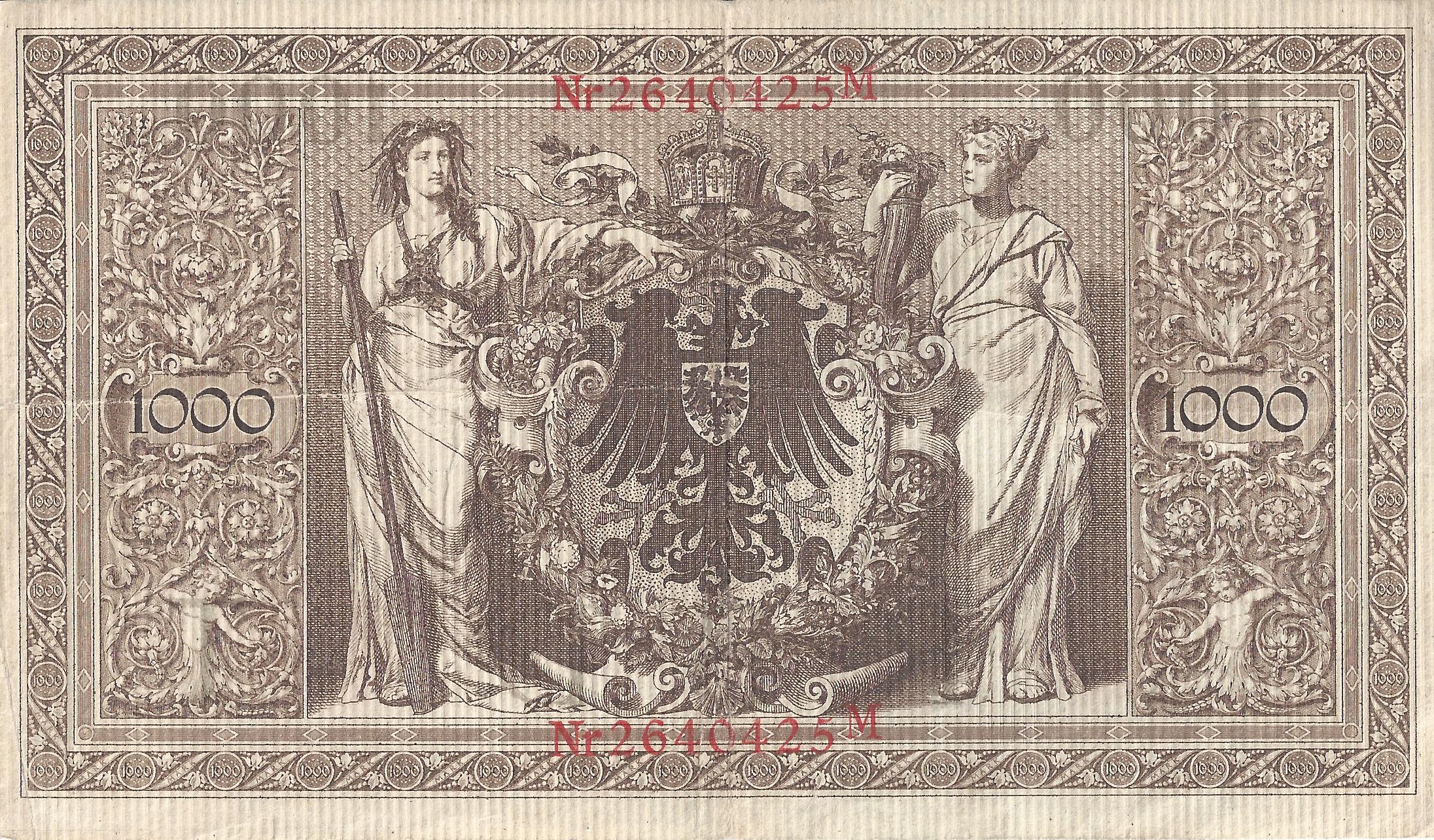
While the United States has had a somewhat stable currency since the Civil War, some other countries were not as fortunate. Germany, for example, went through a lot of upheaval in the 20th Century. Prior to World War I, The German Gold Mark was the banknote Germans used. Produced in denominations of 20, 50, 100 and 1000 Mark, the bank notes are quite large, especially compared to American notes, as this 1000 Mark example from 1910 shows:The German Gold Mark was replaced in 1914, by the German Papiermark. This decision was because the link between the gold reserves and the mark was abandoned. By the end of the War in 1918, the German Papiermark was nearly worthless, due to the German loss, and insistence of Germany to pay back war debts by printing and using bank notes. The Rentenmark replaced the Papiermark as such, due to hyper inflation. It was replaced with the Reichsmark, prior to World War 11, and then the East German Mark, and Deutsche Mark from War’s end to 1990, when Germany was reunited, and the Deutsche Mark took over from 1990, until 2002, when the Euro took over as currency for Germany and much of Europe.
Another country that had a lot of economic upheaval was Russia. The Ruble is the traditional currency of Russia, and like other currencies, were made of gold or silver. The amount of metal per coin varied, until Peter The Great standardized the amount of silver in 1704. By 1768, banknotes were being printed, by the Assignation Bank. This lasted until 1843, when the Assignation Bank folded, and “state credit notes” were issued by the government.
The old system lasted until the October Revolution of 1917, when the Russian Soviet Federative Socialist Republic took over as government, and began circulating their own version of the ruble. The first version, which was used until 1922, had to be adjusted for post-war, non-gold standard hyperinflation after World War I. In 1922, the second version was instituted, this version having a rate of 1 “new” ruble for 10,000 “old” rubles, due to hyperinflation. The third change took place in 1923, at a rate of 100 to 1. This lasted until 1924, when Joesph Stalin’s consolidation of power following the death of Lenin, and Stalin issued the fourth version of the Soviet Ruble, which was attached to the gold standard, and lasted through 1947, when the fifth version, which was issued in response to citizens selling wartime rations for a profit, and keeping the money for themselves. This was placed on amounts over 3,000 rubles.
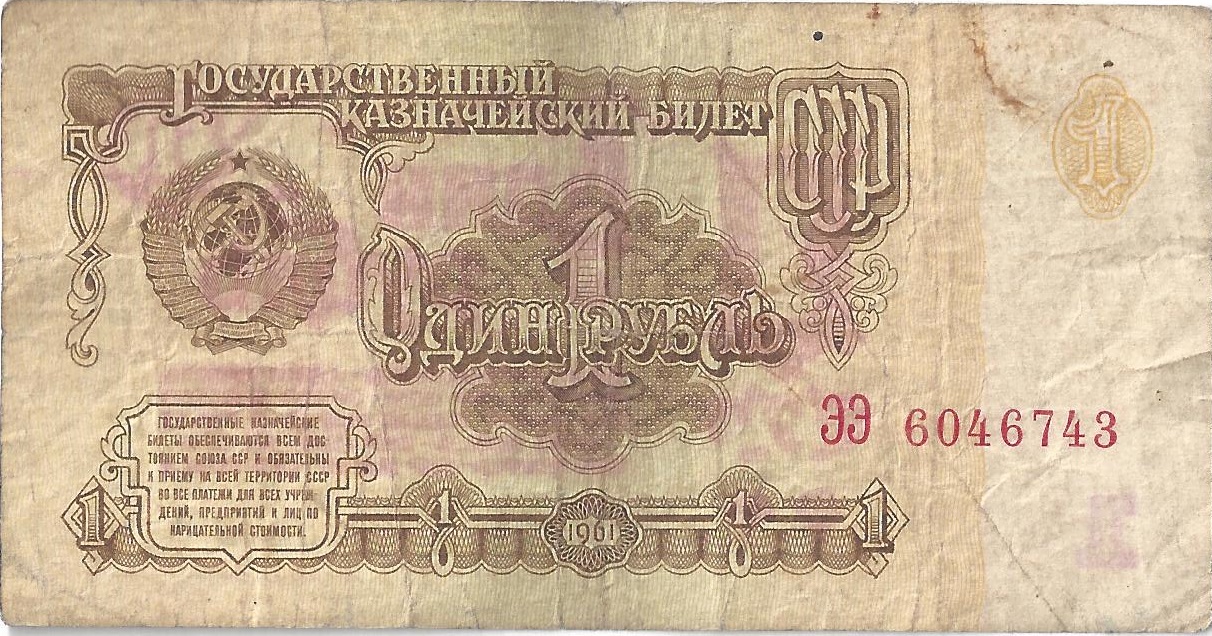
These are examples of the sixth version, used from 1961 to 1991. These brand new bank notes were designed by arists Victor Tsigal, and had a gold exchange rate of one ruble for 0.987412 gram of gold, though the gold was never offered to the general public. These are the 1, 3, 5, 10, and 25 ruble bills from 1961, the first year of issue.Bank notes, like coins have different sizes, These are the scale designs of the different bank notes I have discussed.I have to say that given recent trends, which emphasize anti-counterfeiting measures as opposed to aesthetic design, I hate United States Currency. This is the front and back of the current design, first used in 2006. This is the front and back from a $5 1953. This is the front and back of a $5 bill from 1928. This is the front and back of a $5 bill from 1896, and from 1891, 1880, and 1862. It’s amazing how much better the bill gets, the older it is. I understand that anti-counterfeiting measures are a requirement in this day in age, but can we at least make them pleasant to look at?
Next week, we will return to auto racing, with a historic piece of Funny Car memorabilia…stay tuned.
I wanted to start 2016, and celebrate my 34th birthday with a project I have been working on for a while. Money really is the great equalizer. Every human being on the planet wants as much of it as possible. We work jobs we hate in order to get it, and we spend it as we see fit. While we mainly spend it on things we need to live, food, shelter, and clothing, we do spend it on things that make us happy.
I find it amazing that most people know so little about one of the most important objects in the world. For a lot of us, our pocket change can be useful, but if you knew the history about it, and how it was made, they would be awestruck.
Metallic coins really started with the human desire for gold. While the earliest known coins date back to around the 8th and 7th centuries BCE, gold has been used since 600 BCE for monetary purposes. Today, gold is still a part of global currency, but most gold mined is used for other applications, such as jewelry, electronics, medicine, commercial chemistry, and other industrial uses.
Gold is also a status symbol. Gold medals, and trophies are symbols of victory and achievement. Gold used in jewelry is symbolic of wealth and success. Gold in and of itself is seen as both a form of good and evil. One of James Bond’s most well known foes was Auric Goldfinger, who spent his entire life trying to acquire as much gold as possible.
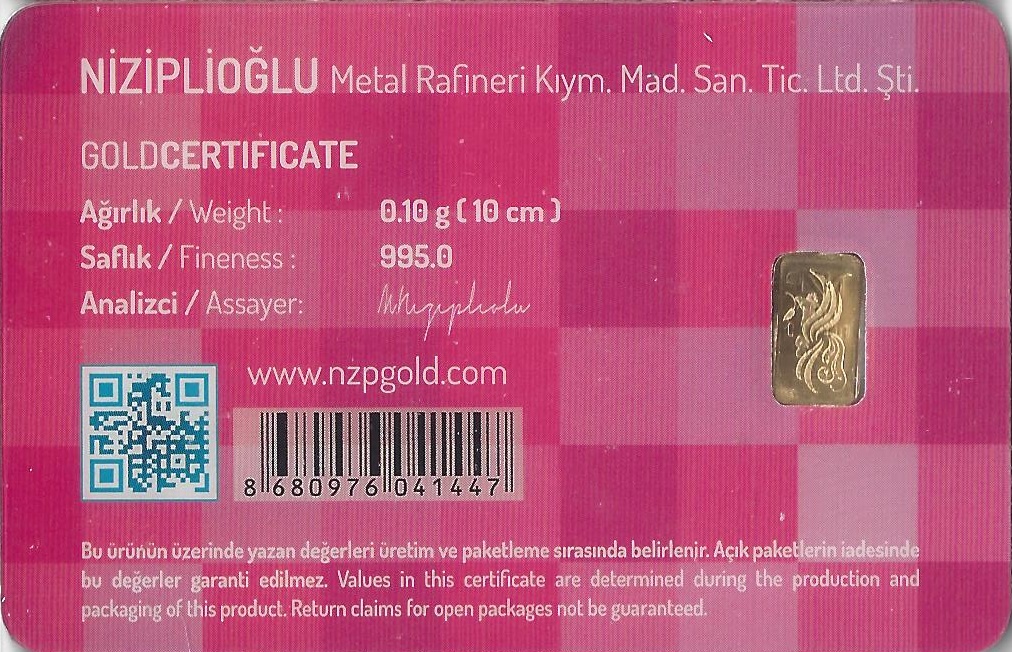
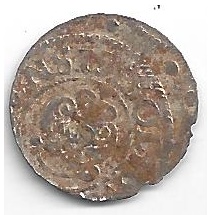
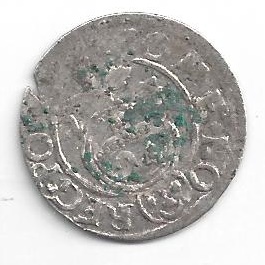
I happen to have some pure gold in my possession. I have .61 grams of gold in the form of three small ingots. Two of them, weighing .1 grams and .01 grams respectively are from NZP Gold, a smelting plant in Turkey. The third one, weighing .5 grams comes from Istanbul Gold Refinery, also in Turkey.Coins started their lives as a way to simplify the use of gold as currency. Coins were originally made by using molds and metal. The blank was made using bars of metal, which was hammered out on anvils. Then the blank, which is known as a “planchet” was then heated up, placed between the two molds, and hammered. This was a less than precise method, and since the mold had to be hammered by hand, the design would vary. These examples of medieval coins are examples of that process.As time went on, the process improved. Dies replaced the molds. The die process is similar in theory to the mold process, but there is a lot more quality control involved. Dies are cast from a master die. The design for the master die is drawn on paper, and then hand carved in clay then plaster by an engraving expert, in a much larger size than the coin will be. That is then coated in expoxy, which takes 18 hours to set and cure, then it is placed in a machine that is called a “reducing lathe” which spins the design around while transferring every minute detail from the large epoxy mold to a coin-sized die. This die is called “the reduction hub” and is used to make the master die.
When the master die is made, the reduction hub is placed into a machine with a cone-shaped piece of metal. The machine presses the hub into the cone, creating the master die. This master die is used to make “working hubs” which are used in the die press. Dies have the image of the coin reversed, so they come out properly in the minting process. Planchets come about from 1,500 foot rolls of prefabricated metal, which has the correct mixing of metals. The planchets are punched out, and the waste metal is recycled. These are two examples of modern planchets, one is a quarter, one is a dime.After they are washed and cleaned, the coins go through an “upsetting mill” which uses a large spinning disk to move the planchet through a groove which grows narrower and narrower. This adds a raised edge to the coin, higher than the design, which is called a “relief.” This is done to protect the relief. Then the planchet, with the raised edge heads to the press, where a die set is waiting. The coin press can stamp out 750 coins a minute, or 12.5 coins a second! One die is the “hammer” which moves back and forth during the stamping process, and the other is called the “anvil” and is stationary.
After the coin is struck, mint technicians examine a sample from the batch. If there are die errors, or other forms of damage, the lot it scrapped, the metal recycled, and a new hub is brought in. This is done for several reasons. The mint takes pride in their work, but the main reason is that new vending machines have scanners that scan coins as they are inserted. Errors of any kind mean that the scanner will reject the coin as it sees it as fake.
Interestingly, the US Mint doesn’t simply throw away used coin dies. They realize that there is a huge demand for coin dies. The relief is removed from the die, and destroyed. The end result is packaged with one of the coins it minted, and sold in sets to collectors, such as this example here.This set comes from the Philadelphia Mint, and the die, this one #P6-122687 was used from February 14, 2006 to February 16, 2006, and was used to strike 286,000 Nevada P quarters. The relief has been removed, and the Brilliant Uncirculated Nevada P Quarter it comes with is one of the 286,000 quarters it minted. The has obviously had the relief removed. This is not a minor issue, as there are a lot of counterfeiters out there, who want to make money the illegal way, rather than earn it. This also goes back to the Canadian Voyager Die incident. In 1986, the Royal Canadian Mint shipped both sets of master dies from Ottowa to Winnepeg. In the following investigation, it was discovered that the Royal Canadian Mint had no set procedure for shipping dies, and in a bid to save $43.50 Canadian. This disastrous decision forced the Mint to come up with a new design, due to the very real fears of counterfeiting, and as such, the Loonie was chosen as the new design for the dollar coin.
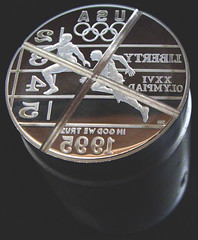
While it is impossible to get a die used in a monetary coin, medallion dies are easier to get. While some dies are clearly canceled, others, such as these three examples, still have the reverse image present. These two small dies were used to make a small “B.T.” token, slightly bigger than a nickel. The accompanying token is a fit to the mold. This second die is from a 1960’s Wildwood Medallic Arts Wildlife series medallion. This is from the 3rd medal in the series, this is the Grizzly Bear die from the Grizzly Bear/Golden Eagle Medallion. The relief is just under 1.5 inches across, and is in perfect condition, having no evidence of cancellation. The detail in it is amazing.
Next week, I will discuss bank note design. Until then, here is a video showing the dies pressed into soft clay.
The Executive Paint Scheme Ranking Committee has had our final meeting. While I made the decisions, Alejandro slept on my lap and occasionally woke up and purred. All 49 teams are having their paint schemes ranked this week, so here we go:
1-FURNITURE ROW RACING #78 CHEVY SS-Rank Last Year:4th of 55-Black matte with orange numbers works. The ovarian cancer theme is very justifiable, as Truex’s wife is dealing with ovarian cancer. The #78 has earned the top spot.
2-FRONT ROW MOTORSPORTS #35 FORD FUSION-Rank Last Year:28th of 55-Front Row’s new team started their existence with a slew of great schemes. All of them are smooth, simple and great.
4-WOOD BROTHERS RACING #21 FORD FUSION-Rank Last Year:1st of 55 I thought that the Snap On memories scheme wasn’t as good as it could be,but other than that, The Wood Brothers had a great season.
5-JTG DAUGHTERY RACING #47 CHEVY SS-Rank Last Year: 15th of 55-A lot of great looks, but Bush’s kept them out of the top five in The Leaderboard.
6-HENDRICK MOTORSPORTS #24 CHEVY SS-Rank Last Year: 36th of 55-Jeff’s last season in NASCAR was one of his best looking. The Penn State Scheme kept Jeff from taking the top spot, but a solid season nonetheless.
7-STEWART-HAAS RACING #4 CHEVY SS-Rank Last Year:5th of 55-Kevin had a great season, though the disaster that is Hunt Brothers Pizza dragged his ranking from 2nd, possibly first to Fourth in the Chevy Leaderboard.
8-JOE GIBBS RACING #11 TOYOTA CAMRY-Rank last year:24th of 55-Four brand new, amazing FedEx schemes, a mediocre SportClips scheme, and one mediocre SportClips throwback scheme.
10-PHIL PARSONS RACING/PREMIUM MOTORSPORTS #98-Rank Last Year:31st of 55-Due to the midseason switch, the #98 will be ranked in Chevy, Ford AND Toyota. Ran a lot of good schemes, except the Xyience scheme, and the modified scheme with sponsors.
11-TEAM PENSKE #2 FORD FUSION-Rank Last Year:6th of 55 Detroit Gasket drags down what could easily have been the top pick for 2015. Other than that, no complaints.
12-MICHAEL WALTRIP RACING #15 TOYOTA CAMRY-Rank last year:44th of 55-I was much too harsh on the 15 last year, and looking at the schemes this year, they are all defendable. I did give extra credit for the hand-painted Buddy Baker scheme.
13-PREMIUM MOTORSPORTS #62-Rank Last Year:N/A-Due to the midseason switch, the #98 will be ranked in Chevy, and Ford-A lot of solid schemes, though Vydrox and Low T Central were a bit too much.
14-FRONT ROW MOTORSPORTS #38 FORD FUSION-Rank Last Year:32nd of 55 While there weren’t a lot of new schemes, the new ones, as well as the camo schemes were not great.
15-LEVINE FAMILY RACING #95 FORD FUSION-Rank Last Year:13th of 55-Another top contender ruined by one scheme, this one Larry the Lobster. Other than Larry, the schemes are great.
16-FRONT ROW MOTORSPORTS #34 FORD FUSION-Rank Last Year:20th of 55-Front Row uses a template that usually works well, but modifying for Bully Hill didn’t work, and no escape was a disaster.
18-HENDRICK MOTORSPORTS #25 CHEVY SS-Rank Last Year:N/A-Chase Elliott, who is taking over for Jeff Gordon in 2016, used the #25 to get some Cup experience. The NAPA scheme by itself is not bad, but the fauxback Bill Elliott scheme is a disaster.
19-CIRCLE SPORT RACING #33 CHEVY SS-Rank Last Year:38th of 55-Science Logic and Pinkwashing derailed what was otherwise a great looking year for Circle Sport.
20-RICHARD PETTY MOTORSPORTS #43 FORD FUSION-Rank Last Year:11th of 55-The Nathan’s color scheme does not work well with the Petty color scheme, and the Fresh From Florida scheme is awful. The majority of schemes are good though.
21-TMG RACING #30 TOYOTA CAMRY-Rank last year:N/A-Smokey Mountain Snuff is awful, plain car with no sponsor is great.
23-HSCOTT MOTORSPORTS #51 CHEVY SS-Rank Last Year:30th of 55-If the car is running a Brandt scheme it looks good, anything else looks terrible.
24-HILLMAN-SMITH MOTORSPORTS #40 CHEVY SS-Rank Last Year:27th of 55-The schemes were all over the place this year, but this team has had a lot of good looks.
25-CHIP GANASSI RACING TEAM #42 CHEVY SS-Rank Last Year:18th of 55-The plaid, Energizer, camo and Clorox sank them this season, otherwise they looked really good.
26-RICHARD CHILDRESS RACING #27 CHEVY SS-Rank Last Year:36th of 55-Part of the problem of using a template is that it can backfire on you, and that is exactly what has happened here. The Menard’s template works well with some color schemes, but terribly with others. The Pittsburgh Paints scheme is horrible by itself.
28-HSCOTT MOTORSPORTS #46 CHEVY SS-Rank Last Year:N/A-A lot of good schemes and a lot of bad schemes is the story of the #46 season.
29-BK RACING #83 TOYOTA CAMRY-Rank last year:25th of 55-Many new schemes and sponsors, and they were all over the place. When taking everything into account, I can say that they aren’t horrible.
30-BK RACING #23 TOYOTA CAMRY-Rank last year:8th of 55-VooDoo, Overture, and Pinkwashing take a decent grade down to a mediocre grade. Otherwise there is a lot of decent schemes here.
32-ROUSH-FENWAY RACING #16 FORD FUSION-Rank Last Year:54th of 55-3M leaving was the best thing that happened to Greg Biffle, especially on this list, though Pinkwashing, Safety Kleen, and Jardiance do drag it down.
34-ROUSH-FENWAY RACING #6 FORD FUSION-Rank Last Year:10th of 55-Camo and Pinkwashing kill a great rank, including one of my favorite throwbacks outside of Jeff Gordon’s.
35-JOE GIBBS RACING #18 TOYOTA CAMRY-Rank last year:4th of 55-A lot of changes in paint schemes, some good, some awful, many mediocre.
36-CHIP GANASSI RACING TEAM #1 CHEVY SS-Rank Last Year:12th of 55-McDonalds was either great or awful. Add a pinkwashing scheme, Bass Pro Shops, and Bad Boy Buggies, and they are ranked much lower than they should be.
37-HENDRICK MOTORSPORTS #5 CHEVY SS-Rank Last Year:51st of 55-When Kasey has a good scheme, it is still mediocre, and he didn’t have a great scheme all year.
38-HENDRICK MOTORSPORTS #48 CHEVY SS-Rank Last Year:2nd of 55-Completely changing their look dragged down Jimmie’s grade. On a separate note, I do think the yellow tribute numbers should stay, since they look better than the white numbers.
39-GO GREEN RACING #32 FORD FUSION-Rank Last Year:46th of 55-The most different paint schemes of any team in 2015, they ranged from amazing, a great throwback, to vomit inducing.
40-RICHARD PETTY MOTORSPORTS #9 FORD FUSION-Rank Last Year:41st of 55-Like Go Green, the #9 ran a lot of paint schemes, some were great, but many were awful. I really hope whoever drives the #9 next year helps tone it down.
41-HENDRICK MOTORSPORTS #88 CHEVY SS-Rank Last Year:17th of 55-With the exception of Dewshine, everything that Mountain Dew ran was average to awful. Nationwide is decent, but Halo was awful.
42-STEWART-HAAS RACING #14 CHEVY SS-Rank Last Year:47th of 55-Not much change in terms of sponsors. In terms of car design, there were a lot of changes this year. But with the exception of Rush’s, they were all mediocre to awful.
43-TOMMY BALDWIN RACING #7 CHEVY SS-Rank Last Year: 48th of 55-The car looks so much better without a sponsor on average, it isn’t even funny.
44-TEAM XTREME RACING #44 CHEVY SS-Rank Last Year:53rd of 55-Not even the addition of Golden Corral could save Team Xtreme Racing. I’m glad I don’t have to see that Phoenix Warehouse scheme anymore!
45-TEAM PENSKE #22 FORD FUSION-Rank Last Year:42nd of 55-The Mario Andretti throwback, and the Helio Castroneves mockup were great, but sadly, those were the only highlights of the season for the 22 crew.
46-STEWART-HAAS RACING #10 CHEVY SS-Rank Last Year: 52nd of 55-Hideous design, awful color choices, and pinkwashing…need I say more?
47-PREMIUM MOTORSPORTS #66-Rank Last Year:N/A-Another example of when a car looks so much better without a sponsor on average, it isn’t even funny.
49-STEWART-HAAS RACING #41 CHEVY SS-Rank Last Year:9th of 55-Due to the driver’s actions toward his then girlfriend at Dover, the #41 has earned the bottom ranking.ICHAEL WALTRIP RACING,TMG RACING, BK RACING,
The Executive Paint Scheme Ranking Committee(I should pick a different committee name next year) has met for another round of meetings to determine the Toyota Leaderboard for 2015. While Alejandro looked at me sarcastically when I asked his opinion, we got the job done. Here are Toyota’s rankings for 2015.
1-RAB RACING #29-Rank last year: 5th of 13-Only one scheme, and it was a great one!
2-JOE GIBBS RACING #11-Rank last year:6th of 13-Four brand new, amazing FedEx schemes, a-mediocre SportClips scheme, and one mediocre SportClips throwback scheme.
3-JOE GIBBS RACING #20-Rank last year:8th of 13-SportClips didn’t do the really good set of schemes any favors.
4-MICHAEL WALTRIP RACING #15-Rank last year:12th of 13-I was much too harsh on the 15 last year, and looking at the schemes this year, they are all defendable. I did give extra credit for the hand-painted Buddy Baker scheme.
5-MICHAEL WALTRIP RACING #55-Rank last year:1st of 13-New Aaron’s scheme isn’t that great. The Throwback is amazing!
6-TMG RACING #30-Rank last year:N/A-Smokey Mountain Snuff is awful, plain car with no sponsor is great.
7-JOE GIBBS RACING #19-Rank last year:N/A-Nothing really horrible here, though there are many mediocre schemes here.
8-BK RACING #83-Rank last year:7th of 13-Many new schemes and sponsors, and they were all over the place. When taking everything into account, I can say that they aren’t horrible.
9-BK RACING #23-Rank last year:3rd of 13-VooDoo, Overture, and Pinkwashing take a decent grade down to a mediocre grade. Otherwise there is a lot of decent schemes here.
10-BK RACING #26-Rank last year:4th of 13-The many awful schemes here take them to back of the pack. Not even the great schemes can save it.
11-JOE GIBBS RACING #18-Rank last year:2nd of 13-A lot of changes in paint schemes, some good, some awful, many mediocre.
12-BK RACING #26-Rank last year:4th of 13-The many awful schemes here take them to back of the pack. Not even the great schemes can save it.
 By David G. Firestone
 It’s not easy to figure out when these gloves were used, but a little video research can go a long way. Based on my research, I can safely say that these gloves were used before 2011, possibly after, as video footage and photograph research clearly show Buescher wearing this style of gloves in 2010, but switching to a different design in 2011. I’ll give Buescher credit where credit is due, he was really good with glove color matching sponsors. Since there are a number of sponsors using this color scheme, it doesn’t seem too far fetched that they were used post-2010.
 The grips on the palms are yellow, and have Simpson logos on them.


 Buescher has signed both gloves, with the inscription “31.”
 James Buescher, along with his older brother Chris are both NASCAR champions. Next week, we’ll look at a series of memorabilia from another group of championship winning brothers…