The Driver Suit Blog-Every Great Outfit Needs Gloves and Shoes to Match!

10-riggsshoes - CopyBy David G. Firestone

Since the fire risk in racing is as high as it is, it makes sense that driver uniform includes fire retardant shoes and gloves to go along with it. Although they are frequently overlooked by many fans, they are just as critical to driver safety and comfort as the suit and helmet. Gloves and shoes have, like the suit and helmet, become fashion forward in recent years.

Let’s look at the gloves first. Gloves in racing are typically made of multiple layers of Nomex, and feature a textured layer on the palm, which is designed to help the driver grip the steering wheel. Gloves may be waterproofed for open cockpit racing, where rain and other inclement weather may not impede the race. The gloves give the same amount of protection that the suit does, roughly 30 seconds, and are certified by FIA and SFI. This example, worn by Hut Stricklin in 2000 shows the basics..90-stricklinglovesThe textured palm…90-stricklingloves-rglovb 90-stricklingloves-glovebThe thickness…90-stricklingloves-rsize 90-stricklingloves-lsizeas well as the liability tag and the safety certification…90-stricklingloves-ltag 90-stricklingloves-rtagAs I mentioned above, gloves have evolved to be more visible on in-car cameras. These examples, worn by Dale Earnhardt Jr. and Jimmie Johnson show how these new customizations can take a simple safety equipment item, and add some visual appeal to it. A search on eBay reveals that these items do wind up for sale after they are used.

Next, let’s discuss the shoes.

Shoes are as important as gloves in terms of fire protection. Those 30 seconds of fire protection are critical for the driver to get out of a burning car. The basic design of the shoes are meant to help the driver, well, drive. Some drivers in years past have opted for nontraditional racing shoes, such as Dave Marcus who was well-known for wearing wingtips while racing.

Typical racing shoes consist of a rubber, fire retardant sole, with triple-layer Nomex material covering the foot. The tongue, and shoe laces are fire retardant as well. Velcro straps are frequently employed to secure the shoe as extra protection. Let’s look at a race-worn pair, this pair worn by Scott Riggs in the early 2000’s.10-riggsshoesThese shoes show the sole design,10-riggsshoes-bottomMain design, with the reflective layer adding some extra protection…10-riggsshoes-rshoe2 10-riggsshoes-rshoe1 10-riggsshoes-lshoe2 10-riggsshoes-lsigand thickness…10-riggsshoes-ltopWhile the design of the gloves are fashion forward, the shoes are more utilitarian than anything else. But they do wind up on eBay sometimes…

Jamie McMurray #1 Bell Helicopters Chevy SS Love the simplicity in the design and color scheme, as well as Bell’s great logo! It is simple, yet elegant, and earns an A grade

Kasey Kahne #5 Farmer’s Insurance 85th Anniversary Chevy SS It’s amazing how a color change can affect a scheme. I graded the standard scheme at a D+ earlier this year, and with the black red and tan color change it takes it from a D+ to an A-. Notice that there is no real difference between the two schemes except the colors and the new one is so much better!

Kevin Harvick #29 Bad Boy Buggies Chevy SS I like this scheme for the same reasons as the Jamie McMurray Bell scheme, and it gets the same A grade!

David Stremme #30 Window Wax Toyota Camry  The best way I can describe this scheme is that there is nothing good about it.  Anything they could have messed up with this scheme, they did.  It gets an F-

David Stremme #30 Lean 1 Toyota Camry See Above

Landon Cassill #33 Justin Workboots Chevy SS I like the design scheme except for the primary sponsor logo is a completly different color than the rest of the car.  The thing is that the two color schemes work very well by themselves, but the combo of the two just makes no sense.  It takes an A scheme and brings it down to a C…PICK A COLOR SCHEME!

The Driver Suit Blog-2014 NASCAR Hall of Fame Nominees

I had an article ready on driver shoes and glove ready for this week, but NASCAR came out and announced this week that the 2014 NASCAR Hall of Fame would be electing new inductees on May 22. So what I’m going to do this week is discuss each inductee in some detail, and add the 5 who I should be inducted this year, and the 5 that I think will be inducted this year.

Red Byron-One of NASCAR’s 50 Greatest Drivers he is the first champion in what is now the Sprint Cup, Red Byron is considered one of the best drivers in the early years of NASCAR. After winning the inaugural NASCAR Modified championship, he took to the inaugural NASCAR Strictly Stock series. Although he only had 2 wins in the 8 races, he took the title.

Richard Childress-The top team in the 1980’s and 1990’s Childress has the distinction of being the first owner to win a race in all 3 of NASCAR’s top series, as well as being the first owner to win a championship in all 3 of NASCAR’s top series. In total, in the top 3 NASCAR series, he has 6 championships and 193 wins.

Jerry Cook-His work in the Wheelin Modified Series speaks for itself, 6 championships, 342 wins, and one of NASCAR’s 50 Greatest Drivers. He is also known for having a rivalry with Ritchie Evans, who was inducted into the NASCAR Hall of Fame a few years ago.

H. Clay Earles-The founder of Martinsville Speedway, Earles built Martinsville after witnessing the popularity of stock car racing at fairgrounds, feeling that a permanent track would be a profitable venture. Earles also began the tradition of awarding grandfather clocks to race winners, a practice that continues to this day.

Tim Flock-Two time Sprint Cup champion in 1952 and 1955, he hold the record for most poles in a season with 18, highest career winning percentage for a driver with 21%. He is one of NASCAR’s 50 Greatest Drivers.

Ray Fox-An engine builder who’s engines helped Junior Johnson win the 1960 Daytona 500, and the discovery that drafting at Daytona increases speed, Fox has 14 wins to his team as an owner, with 62 top 5’s 82 top 10’s, and 16 poles over 12 years.

Anne Bledsoe France-Helped build the sport with her husband Bill France Sr, and is the first woman up for induction.

Rick Hendrick-The top owner in NASCAR in the last 20 years, Hendrick has 262 wins in NASCAR’s top 3 Series, as well as 14 championships.

Jack Ingram-A 2-time Nationwide Series champion with 31 wins, Ingram also won the Late Model Sportsman Division in 1972, 1973, and 1974. He is one of NASCAR’s 50 Greatest Drivers.

Bobby Isaac– 1970 Sprint Cup champion who was well-known for racing the 1970 Dodge Daytona, Isaac has 37 wins, 170 top 10’s and 49 poles over 14 years. Isaac later took the Daytona to the Bonneville Salt Flats and set 28 speed records, many of which still stand. He is one of NASCAR’s 50 Greatest Drivers.

Dale Jarrett-Son of 2011 NASCAR Hall of Fame inductee Ned Jarrett, Dale is the 1999 Sprint Cup Champion who also won 3 Daytona 500s and two Brickyard 400’s. He is one of NASCAR’s 50 Greatest Drivers.

Fred Lorenzen-26 wins to his name, Lorenzen also had a winning streak from 1962 to 1967, won the 1965 Daytona 500, and pulled the Yellow Banana stunt in 1966. He is one of NASCAR’s 50 Greatest Drivers.

Raymond Parks-When Red Byron won the 1949 Sprint Cup championship, Parks was recognized as the owner of the team, the first team owner to win a Sprint Cup championship.

Benny Parsons-the 1973 Sprint Cup Champion and the 1975 Daytona 500 winner, Parsons also has 21 wins, 283 top 10’s, and 20 poles in his career. He retired from driving and became a respected television announcer. He is one of NASCAR’s 50 Greatest Drivers.

Maurice Petty-Chief engine builder for Petty Enterprises, and head mechanic for Richard Petty. For most of Richard’s 200 wins, Maurice was working on the cars.

Larry Phillips-Raced from 1961 to 2001, winning the NASCAR Weekly Series Championship in 1989, 1991, 1992, 1995, and 1996, seven NASCAR Weekly Regional championships, and 13 track championships.

Les Richter-An inductee into the Pro Football Hall of Fame, Richter was the vice-president of special operations for the International Speedway Corporation, chairman of the board for the International Race of Champions, Senior Vice President of NASCAR, and was working at Auto Club Speedway at the time of his death in 2010.

Glenn “Fireball” Roberts-Won the 1962 Daytona 500, in addition to 32 other races. His death in 1964 helped lead to safer driver uniforms with better fire protections. He is one of NASCAR’s 50 Greatest Drivers.

T. Wayne Robertson-Employee of RJR who helped promote the NASCAR Winston Cup Series by taking a show car to shopping malls, and other events, with a point standings leader-board.

Wendell Scott-The first African American to win a NASCAR Sprint Cup race, Scott is a true trailblazer, not just in racing, but in sports as well.

Ralph Seagraves-RJR executive who established the sponsorship of the Grand National series in NASCAR by Winston, forming the NASCAR Winston Cup Series in 1972, and would later go on to sponsor the NHRA as well.

Ollen Bruton Smith-Builder of Charlotte Motor Speedway, and founded Speedway Motorsports which helped oversee expansion in NASCAR, Smith was also a promoter who would put on a show for the fans before races.

Curtis Turner-Won 38 races in 4 years in the NASCAR Convertible Division, Turner would later win 17 races in the Sprint Cup Series. Turner holds the distinction of being the only Sprint Cup driver to win two flag-to-flag races back to back, leading a total of 400 laps in the two races in July of 1950. He is one of NASCAR’s 50 Greatest Drivers.

Joe Weatherly-Won two Sprint Cup Championships, two Modified Championships, with 25 wins, 153 top 10’s, and 18 poles. He is one of NASCAR’s 50 Greatest Drivers.

Rex White-1960 Sprint Cup Champion, with 28 wins, 163 top 10’s, and 36 poles. He is one of NASCAR’s 50 Greatest Drivers.

Those are the nominees for the 2014 Hall of Fame class. Picking who I think should be inducted for the 5 spots is difficult. But Wendell Scott is a given, as is Jack Ingram. I would also give a nod to Rick Hendrick and Richard Childress here. And for my final pick, I’m going with Burton Smith.

Who I think will get picked for the hall of fame is much simpler. Any driver who was named in the 50 Greatest Drivers is a safe pick. I would be shocked if Hendrick and Childress don’t get picked. So I think that Wendell Scott, Rick Hendrick, Richard Childress, Bobby Isaac, and Curtis Turner will get the pick.

Two new paint schemes this week

Austin Dillon #51 Realtree/Bruce Lowery Chevy SS That is not what a Realtree sponsored car should look like…This is! It looks too formal for hunting camo and I can’t give it a passing grade here, so it gets an F

Joe Nemechek #87 ATI Gun Stocks Toyota Camry Seriously? What is the stone design on the sides, roof and hood? Is ATI selling stone gun stocks? If the design was only on the door frame, I would be able to stand it, but is just looks bad. Again an F!

The Driver Suit Blog..The SFI and FIA patches…Why they are as critical as they are.

fia 1By David Firestone

Many race fans have seen these small patches on driver suits, and may have wondered what they are. What many do not realize is that these small patches have a very critical role in driver safety. These small patches are the safety certification patches. These small patches state that this uniform part has been examined by one of the two groups, and determined to meet the standards set by the group. For North American made equipment that group is SFI.

sfiAccording to their website, SFI was founded in 1963 as part of Speed Equipment Manufacturers Association or SEMA, as a safety group. Back then, the safety culture wasn’t as rigorous as it is today, and there were not many standards in place. SEMA started the safety certification with SFI or SEMA Foundation, Inc certification. If the equipment didn’t meet SFI standards, the participant could be denied entrance to the event. Eventually, SFI left SEMA and became its own independent group.

Since then, SFI has certified safety equipment, and their certification is the standard in North America. This small patch is usually sewn into the inside wrist area on the left sleeve. This example, from a Terry Labonte suit from 2008, indicates that the suit meets “3.2A/5” standards. According to their site, this certification is standard for driver suits, and this suit would need re-certification in the next 5 years, or 2013. This certification is standard for many NASCAR suits, as shown below.12-stremme-sfi36-said-sfi

10-labonte-sfi 12-miller-sfiFor suits made internationally, the certification comes from a different group, the FIA Institute. Like SFI, the FIA Institute has the exact same goal, to make sure auto racing is safe, and that the equipment that drivers wear is as safe as possible. Unlike SFI however, FIA certification ends up in one of two places, either on the back of the neck,36-barron-neckor inside the belt,

9-kahne-fiaBoth certifications serve the same purpose and both are mandated in racing today. These certifications also appear on driver gloves,90-stricklingloves-ltagand even helmets, usually on the HANS anchormcdonalds-2 - CopyMoving on to more 2013 paint schemes…

Trevor Bayne #6 Valvoline Ford Mustang Love this scheme! This brings back some fond memories of Mark Martin behind the wheel back in the 1990’s. The color and design scheme are amazing, so it gets an A

Regan Smith #7 Tax Slayer/Hellman’s Chevy Camaro Same as the 5 and 88, so nothing really to say here…

Brad Keselowski #22 Hertz Ford Mustang Only Penske can ruin one of the best color schemes with an awful design. Seriously what is the design on the front? It kills this scheme. Final Grade: D

Travis Pastrana #60 Ford Mustang What the Hell? Did Lisa Frank design this car? I’d love to comment on the color scheme, but just looking at the picture is enough! I didn’t think it was possible to make a scheme worse than the Kyle Bush Sponsafier car, but here we are! Final Grade: F’

By the way, I never thought I would reference Lisa Frank in this blog…

Jamie McMurray #1 Cessna Chevy SS Cessna has figured out the way to a good paint scheme, simple colors and simple design. It works very well and earns an A grade.

Casey Mears #13 Geico Ford Fusion Eww…just eww. The color scheme is dreadfull, and the designs on the side are painful to look at. It passed because of the logo and number design. Final Grade: D-

Kyle Busch #18 Interstate Batteries Toyota Camry Great color scheme, and good basic design, but there is something with this car I find annoying. The driver’s name is on the windshield and above the door, so why is it on the top of the hood? Not just on the top of the hood, but UPSIDE DOWN as well? Seriously? It makes no sense, and takes the final grade down to a B

The Driver Suit Blog-NASCAR Helmets Over The Years

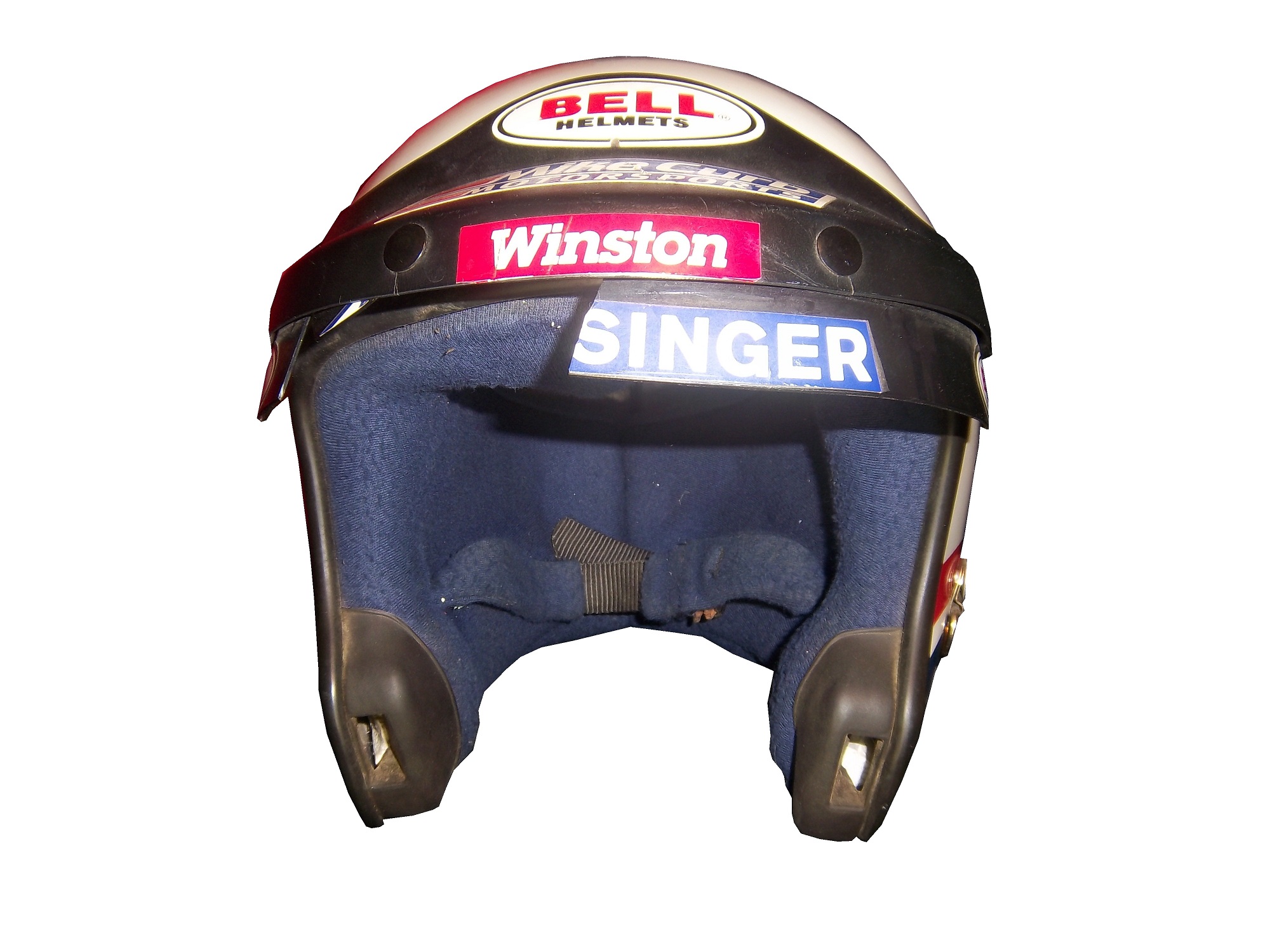
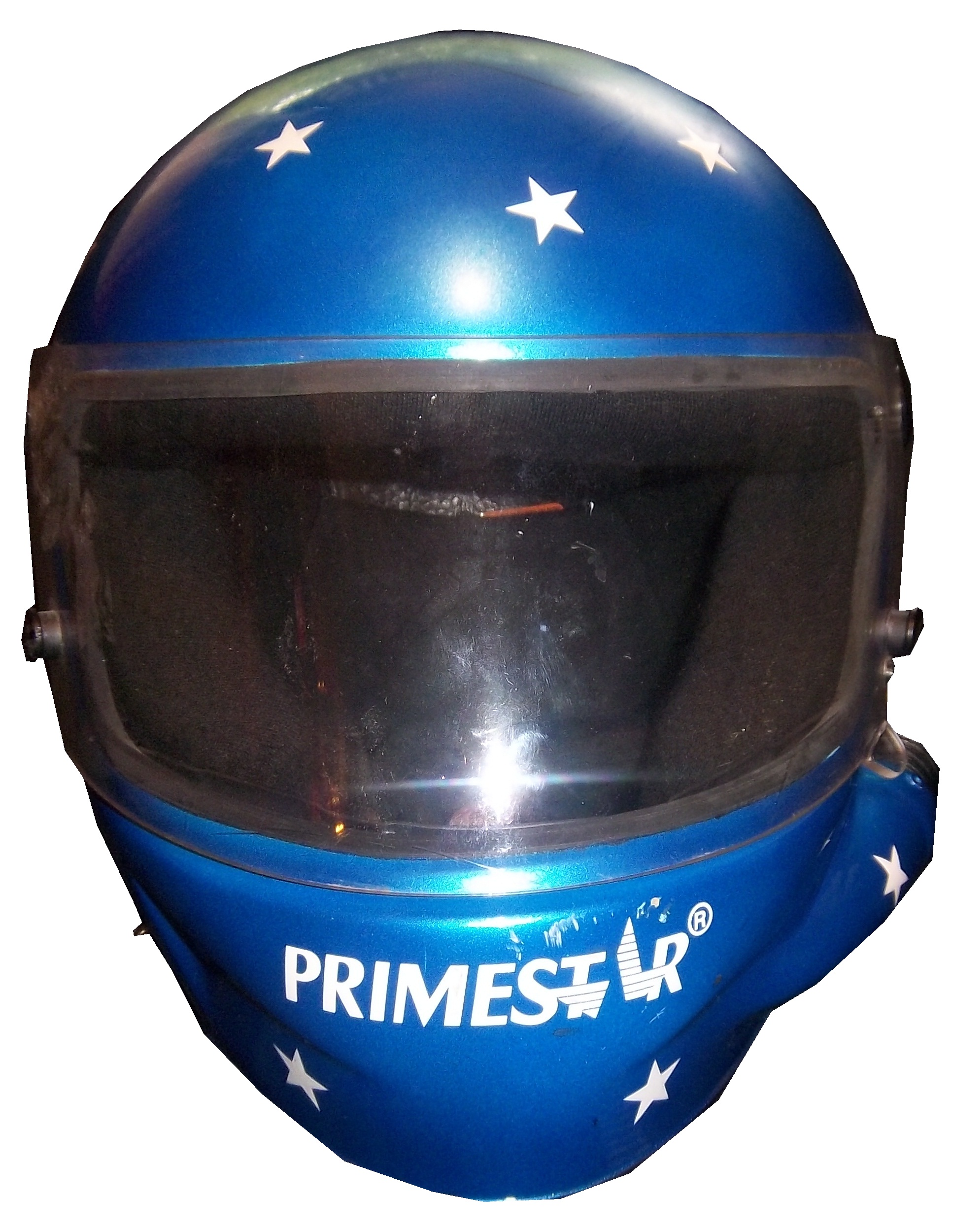
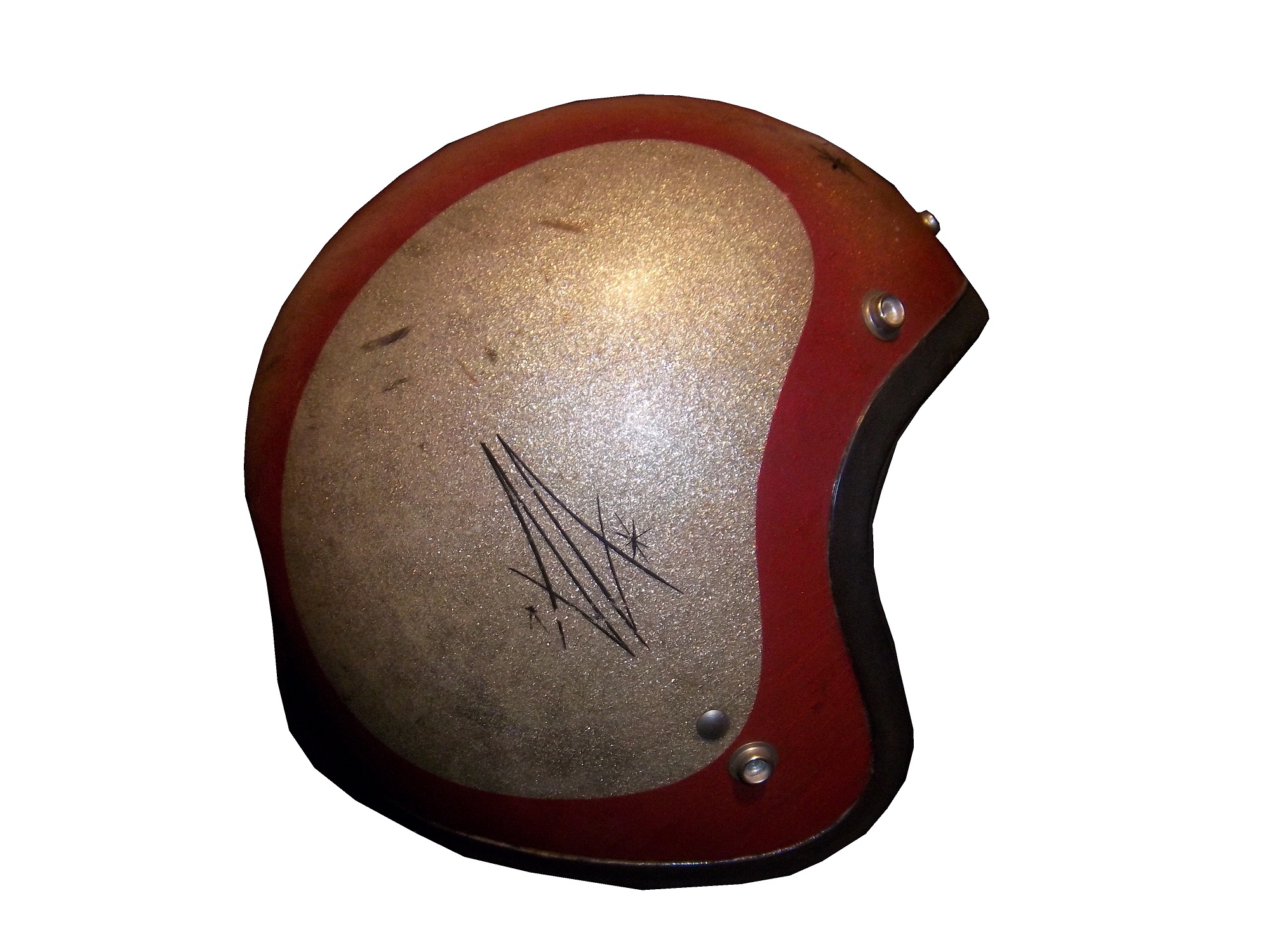
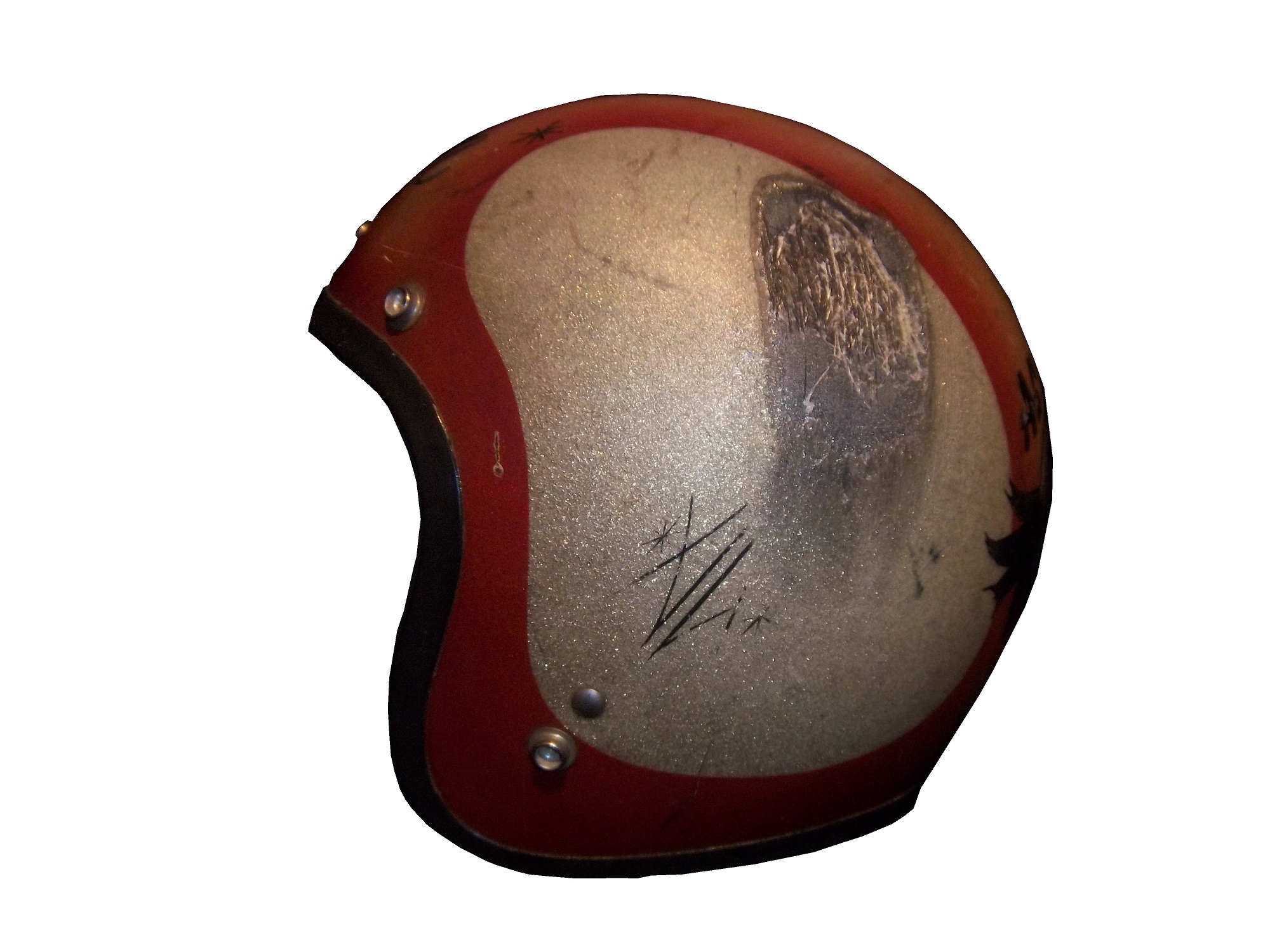
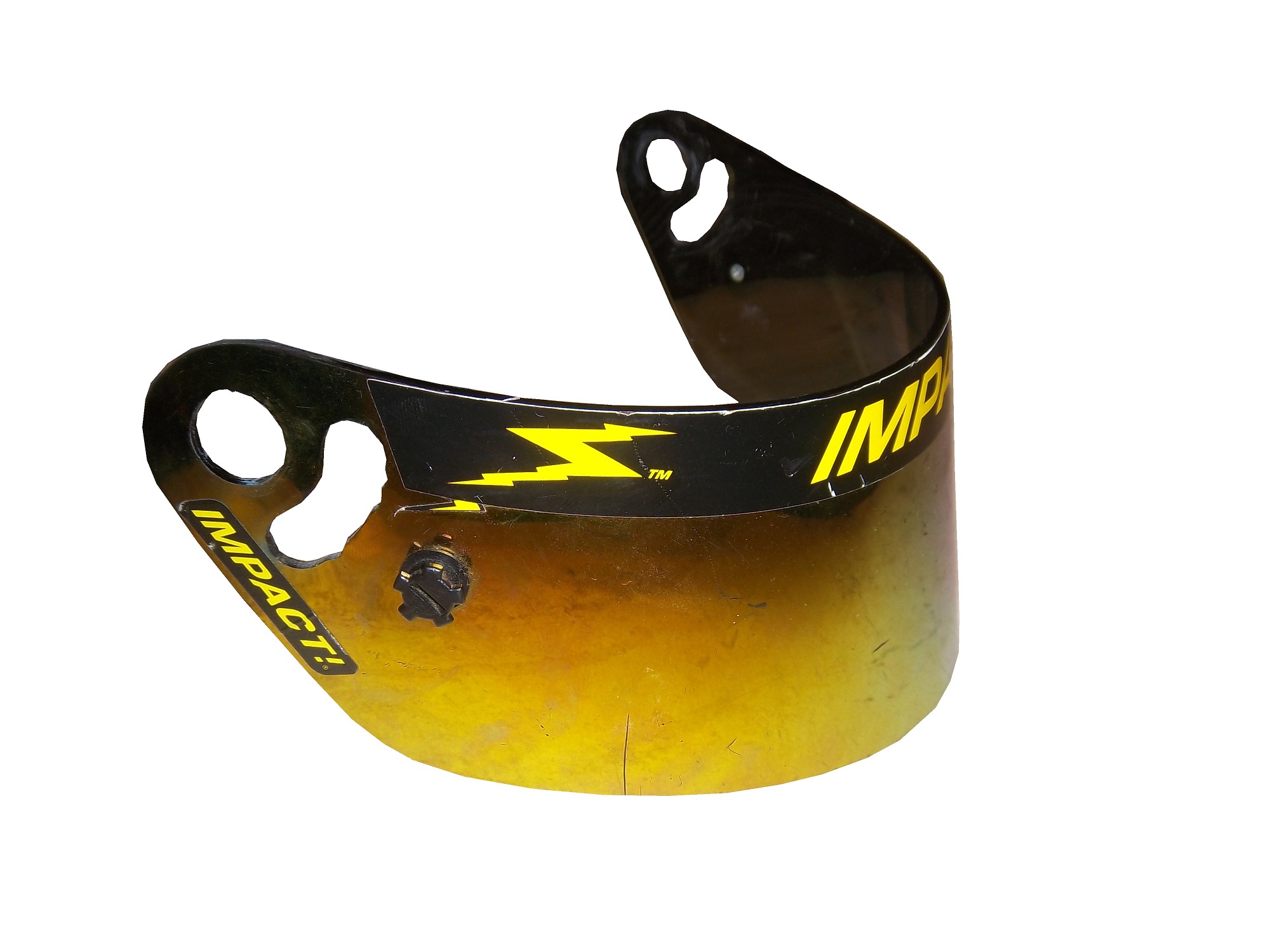
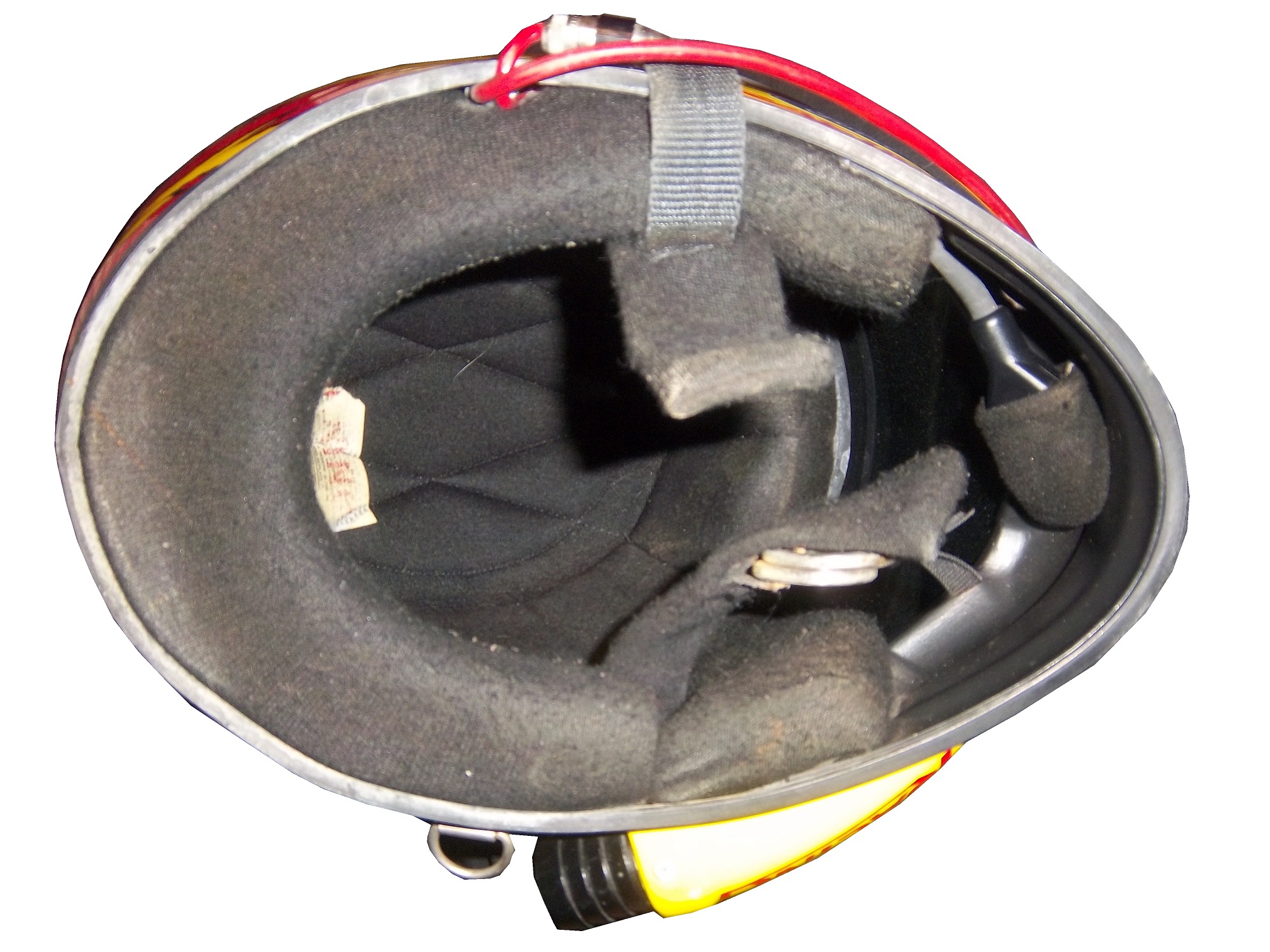
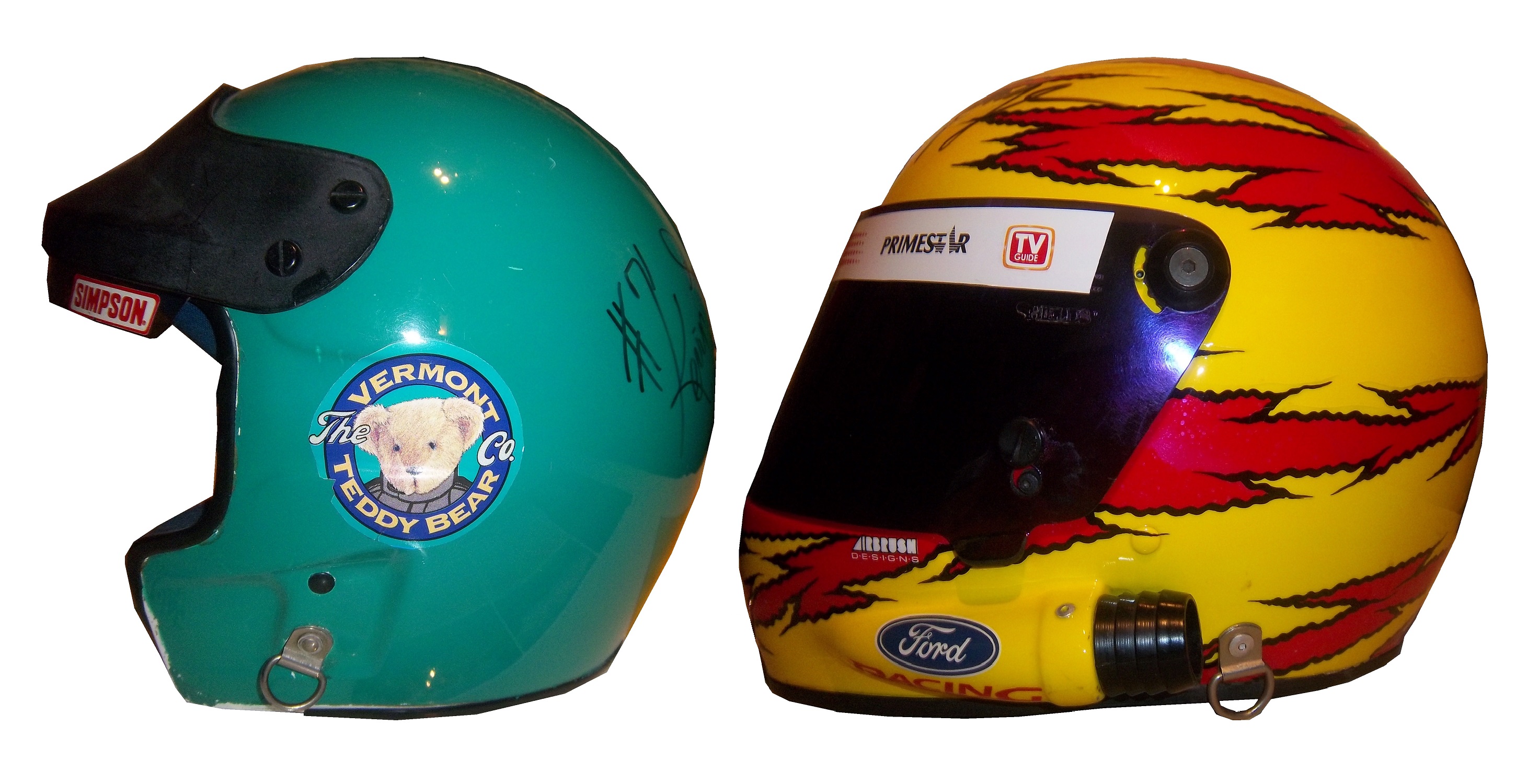
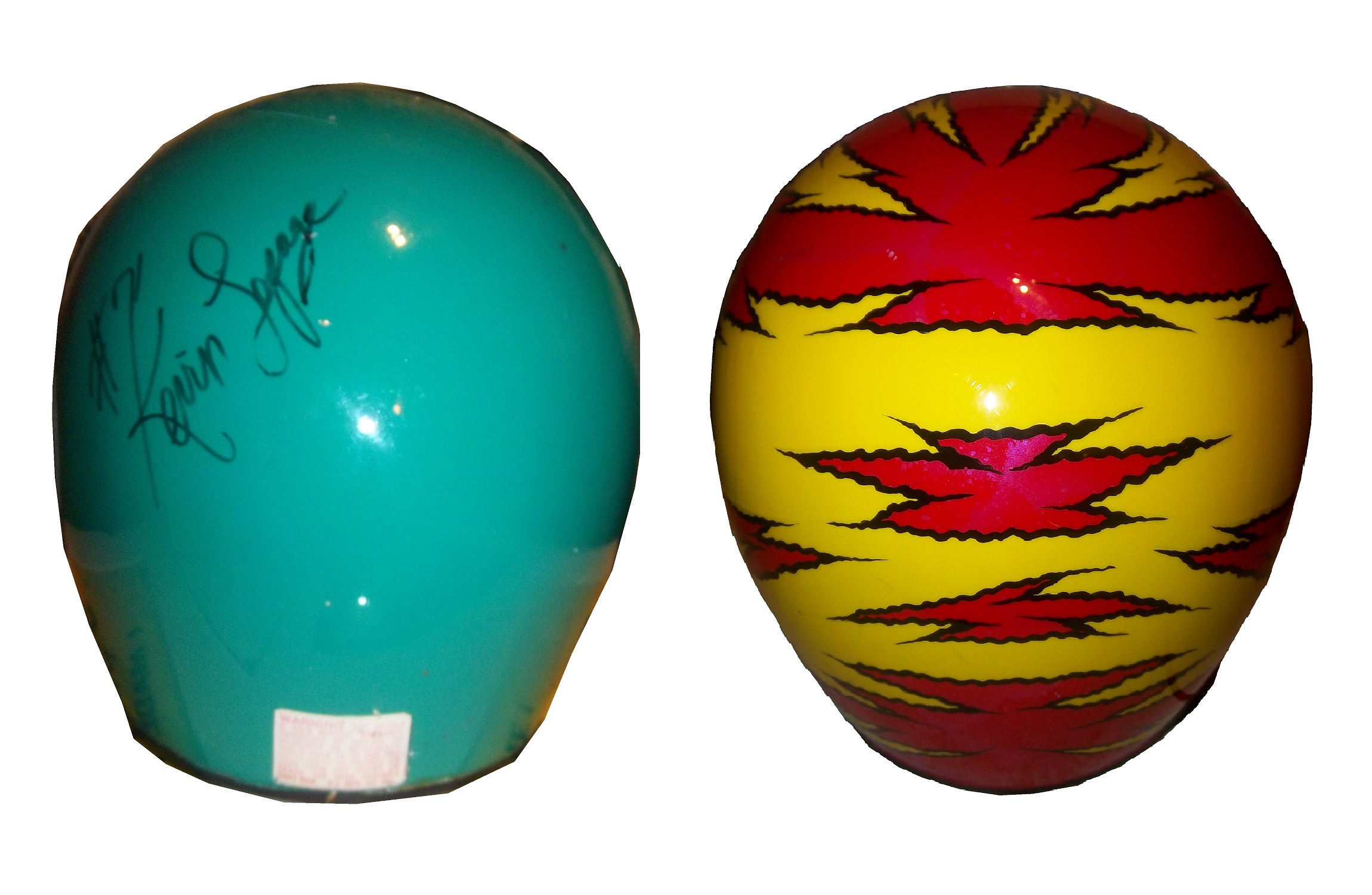
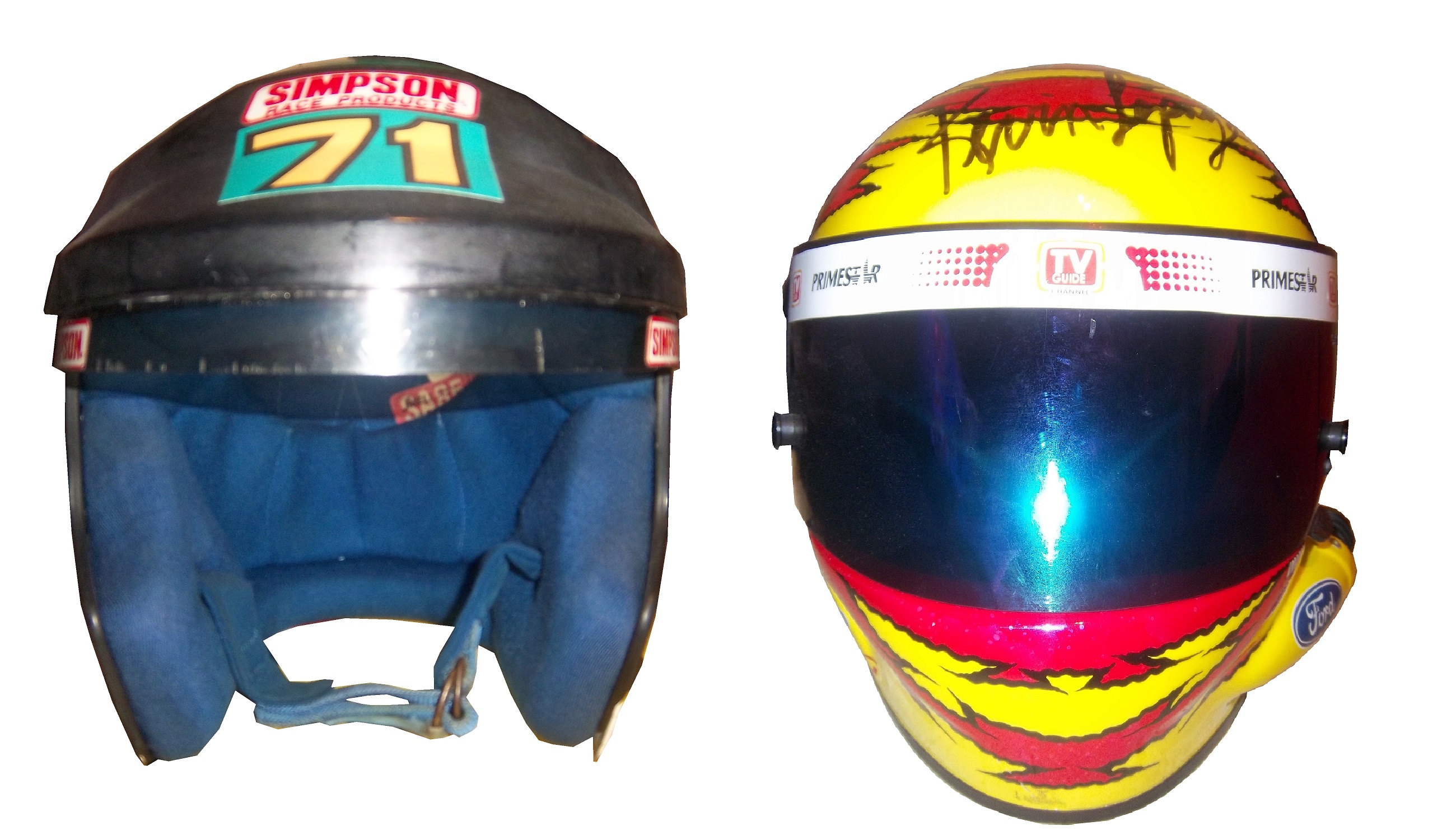
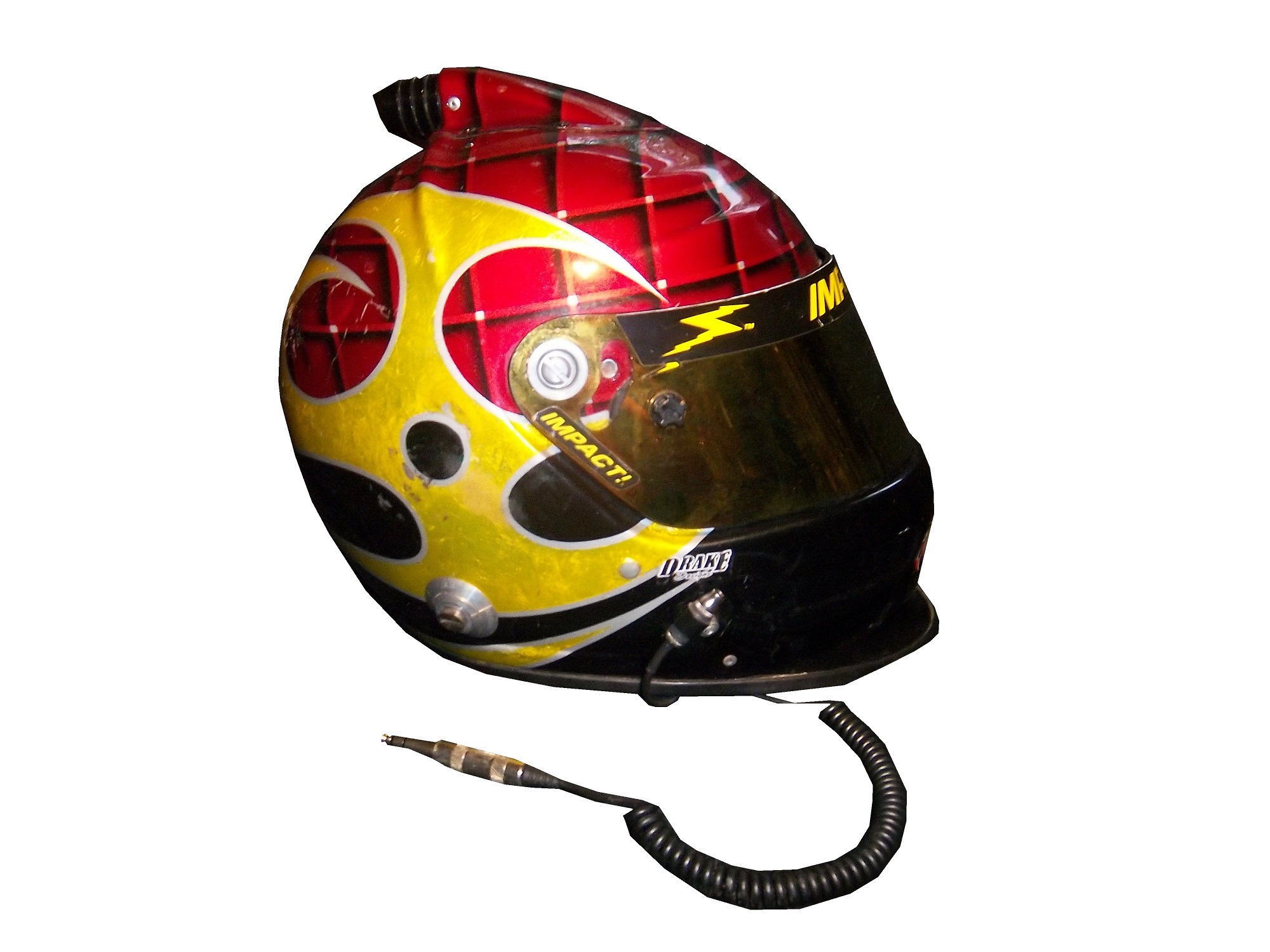
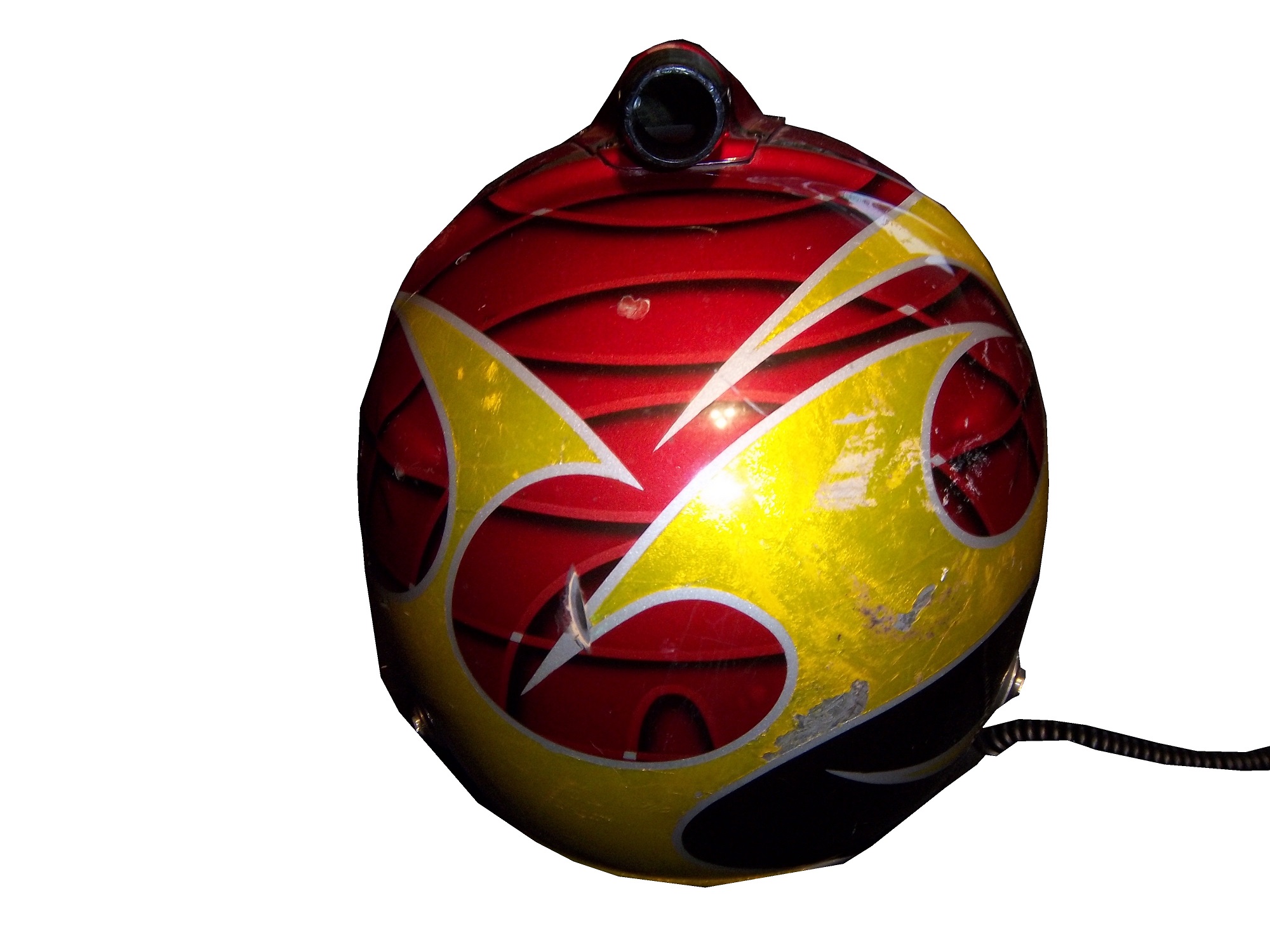
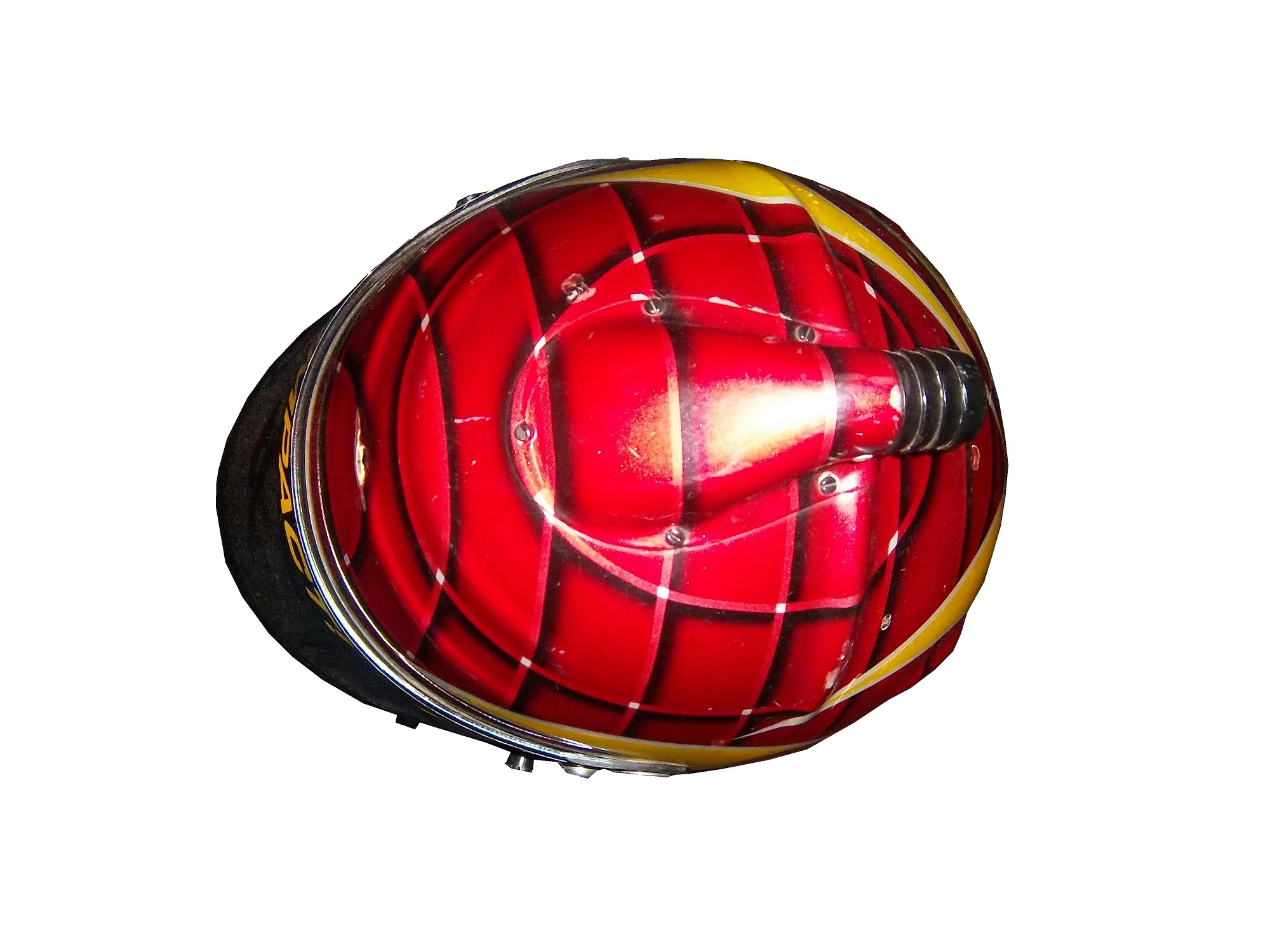
By David G. Firestonemcconnell-5The evolution of the racing helmet in NASCAR for the most part was slow, in the beginning. NASCAR was officially founded in 1947, two years after World War II ended. Many of the helmets worn during the 1940’s and 1950’s were little more than repainted army and air force helmets. These helmets were basic at best, and as protection for the dangers of racing, these helmets were inadequate at best. During the 1950’s, many drivers switched from military headgear to motorcycle helmets. In the 1960’s, motorcycle-style helmets became the norm.mcconnell-5The above helmet was worn by Jim McConnell, who raced and promoted races in Maine, and went on to found Beech Ridge Motor Speedway in Scarborough, Maine. This is a racing helmet, but it looks more like Wyatt’s Captain America helmet from Easy Rider, in its basic design. It has an open face, no microphone equipment, and is rather thin. Although there would be advancements in helmet technology, the open-face design would remain popular until the 1980’s.Noffsinger-1This helmet was worn by Brad Noffsinger in 1988, it is the same general design, though it is much thicker, has some advancements in visor technology, and had some microphone technology in it as well. Although these helmets have since been banned, they remained legal for as long as they did for one simple reason: Advanced visibility. NASCAR did not want to have a crash caused by decreased visibility due to a rule mandating full-face helmets.musgrave1The Ted Musgrave helmet mentioned in a previous post is a perfect example. The bottom part covering the chin does to a certain extent reduce visibility for a driver. The logic makes sense, in that if there was a crash caused by reduced visibility, so for the 1990’s and 2000, the open-face was legal…then came the 2001 Daytona 500. That race saw the death of Dale Earnhardt Sr. from a Basilar skull fracture, which as tragic as it was, wasn’t the first death due to sub-par safety equipment. John Nemechek, Adam Petty, Kenny Irwin Jr., and Tony Roper had all been killed in similar accidents. Only after Earnhardt’s death, did the HANS device come to light, and eventually became mandatory in NASCAR, and eventually, across the board in racing. Now the helmets used in NASCAR look like this:mcdonalds-1This is a helmet worn between 2004 and 2005 by either Regan Smith or Jason Keller. As you can see, it has a number of advancements, including the visor, and air intakes, but the biggest advancement is these small bolts towards the back.mcdonalds-2 - CopyThese are where the HANS device connects to the helmet. The HANS device was mandated after the death of Dale Earnhardt Sr. to prevent Basilar skull fracture deaths. This device has worked very well. The HANS device works by attaching the device to the helmet, and then being secured by the shoulder straps.
As advanced as this helmet is, there is always room for improvement. What new form will the racing helmet of tomorrow take? Only time will tell.

On to Paint Schemes, we have a lot of ground to cover today…

First in the Camping World Truck Series

Chris Cockrum #07 Accu-Tech/Homesmart Toyota Tundra Decent color scheme, good stripe pattern, logos are easy to see. Solid A grade.

Sean Coor #82 Warriors in the Workplace Ford F-Series Simple yet bold. Great use of matte black, great number design and color scheme. The logo is easy to see and stands out. No distracting stripes or patterns. Solid A grade.

Next up, the Nationwide Series

Sam Hornish Jr. #12 Wurth Tools Ford Mustang The doors look like they have race damage on them already, which is not a good sign. The color scheme is decent, but the Pennzoil stripes just kill it. The logos are easy to see, but the stripes are just awful. Final grade C+

Matt Kenseth #18 Reser’s Foods Toyota Camry. Numbers are great, color scheme is good, logos are easy to see, and the background design is visible, but not overpowering. The only thing keeping this scheme from a higher grade is the picture of the package on the side of the car. That drags the grade down to a B+ from an A

Now moving on to the Sprint Cup Series

Denny Hamlin #11 FedEx Toyota Camry There are a total of 4 variations of the FedEx scheme, Express, Freight, Ground and Office. Right off the bat, the front nose design and stripes are awful. The color schemes are great, as are the logos and numbers, but the stripes kill it. The best grade I can give is a C+ across the board.

Paul Menard #27 Menard’s Chevy SS Not the worst I have ever seen, but the yellow is way too bright, and the massive collection of sponsor stickers on the quarter panel is just ugly. Final Grade C-

The Driver Suit Blog-My Thoughts on the 2013 Daytona Testing So Far…

This video displays some of the things I have noticed from Preseason Thunder…Aside from the fact that the new cars look good, and that there is still some work to do, here are my thoughts from Preseason Thunder at Daytona…

The roof ads are next to invisible when viewed from the standard TV cameras.  They may look better from in-car cameras, but until I see them, I’ll reserve my judgement…

The radio antennas are much larger than last year, and are much more visible than last year.  This may just be the setup for testing, but it looks really ugly.

The names on the windshield need to be in bigger lettering.  At speed, these names are very hard to read.

It turns out that Ford is running tailpipe decals, but they are much less predominant that their Chevy counterparts.

The yellow Dollar General scheme with the orange Home Depot rear looks much MUCH worse at speed.

Many of the cars are running a matte black design, with numbers and sponsor decals…and it is amazing how this improves the look of many of the cars.

and finally…Daytona has a very nice checkerboard design in the front infield.

Now let’s discuss paint schemes…we have a lot of ground to cover.

Clint Boywer #15 5 Hour Energy Toyota Camry   Basically the same scheme as last year, nothing really wrong, but nothing really right with this scheme…final grade C

Ryan Newman #39 Outback Steakhouse Chevy SS   A decent scheme ruined by a bland color scheme.  The mountain stripes look good, but the beige background just makes it bland.  Is the Australian Outback dealing with smog?  A sky blue would work much better here.   Final Grade: C

Bobby Labonte #47 Bushes Baked Beans/Charter/Clorox/Kingsford/Scott Toyota Camry   The Final Grades for the Bushes, Clorox, Kingsford and Scott schemes are all A…Nothing wrong with them.  The Charter scheme is ruined by a really mediocre color scheme, and earns a C.

Kurt Busch #78 Furniture Row Racing Chevy SS Not much here, but I love the matte black, simple logo and number design and the complete lack of stripes or other designs, and it warrants an A…simple yet elegant.

Moving on to the new schemes in the Nationwide Series

Brian Scott #2 Shore Lodge Chevy Camaro Richard Childress is the only owner who can use the black/white/silver combo effectivey, which is what this scheme does. The stripe pattern needs work, but the logos are very visible, and the lettering is good.  Final Grade B+

Elliot Sadler #11 One Main Financial Toyota Camry Great color scheme, logo, number design, and all-around simple yet bold paint scheme that earns a final grade of an A

Eric McClure #14 Hefty Toyota Camry  Not a big fan of this color scheme. The stripes on the quarter panels are dreadful. The numbers and logos are good, and boost the scheme to a C grade.

The Driver Suit Blog-Some Thoughts on 2013 Paint Schemes So Far

Yesterday, I discussed the basic design changes for the 2013 redesigned schemes.  Today, I thought I would look at some of the schemes that have been released, and give my thoughts on them.

Let’s look at the Chevy schemes first.

Jamie McMurray  The basic scheme is solid here.  The Bass Pro Shop “lightning bolt” used in last year’s scheme is gone, and a single Golden Arch has taken its place.  The car has a cleaner look as a result.  I like the design of the car number here as well, and the goldenrod yellow works rather well.  Final Grade: A-

Kasey Kahne  I really hope this is a prototype design,,,the color scheme is all wrong, there are too many light colors, and the door design is just brutal.  The tailpipe decals which are already bad have a silver border around them, which just makes them stand out even more. Of the Chevy schemes released, this is the worst.  Final Grade: D+

Danica Patrick  Last year Danica’s car was painful to look at.  However if this is the final design for Danica, I like it.  The yellow is much more subdued, giving it an overall better appearance.  Also the orange and black stripes at the bottom give it a bolder look as well.  The numbers need work though, as the generic racing font doesn’t do the car any favors.  Final Grade: B+

Tony Stewart  Both of Tony Stewart’s paint schemes leave something to be desired.  The Bass Pro Shop scheme is the better of the two.  The total lack of white on the Bass Pro Shop scheme give the car a good look, and the stripes give a cleaner line.  The orange on the bottom needs to be a little darker, but it;s a great scheme.  Mobil 1 on the other hand has too much white, an awful set of stripes that seem to be non-sequitur with each other.  The overall color scheme is all over the place and is very confusing to look at.  In addition, the white on the back doesn’t help.  Final Grade: C+

Jeff Gordon Are you kidding?  Black flames on a car that is totally black outline in blue?  Pepsi has a great shade of blue and a great logo and yet they manage to screw it up by trying the Pepsi Max design to be edgy.  I’m a fan of black cars, but this just falls flat. Final Grade: C-

Kevin Harvick  Ok, let’s make this clear:  This is what a Budweiser scheme should look like, this is not.  This is one of my favorite schemes so far, it looks like a Budweiser car should look like, so my Final Grade: A

Jeff Burton From what I’ve seen the Cat car looks about the same as it did last year which is actually a good thing, because the scheme is solid, has good colors, great number designs and a good pattern used.  Final Grade: A

Juan Pablo Montoya Great color, great number design, and the pattern used is a lot more sublte than last year’s scheme.  The quarter-panels have too many associate sponsors and looks too cluttered, keeping the Final Grade at a B.

Jimmie Johnson  Less is more and this paint scheme proves that.  The Z-28 stripes, good color scheme, and clean design gives the Lowes car a simple yet elegant design that just works.  The Jimmie Johnson Foundation scheme is a little cluttered, but it still works.  Final Grade: A

Dale Earnhardt Jr.  The Diet Dew scheme isn’t great, the design is pointlessly complex, and the red on green number design is just brutal.  If you look at this picture of the National Guard scheme you will see that one of the major changes to Chevy’s driver suits is the full Chevy logo, as opposed to just a red bow tie like last year.  This design was used in IndyCar last year and looks better than the old design.

Moving on to Ford…

Brad Keselowski  The scheme is decent, but the dark red lettering on the dark blue background is very hard to see.  Miller needs to rethink that part of the design, but other than that it’s a good scheme…though I still miss the beer-colored wheels from last year!  Final Grade is a C

Marcos Ambrose  Is it normal to get seasick while looking at a paint scheme?  The Petty Blue just does not work here, and the oval around the letters is pointless.  The car looks awful even though it has a great color scheme and great sponsor logos.  Final Grade: D

Greg Biffle  There’s nothing really wrong here, but nothing really right here either.  The side design looks forced, the black roof is idiotic, the color scheme is good, but the number design looks too cliche.  It makes no sense, but 3M schemes never do, so I’ll give it a C

Ricky Stenhouse Jr.  The Best Buy scheme looks good.  The number design, color scheme, and simplistic design give the car a good look.  The Zest scheme on the other hand has an awful scheme, and like Kasey Kahne’s scheme, has too many light colors and not enough dark to make the scheme work.  The Final grade is a C overall, an A for Best Buy and a D for Zest.

Trevor Bayne Timeless, plain and simple.  This scheme works well, and if it’s not broken, don’t fix it.  Final Grade: A

Joey Logano This scheme could very easily be mistaken for McDonald’s.  The red wheels don’t do it any favors, and the Penzoil scheme is too simplistic.  Sometimes less is more when it comes to car design.  Final grade: D-

Carl Edwards  The stripes work well here, and the color scheme is good.  Unlike the Zest scheme, this scheme uses enough dark blue to make it work.  The UPS scheme however is a disaster.  The dark brown really works, but the various shades of gold, orange and red make the design look like a sad rainbow.  The white numbers don’t help that much either.  Final Grade is a C, A for Fastenal, D for UPS

And finally a look at Toyota’s schemes thusfar

Matt Kensith  This Dollar General scheme could be good if some of the black stripes go, and what is up with the DG design on the bottom of the quarter-panels?  The yellow-to-orange fade on the back doesn’t work either.  Final Grade: D

Clint Bowyer  The dual blue and white scheme is popular this year, and this scheme is one example.  The basic design would work better without some of the stripes on the front.  Otherwise it’s a solid scheme with a B grade.

and last but not least, Martin Truex Jr.  Simple, elegant with a great color scheme, great logos and great number design.  Final Grade: A

I will add more input when more schemes are released.